


x
Hand-painted oil on canvas in your size and frame, made to order by our artists. ( Buy Print Buy Image)





























Pick from our preset sizes that match the artwork's original proportions.

You may enter your own dimensions to fit a specific frame or space. If your selected size does not match the original image's proportions, we will either crop the artwork or extend the painting with additional hand-painted elements. A digital mockup will be sent for your approval before production begins.
Please note that the on-screen preview does not reflect the actual cropping or extension. Only the mockup will accurately show the final composition.
While custom sizes are available, we recommend selecting a dimension from the predefined list to preserve the original proportions.
Worldwide Delivery () in 3/4 weeks instead of standard 5 weeks. (15 August). No compromise on quality.


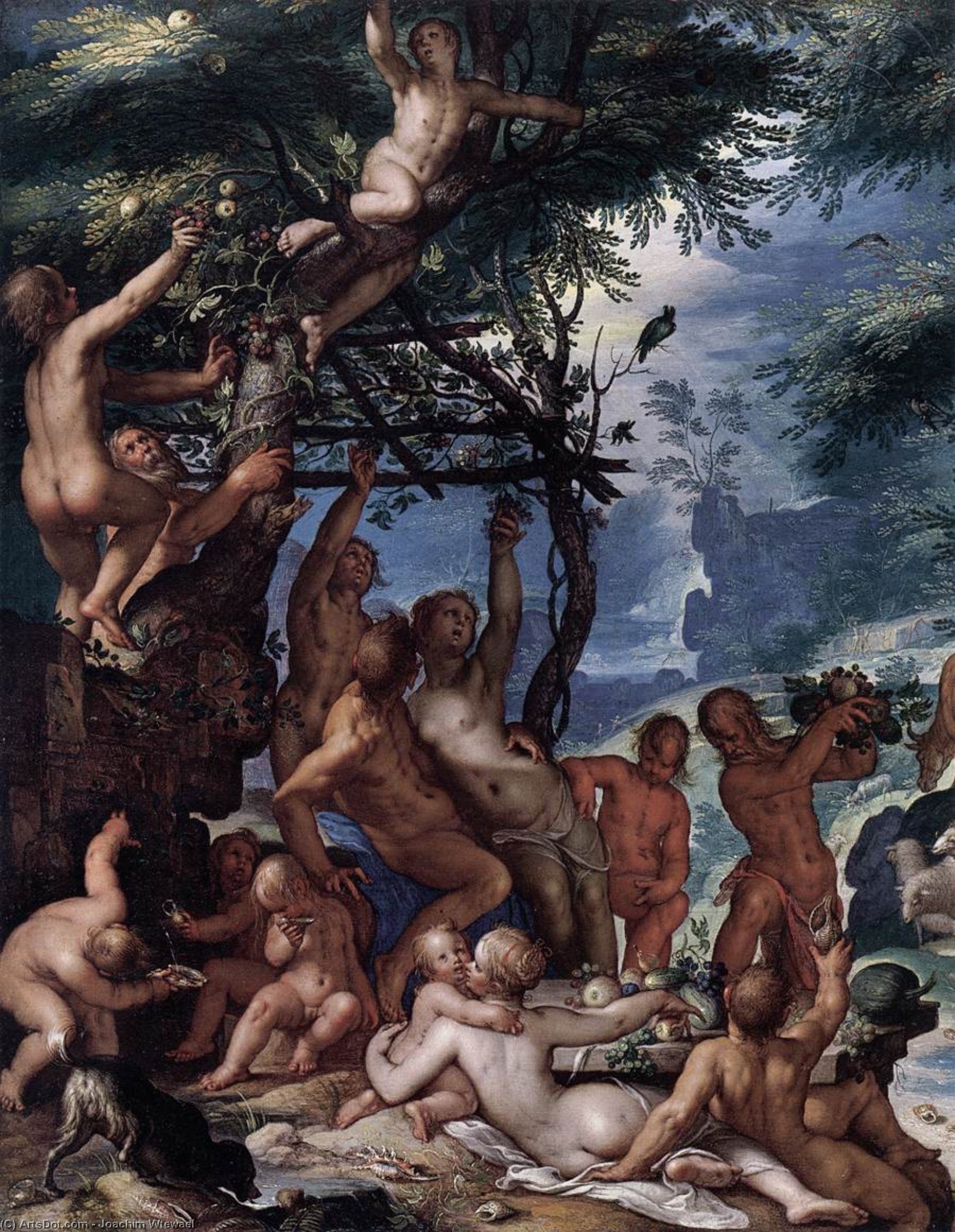
The Golden Age (detail)
Reproduction Size
Joachim Anthonisz Wtewael’s “The Golden Age,” painted in 1605, isn't merely a depiction of a mythological scene; it’s an immersive experience—a vibrant, intoxicating glimpse into the heart of Renaissance pleasure and abundance. Housed within the Metropolitan Museum of Art, this oil on copper painting transcends its physical dimensions to transport the viewer into a world brimming with sensual delight, theatrical drama, and a profound sense of timeless celebration. Wtewael, a key figure in Dutch Mannerism, masterfully captures the spirit of his era, blending classical themes with a distinctly Northern European sensibility that’s both opulent and subtly unsettling.
The painting centers on a chaotic yet exquisitely ordered gathering of nude figures engaged in a dizzying array of activities. We see them feasting, dancing, drinking from overflowing goblets, climbing through the branches of a bountiful tree laden with fruit – a visual symphony of indulgence. The setting is fantastical: a lush landscape punctuated by a cascading waterfall and dramatic rocky cliffs, hinting at an otherworldly realm where earthly pleasures are amplified. This isn’t a straightforward narrative; it's a carefully constructed tableau designed to evoke a specific emotional response—a feeling of ecstatic abandon and unrestrained joy.
Wtewael’s style is immediately recognizable as belonging to the Dutch Mannerist tradition. Unlike the more naturalistic tendencies emerging at the time, he revels in elongated figures, exaggerated poses, and a deliberate distortion of perspective. The bodies are not rendered with anatomical precision but rather sculpted into dynamic, almost theatrical shapes—a hallmark of Mannerism’s emphasis on emotional expression over strict realism. Notice how limbs stretch and twist, creating a sense of movement and instability that mirrors the painting's overall feeling of exuberance. The artist employs a meticulous technique, layering thin glazes of oil paint to build up rich colors and textures. The use of *scumbling*, where pigment is applied in a broken, irregular manner, adds depth and luminosity to the scene, particularly evident in the dappled sunlight filtering through the foliage.
The choice of copper as the support for this painting is significant. Copper’s reflective qualities allowed Wtewael to achieve an unparalleled level of detail and brilliance—a characteristic that lends the work a remarkable vibrancy even today. The meticulous rendering of skin tones, fabrics, and fruit highlights his mastery of oil paint and his dedication to capturing subtle nuances of light and shadow.
“The Golden Age” is deeply rooted in classical mythology, specifically referencing the story of Pomona, the Roman goddess of fruit trees. The abundance of fruit depicted—pears, grapes, apples, and pomegranates—is a potent symbol of fertility, prosperity, and the pleasures of the senses. However, Wtewael doesn’t simply present a straightforward depiction of Pomona's revelry; he layers in multiple mythological references. The presence of figures like Cupid and Psyche, engaged in their own romantic drama, adds another layer of complexity to the scene. The inclusion of elements such as the wedding feasts of Peleus and Thetis, combined with the Judgment of Paris, suggests a celebration of love, beauty, and the cyclical nature of life.
Furthermore, the painting’s overall atmosphere—a blend of sensual indulgence and theatrical drama—reflects the broader cultural context of 17th-century Netherlands. It was a time of burgeoning wealth, artistic innovation, and a fascination with classical antiquity. Wtewael's work captures this spirit perfectly, offering a glimpse into a world where pleasure, beauty, and mythology intertwined to create an unforgettable visual experience.
“The Golden Age” remains one of Joachim Wtewael’s most celebrated works, admired for its technical brilliance, evocative imagery, and profound sense of atmosphere. Reproductions of this masterpiece offer a remarkable opportunity to bring this extraordinary painting into your home or office—a chance to immerse yourself in the world of Dutch Mannerism and experience the enduring power of classical mythology. Whether you’re an art collector, an interior designer seeking a touch of opulence, or simply someone who appreciates exquisite beauty, “The Golden Age” is sure to captivate and inspire.

Joachim Anthonisz Wtewael, a name whispered among connoisseurs of the Dutch Golden Age, remains a captivating figure whose art defies easy categorization. Born in 1566 and passing away in 1638, his life was as multifaceted as his canvases. While his artistic genius shone brightly, it is equally notable that he was also a successful flax merchant and an active town councillor of Utrecht. This dual existence—the meticulous artisan alongside the pillar of civic society—suggests a man whose life demanded both worldly acumen and profound creative focus. Wtewael’s signature style, however, possessed a remarkable consistency; it remained largely untouched by the sweeping naturalistic currents that were reshaping art across Europe during his lifetime.
Wtewael's early training rooted him deeply in the sophisticated vocabulary of late 16th-century Haarlem Mannerism. His initial professional life saw him working as a glassmaker and engraver within his father’s workshop, an apprenticeship that undoubtedly honed his hand for intricate detail. A pivotal period arrived when he embarked on travels through Italy and France starting in 1586. These sojourns were crucial, exposing him to the rich artistic currents of the Second School of Fontainebleau. Yet, despite these influences, Wtewael possessed a unique internal compass. His work is characterized by figures that are masterfully drawn, possessing an almost porcelain-like polish, often arranged in poses that feel wonderfully capricious and dramatically charged.
The body of his surviving work—comprising around one hundred paintings, alongside numerous drawings and stained glass designs—reveals a fascinating thematic duality. He was equally at home depicting profound religious narratives as he was celebrating the lush drama of classical mythology. Consider works such as Adoration of the Shepherds juxtaposed with Venus and Mars Surprised by Vulcan. These pieces showcase his remarkable ability to weave together conventional sacred subjects with pagan lore, often imbuing both realms with a palpable, sometimes strong erotic undercurrent that draws the viewer into its narrative embrace. His attention to detail is breathtaking; in works like Perseus and Andromeda, housed notably at the Mauritshuis museum in Utrecht, one can trace his unparalleled skill.
What makes Wtewael’s contribution so significant is precisely that resistance to change. While naturalism beckoned artists toward greater realism, Wtewael held fast to a polished, idealized aesthetic, creating a body of work that feels both historically situated and eternally vibrant. His cabinet paintings, executed on copper plates, are particularly distinctive and numerous, offering intimate glimpses into his artistic process. Though the final decade of his life saw him retreat from painting—a period possibly marked by personal sorrow following the passing of his wife—the impact of his vision endures. He gifted art history a style that remains both highly polished and wonderfully unpredictable.

1566 - 1638

Explore the profound mastery of light and shadow in Dutch Golden Age art. From Rembrandt's chiaroscuro to Vermeer's luminosity, discover the techniques that defined an era and learn how to bring these museum-quality masterpieces into your home through expert oil reproductions.


Stay updated with the latest art news, exclusive offers, and decoration ideas.
Tell us about your project and our art experts will provide you with 3 personalized art suggestions.
Let Us Curate 3 Options Just for You - Free!


 Preview
 Send
Send Share
Share
 Details

 Download
 Similars
 X-Ray
X-Ray Diaporama


 Read More







 Glass option is only available in size under 110 CM


