


x

 Oil On CanvasWallArtBaroque
 1718
1718 205.0 x 265.0 cm
 Kunstpalast
Hand-painted oil on canvas in your size and frame, made to order by our artists. ( Switch to Print Switch to Image)





























Pick from our preset sizes that match the artwork's original proportions.

You may enter your own dimensions to fit a specific frame or space. If your selected size does not match the original image's proportions, we will either crop the artwork or extend the painting with additional hand-painted elements. A digital mockup will be sent for your approval before production begins.
Please note that the on-screen preview does not reflect the actual cropping or extension. Only the mockup will accurately show the final composition.
While custom sizes are available, we recommend selecting a dimension from the predefined list to preserve the original proportions.
Worldwide Delivery () in 3/4 weeks instead of standard 5 weeks. (6 August). No compromise on quality.


The Prophet Baruch
Reproduction Size
The painting, titled The Prophet Baruch, immediately draws the viewer into an atmosphere of profound stillness. We encounter a figure seated upon the ground, his posture speaking volumes without uttering a single word. With his head bowed into his hands, he embodies a moment of deep introspection or perhaps prayer. The subject is rendered with such palpable humanity that one feels they are witnessing a private communion between man and thought. He is clad in simple robes, and his long hair seems to cascade around him like a natural curtain, framing the quiet drama unfolding within this sacred space.
Technically, the work showcases an exquisite handling of paint that speaks to the skill of its creator. The artist has employed a palette dominated by rich earth tones—ochres, deep siennas, and warm browns—which combine to create an atmosphere that is both inviting and deeply meditative. Upon closer inspection, one can appreciate the intricate brushwork; it lends the entire surface a beautiful, textured quality, suggesting the passage of time and the weight of contemplation itself. The contrast between the soft folds of the drapery and the solidity of the table upon which his arm rests adds a wonderful tactile dimension to the visual experience.
The inclusion of the book in one hand, juxtaposed with the gesture of repose, suggests a profound engagement with sacred or scholarly texts. This is not merely a portrait; it is an allegory of wisdom sought through quietude. The Prophet Baruch becomes a universal symbol for the intellectual journey—the necessary retreat from the clamor of the world to find clarity within one's own mind. For the collector, this piece offers more than mere decoration; it offers a visual anchor for moments of personal reflection.
Dating to 1718, this work carries the weight of the early eighteenth century, yet its themes transcend any specific era. While the artist's style connects it to grand traditions of religious and portraiture painting, its emotional resonance feels timeless. For those designing a space—be it a library, a study, or a quiet corner in a drawing-room—this reproduction serves as an immediate focal point. It whispers tales of devotion and deep thought, transforming any room into a sanctuary for the mind.

Born in Paris in 1656 and passing away in the same city in 1746, Nicolas de Largillière stands as a pivotal figure in the history of French portraiture. While often overshadowed by the titans of his era – Rigaud and Le Brun – Largillière carved out a unique niche, specializing in exquisitely rendered portraits of the wealthy middle class, capturing their dignity, grace, and quiet moments with an unparalleled sensitivity. His career spanned over six decades, marked by consistent success and a prodigious output, solidifying his reputation as one of the most accomplished artists of his time.
Largillière’s early artistic development unfolded in Antwerp, where he received his initial training under Antoine Goubeau. This period proved crucial, exposing him to the vibrant artistic scene of the Low Countries and fostering a deep appreciation for classical ideals. Following this formative experience, he journeyed to England, working briefly with Lely and Verrio – encounters that undoubtedly influenced his technique and understanding of portraiture. It was in Paris, however, that Largillière truly established himself as a leading artist, quickly gaining recognition for his refined style and ability to capture the essence of his subjects.
Unlike many artists of his time who sought fame through grand historical or religious paintings, Largillière focused almost exclusively on portraiture. This dedication allowed him to hone his skills with remarkable precision. His portraits are characterized by a meticulous attention to detail – from the texture of fabrics and the sheen of jewelry to the subtle expressions in his subjects’ eyes. He employed a technique known as ‘clárriage,’ a method of applying paint thinly over a ground prepared with chalk, creating a luminous surface that enhanced the richness and depth of color. His use of light and shadow was particularly masterful, subtly defining forms and conveying a sense of atmosphere within each portrait.
Largillière’s subjects were predominantly members of the Parisian bourgeoisie – merchants, lawyers, doctors, and other prominent figures of the day. He depicted them in intimate settings, often engaged in everyday activities such as reading, playing musical instruments, or conversing with family members. These scenes weren't merely representations of wealth; they revealed a deep understanding of human nature and an ability to capture the quiet dignity and understated elegance of his subjects’ lives. His portraits were not simply likenesses; they were windows into the souls of those he depicted.
Despite his considerable success, Largillière's career was marked by a remarkable longevity. He remained active as an artist well into his eighties, serving as director of the Académie Royale de Paris from 1734 to 1756. This extended tenure speaks volumes about his standing within the artistic community and his continued relevance as a teacher and mentor. His output was astonishing – contemporary sources estimate that he painted approximately 1,500 portraits throughout his career. Beyond portraiture, Largillière also produced religious works, still lifes, and landscapes, though these genres never achieved the same level of recognition as his celebrated portraits.
Largillière’s artistic style was a synthesis of influences from various sources. His early training in Antwerp exposed him to the Baroque traditions of the Low Countries, characterized by dramatic lighting and dynamic compositions. His time in England introduced him to the refined portraiture of Lely, known for his elegant brushwork and ability to capture the beauty of his subjects. However, Largillière’s style evolved beyond these influences, developing a distinctly French sensibility marked by restraint, subtlety, and an emphasis on psychological realism.
He was particularly influenced by Caravaggio's use of chiaroscuro – the dramatic contrast between light and shadow – which he skillfully employed to create depth and atmosphere in his portraits. Largillière’s compositions were typically balanced and harmonious, reflecting a classical aesthetic rooted in Renaissance ideals. He avoided excessive ornamentation or theatrical gestures, preferring to focus on capturing the quiet dignity and inner character of his subjects.
While Largillière produced an enormous number of portraits, several stand out as particularly noteworthy examples of his skill and artistry. Among his most celebrated works are *Portrait of a Young Woman*, *Portrait of Monsieur de la Rochefoucauld*, and *Portrait of Madame de Montesqui*. These paintings exemplify his mastery of technique, his ability to capture the nuances of human expression, and his profound understanding of his subjects’ personalities.
*Portrait of a Young Woman* (circa 1685) is particularly admired for its delicate rendering of the subject's features and the subtle play of light on her skin. *Portrait of Monsieur de la Rochefoucauld* (1703) showcases his ability to convey both intellectual depth and aristocratic bearing. And *Portrait of Madame de Montesqui* (1724), a later work, demonstrates his continued skill and refinement throughout his long career.
Nicolas de Largillière’s contribution to the history of French portraiture is significant for several reasons. He was one of the last artists to maintain a high level of artistic excellence into old age, demonstrating remarkable dedication and perseverance. His portraits offer invaluable insights into the lives and customs of the Parisian bourgeoisie during the 17th and 18th centuries. Furthermore, Largillière’s emphasis on psychological realism – his ability to capture the inner character of his subjects – set a new standard for portraiture in France.
Often described as the “French Van Dyck,” Largillière's work continues to be admired for its elegance, subtlety, and profound humanity. He remains a testament to the enduring power of portraiture as a means of capturing beauty, dignity, and the essence of human experience. His legacy endures through his remarkable body of work, which provides a captivating glimpse into a bygone era.

1656 - 1746 , Italy

Journey through 25 iconic artworks at the Metropolitan Museum of Art! Explore Van Gogh, Monet, Rembrandt & more. Discover art history, inspiring stories, and museum-quality reproductions to elevate your home decor. Explore the full collection on Most-Famous-Paintings.com.
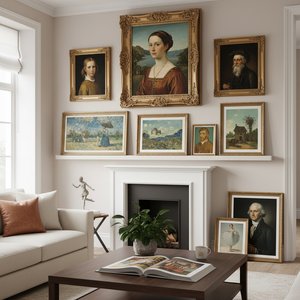
Explore 25 iconic artworks from Washington DC's National Gallery of Art! Discover masterpieces by Cézanne, Matisse & Picasso. Find museum-quality art reproductions and elevate your home decor with timeless paintings. Explore the full collection online at Most-Famous-Paintings.com.
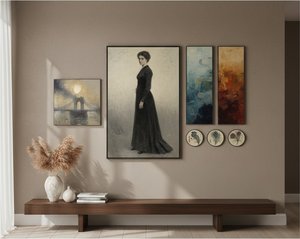
Journey through 25 iconic James Abbott McNeill Whistler paintings! Explore his masterpieces of Aestheticism, from 'Nocturne in Black and Gold' to captivating portraits. Find museum-quality art reproductions & elevate your home decor with Most-Famous-Paintings.com. Discover the full collection online.
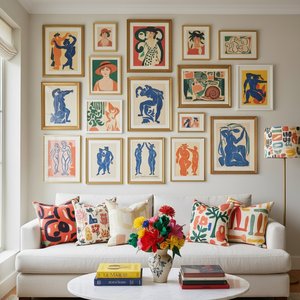
Journey through Henri Matisse's 25 most iconic paintings! Explore Fauvism, vibrant colors & the stories behind masterpieces like 'The Dance'. Find museum-quality art reproductions and curated decor ideas to elevate your space. Discover all masterpieces on Most-Famous-Paintings.com.
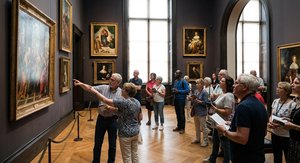
Journey through Alte Pinakothek's 25 most iconic paintings! Explore masterpieces by Dürer, Rembrandt & Rubens. Discover art history, techniques & find museum-quality reproductions for your home at Most-Famous-Paintings.com.


Stay updated with the latest art news, exclusive offers, and decoration ideas.
Tell us about your project and our art experts will provide you with 3 personalized art suggestions.
Let Us Curate 3 Options Just for You - Free!


 Preview
 Send
Send Share
Share
 Details

 Download
 Similars
 X-Ray
X-Ray Diaporama
 Read More







 Glass option is only available in size under 110 CM


