x


 Acrylic On CanvasWallArtRenaissance
 1561Renaissance
 86.0 x 102.0 cm
 Gemäldegalerie Alte Meister
Hand-painted oil on canvas in your size and frame, made to order by our artists.





























Pick from our preset sizes that match the artwork's original proportions.

You may enter your own dimensions to fit a specific frame or space. If your selected size does not match the original image's proportions, we will either crop the artwork or extend the painting with additional hand-painted elements. A digital mockup will be sent for your approval before production begins.
Please note that the on-screen preview does not reflect the actual cropping or extension. Only the mockup will accurately show the final composition.
While custom sizes are available, we recommend selecting a dimension from the predefined list to preserve the original proportions.
Worldwide Delivery () in 3/4 weeks instead of standard 5 weeks. (18 July). No compromise on quality.


Portrait of a Lady in White
Reproduction Size
“Portrait of a Lady in White” by Titian Ramsey Peale II stands as a testament to the enduring beauty and sophistication of the High Renaissance, capturing not merely an image but an essence—a moment frozen in time. Executed around 1561, this oil on canvas masterpiece resides within the Gemäldegalerie Alte Meister in Dresden, Germany, offering visitors a glimpse into the artistic sensibilities of its era.
The painting’s subject is a woman draped in flowing white attire, her gaze serene and dignified as she holds aloft a flag—a symbol likely representing honor or allegiance. Peale II meticulously rendered every detail: the ruffled collar framing her neck, the delicate pearl necklace adorning her bosom, and the carefully styled updo emphasizing her grace. These elements speak to the prevailing ideals of feminine beauty during the Renaissance – purity, refinement, and noble bearing.
Titian Ramsey Peale II’s artistic style is firmly rooted in the Renaissance tradition. Characterized by a profound respect for realism and humanism, it eschews stylized conventions in favor of capturing the subtleties of human anatomy and emotion. Peale skillfully employed chiaroscuro—the dramatic interplay of light and shadow—to sculpt the woman's form and imbue the painting with depth and luminosity. The brushstrokes are smooth and blended, demonstrating mastery of glazing techniques that create a rich surface texture and enhance color vibrancy.
Created during a period marked by intellectual ferment and artistic innovation—the Renaissance—“Portrait of a Lady in White” reflects the humanist spirit prevalent at the time. Artists like Titian were deeply influenced by classical Greek and Roman art, striving to emulate their grandeur and idealism. The painting serves as an invaluable window into aristocratic life in sixteenth-century Europe, portraying a woman of considerable status and conveying a sense of composure and elegance.
Beyond its aesthetic qualities, “Portrait of a Lady in White” carries symbolic weight. The flag held by the woman symbolizes honor and virtue—values highly esteemed during the Renaissance. Her gaze directs towards the viewer, inviting contemplation and establishing an intimate connection between subject and observer. Peale II’s masterful depiction captures not only physical likeness but also psychological depth, conveying a feeling of quiet dignity and inner peace.
To appreciate Titian Ramsey Peale II's contribution to art history fully, consider examining his other paintings: “Doge Antonio Grimani Kneeling Before the Faith,” showcasing similar attention to detail and capturing the solemnity of religious devotion; “Tiziano Vecellio (Titian)”’s “Venus Anadyomene,” a dynamic depiction of mythological beauty; and Sandro Botticelli’s “Lamentation over the Dead Christ with the Saints Jerome, Paul and Peter,” which exemplifies Renaissance artistic ideals.
For those seeking to experience the splendor of this iconic artwork firsthand, Most-Famous-Paintings.com offers meticulously crafted oil paintings—handmade reproductions that faithfully preserve the original's brilliance and artistic essence. Visit Most-Famous-Paintings.com today!


1799 - 1885
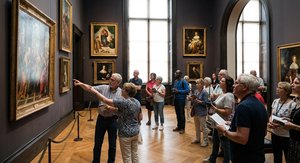
Journey through Alte Pinakothek's 25 most iconic paintings! Explore masterpieces by Dürer, Rembrandt & Rubens. Discover art history, techniques & find museum-quality reproductions for your home at Most-Famous-Paintings.com.

Explore the life & art of Titian Ramsay Peale II, a master of botanical precision and wildlife painting. Discover his legacy bridging art & natural history at Most-Famous-Paintings.
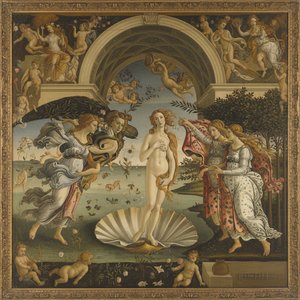
Journey through Botticelli's world with 25 iconic Renaissance paintings. Explore 'Birth of Venus,' 'Primavera,' and more—stories, techniques & timeless beauty. Find museum-quality art reproductions for your home at Most-Famous-Paintings.com.
Journey through the Early Renaissance! Explore 10 iconic paintings by Botticelli, Leonardo da Vinci & Michelangelo. Discover their stories, techniques & lasting impact. Find museum-quality art reproductions and elevate your home decor with .
Journey through the Italian Renaissance with 10 iconic masterpieces by Leonardo da Vinci, Michelangelo & Raphael. Explore art history, techniques & timeless beauty. Find museum-quality reproductions and elevate your home decor on .


Stay updated with the latest art news, exclusive offers, and decoration ideas.
Tell us about your project and our art experts will provide you with 3 personalized art suggestions.
Let Us Curate 3 Options Just for You - Free!


 Buy print
 Send
Send Share
Share
 Details

 Download
 Similars
 X-Ray
X-Ray Diaporama
 Read More







 Glass option is only available in size under 110 CM