

Early Life & Training: The Foundations of a Renaissance Master
 Hans Holbein the Elder
Discover Hans Holbein the Elder (c.1497-1543), a German Renaissance painter celebrated for his detailed portraits & religious works, blending Gothic and humanist styles. Explore his legacy at Most-Famous-Paintings.
Hans Holbein the Younger, born in Augsburg around 1497, emerged from a family deeply rooted in artistic tradition. His father, Hans Holbein the Elder, was a respected painter and draughtsman whose workshop served as young Hans’s initial training ground. This early exposure wasn't merely technical; it instilled a rigorous approach to detail, an understanding of composition, and a burgeoning appreciation for the intricacies of form. Augsburg itself, a thriving commercial hub within the Holy Roman Empire, fostered a climate where artistry was valued – not solely for devotional purposes, but also as a demonstration of wealth and status. While his father’s style leaned towards the Late Gothic tradition, with its emphasis on precise rendering and decorative elements, it provided a crucial foundation upon which Hans would build his own distinctive voice. The seeds of his future mastery were sown in these formative years, nurtured by familial expertise and the vibrant artistic atmosphere of his birthplace.
Basel Beginnings: Humanism, Book Illustration, and Emerging Portraiture
 Wikipedia: Hans Holbein the Younger
Hans Holbein the Younger (UK: HOL-byne, US: HOHL-byne, HAWL-; German: Hans Holbein der Jüngere; c. 1497 – between 7 October and 29 November 1543) was a German-Swiss painter and printmaker who worked in a Northern Renaissance style, and is considere...
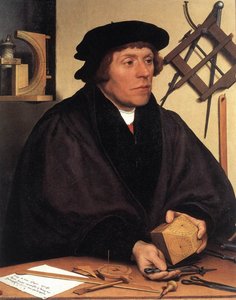
By 1515, Holbein had relocated to Basel, a city rapidly becoming a center for humanist scholarship and printing. This move proved pivotal in shaping his artistic trajectory. He quickly found employment with Johann Froben, a leading printer renowned for publishing the works of Erasmus and other influential thinkers. Initially, Holbein’s role involved designing woodcuts and illustrations for books – a demanding task that honed his draftsmanship and compositional skills. However, it was through his association with Froben that he encountered the intellectual currents of Humanism, which profoundly influenced his artistic sensibilities. He began to receive commissions for portraits, including those of prominent Basel citizens like Jakob Meyer zum Hasen, revealing an early talent for capturing not just likeness but also a sense of individual character. These weren’t simply records of appearance; they hinted at the sitter's personality and social standing. This period marked a transition from the decorative precision of his father’s style towards a more nuanced and psychologically engaging approach to portraiture, foreshadowing the masterpieces that would follow.
The English Court: Holbein's Rise to Prominence Under Henry VIII
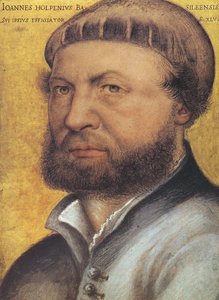 Hans Holbein the Younger
Hans Holbein the Younger (1497-1543): Northern Renaissance master of realistic portraiture, famed for painting Tudor royalty like Henry VIII & intricate detail.
In 1526, armed with a letter of introduction from Erasmus, Holbein embarked on his first journey to England. This proved to be a watershed moment in his career. He quickly gained access to the humanist circles surrounding Thomas More, where his artistic talent was immediately recognized and appreciated. While initial commissions were modest, they allowed him to establish a reputation for exceptional skill and attention to detail. A brief return to Basel did little to diminish his growing ambition; he found himself drawn back to England in 1532, this time securing the patronage of Anne Boleyn and Thomas Cromwell. His fortunes soared as he became King’s Painter to Henry VIII, tasked with creating a series of iconic portraits that would define the image of the Tudor monarch. These weren't merely representations of power; they were carefully constructed statements designed to project authority, legitimacy, and dynastic strength. Holbein’s ability to capture both the physical presence and psychological complexity of his subjects cemented his position as the preeminent portraitist of the English court.
Decoding the Details: Symbolism and Psychological Depth in Holbein’s Portraits
 Double Portrait of Jean de Dinteville and Georges de Selve (also known as The Ambassadors)
Explore Hans Holbein’s ‘The Ambassadors’! A Renaissance masterpiece brimming with symbolism & anamorphic detail. Discover power, knowledge & mortality in this iconic 1533 painting.
Holbein's portraits are celebrated not only for their technical brilliance but also for their intricate symbolism and profound psychological depth. Take, for example, his masterpiece, The Ambassadors (1533). At first glance, it depicts two elegantly dressed diplomats, Jean de Dinteville and Georges de Selve, surrounded by objects representing the realms of learning, power, and religion. However, a closer examination reveals a distorted skull anamorphically rendered across the lower portion of the painting – a *memento mori* reminding viewers of the inevitability of death. This unsettling inclusion, alongside other subtle symbols, suggests a deeper meditation on mortality, faith, and the transience of earthly glory. Similarly, in his portrait of Georg Gisze, every detail—from the meticulously rendered fabrics to the carefully arranged objects on the table—contributes to a sense of character and social standing. Holbein wasn’t simply painting what he saw; he was constructing narratives within each portrait, embedding layers of meaning that invite contemplation and interpretation. His skill lay in capturing not just likeness but also the inner lives of his sitters.
Holbein’s Legacy: A Lasting Impact on Portraiture & Artistic Technique
Hans Holbein the Younger died in London between October and November 1543, leaving behind a body of work that continues to captivate and inspire. His influence on subsequent generations of portrait painters is undeniable. He elevated the genre beyond mere representation, imbuing his subjects with psychological depth and symbolic resonance. His meticulous technique—characterized by precise brushwork, subtle glazing, and an unparalleled attention to detail—became a benchmark for artistic excellence. While he founded no formal school, his style was widely imitated and studied. By the 19th century, Holbein had been firmly established as one of the greatest portrait masters in history. Recent scholarship has further illuminated his versatility, revealing him not only as a painter but also as a skilled designer of jewelry, clothing, and even frescoes. His legacy endures as a testament to the power of art to capture both the outward appearance and inner complexities of the human spirit.
Beyond the Brush: Exploring Holbein’s Diverse Artistic Range
 Ambrosius Holbein
Ambrosius Holbein (1494-c. 1519): German Renaissance painter & printmaker, brother of Hans Holbein the Younger. Masterful portraits, religious art & book illustrations mark his pivotal role in the shift from Gothic to Renaissance styles.
While Holbein is rightfully celebrated for his portraits, limiting our understanding of his artistry to this single genre overlooks the breadth of his talent. He was a highly versatile artist who excelled in various mediums and disciplines. His early work included book illustrations and designs for stained glass windows, demonstrating a mastery of line and composition. He also created religious paintings, though these are less well-known than his secular portraits. Furthermore, Holbein’s involvement in the design of jewelry, plate, and other precious objects reveals a keen eye for detail and an understanding of luxury craftsmanship. His designs weren't merely decorative; they were often imbued with symbolic meaning and reflected the tastes of the English court. This diverse artistic range underscores his exceptional skill and adaptability, solidifying his position as one of the most accomplished artists of the Renaissance. At Most-Famous-Paintings.com, we offer a curated selection of Holbein’s masterpieces, allowing you to experience the beauty and complexity of his art firsthand.