![The Anatomy Lecture Of Dr. Nicolaes Tulp [1632] — Rembrandt Van Rijn](/media/artworks/images/thumbnails/12/01/1201b3f0503f4444b89f31dad3941765.jpg)


Introduction
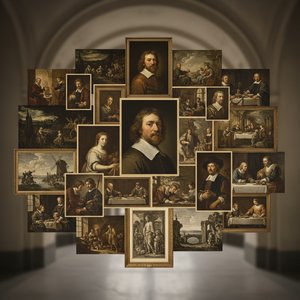
Step into a world bathed in chiaroscuro, where powdered wigs meet profound philosophical inquiry and opulent still lifes conceal subtle vanities. The 17th century—a period of dramatic upheaval and breathtaking artistic innovation—gave rise to masterpieces that continue to resonate with us centuries later. This was an age defined by the clash between tradition and modernity, religious fervor and scientific discovery, absolute monarchy and burgeoning individual expression.
The Baroque movement swept across Europe, characterized by its grandeur, emotional intensity, and dynamic compositions. Simultaneously, in the Dutch Golden Age, a distinctly different aesthetic flourished—one of intimate realism, domestic scenes, and meticulous detail. From the courtly splendor of Versailles to the humble workshops of Amsterdam, artists grappled with themes of power, faith, mortality, and the human condition.
These weren’t merely paintings; they were reflections of a society undergoing radical transformation. They documented new scientific understandings—the anatomy of the body, the vastness of the cosmos—and explored the complexities of inner life with unprecedented psychological depth. Rembrandt 's portraits aren't just likenesses; they are windows into the souls of his subjects. Vermeer 's interiors invite us to contemplate the quiet beauty of everyday existence, while Caravaggio 's dramatic scenes shock and captivate with their raw realism.
The artworks we’ve selected for this journey—our Top 10 explorations of the 17th century—offer a glimpse into this fascinating era. They are not simply historical artifacts, but living testaments to the enduring power of human creativity and our timeless quest to understand ourselves and the world around us. Prepare to be transported back in time, to encounter works that challenge, inspire, and move you with their beauty, complexity, and profound emotional resonance.
Christ and the Samaritan at the Well - Rembrandt van Rijn
 Christ and the Samaritan at the Well - Rembrandt van Rijn
A hush descends upon the scene in Rembrandt van Rijn’s 1659 masterpiece, Christ and the Samaritan at the Well , a moment of quiet grace frozen in time. This painting isn't merely a depiction of a biblical story; it is an exploration of compassion, acceptance, and the subtle power of human connection—a cornerstone of our Top 10 artworks from the 17th century.
Rembrandt’s signature chiaroscuro technique bathes the composition in a warm, earthy glow. The subdued palette of pinks, oranges, and golds evokes a sense of intimacy, drawing us into the shared vulnerability between Christ and the Samaritan woman. Notice how the visible brushstrokes lend texture and life to their garments and faces, revealing not just physical form but also inner emotion.
Created during the Dutch Golden Age, this work reflects a growing emphasis on personal faith and moral introspection. The scene challenges societal norms by portraying Jesus engaging with a woman considered an outsider, symbolizing a radical act of kindness. The painting’s enduring appeal lies in its ability to resonate across cultures and time periods.
Today, Christ and the Samaritan at the Well continues to inspire a sense of calm and contemplation within modern interiors. Its harmonious composition and rich symbolism create a focal point that invites reflection and adds a touch of sophisticated spirituality to any space—a timeless reminder of our shared humanity and the beauty found in unexpected encounters.
Polish Rider - Rembrandt van Rijn
 Polish Rider - Rembrandt van Rijn
A solitary figure cuts a swathe through a landscape veiled in shadow and mystery in Rembrandt van Rijn’s 1655 Polish Rider , an enduring enigma of the Dutch Golden Age. This painting, a cornerstone of our Top 10 artworks from the 17th century, isn't simply about what we *see*, but rather what the scene evokes—a sense of journey, contemplation, and perhaps even hidden identity.
Rembrandt’s masterful use of chiaroscuro creates a dramatic interplay between light and dark, focusing our attention on the rider and his powerful steed. The muted palette of earthy tones—browns, grays, and ochres—enhances the painting's somber mood, while visible brushstrokes lend texture and life to the composition. The landscape itself feels both beautiful and unsettling, hinting at a world beyond our immediate perception.
Intriguingly, the attribution of this work has been debated for decades, with some scholars suggesting the hand of Willem Drost, a contemporary of Rembrandt. Regardless, Polish Rider embodies the artistic spirit of the era—a fascination with light, shadow, and the human condition. The rider’s stoic gaze invites us to contemplate his purpose, adding layers of complexity to this captivating scene.
Today, this painting continues to resonate in modern interiors, offering a touch of sophisticated intrigue and timeless beauty. Its harmonious composition and evocative mood create a focal point that sparks conversation and inspires reflection—a reminder of the enduring power of art to capture not just appearances, but also the mysteries within.
A Girl with a Broom - Johannes Vermeer
 A Girl with a Broom - Johannes Vermeer
A quiet moment—a fleeting glance, a sunlit room—is captured with breathtaking intimacy in Johannes Vermeer’s A Girl with a Broom , painted around 1651. This painting, a cornerstone of our Top 10 artworks from the 17th century, isn't merely a depiction of domestic life; it is an exploration of light, texture, and the subtle beauty found in everyday existence.
Vermeer’s masterful use of chiaroscuro bathes the scene in a warm, ethereal glow. The muted palette of browns, creams, and ochres creates a sense of calm and tranquility, while his signature *staccato* brushwork lends texture and life to every detail—from the girl’s delicate features to the rough wood of the partition.
More than just a portrait, A Girl with a Broom offers a glimpse into the social dynamics of 17th-century Dutch society. The broom itself becomes symbolic, hinting at the young girl’s burgeoning responsibilities and her role within the household. Today, this painting continues to inspire a sense of serene sophistication in modern interiors—a reminder that beauty can be found in simplicity and quiet contemplation.
Three Peasants Travelling - Rembrandt van Rijn
 Three Peasants Travelling - Rembrandt van Rijn
Unveiling Rembrandt van Rijn’s Three Peasants Travelling , a rare and deeply moving etching from 1652, is like discovering a hidden chapter in the story of the Dutch Golden Age. This work—a cornerstone of our Top 10 artworks from the 17th century—isn't about grand spectacle; it’s about the quiet dignity of everyday life.
Rembrandt’s masterful use of chiaroscuro imbues the scene with an emotional intensity that transcends time. The dramatic contrast between light and shadow highlights the weariness etched into the faces of these figures, drawing us into their journey. Notice how his loose, expressive brushwork—and the etching technique itself—creates a sense of texture and depth.
More than just a depiction of rural life, Three Peasants Travelling offers a poignant glimpse into the social fabric of 17th-century Netherlands. It’s a reminder that even amidst great prosperity, hard work and resilience were the hallmarks of everyday existence. Today, this painting continues to resonate in modern interiors—a testament to the enduring power of art to capture not just appearances, but also the shared humanity that connects us all.
Samuel Menasseh Ben Israel - Rembrandt van Rijn
 Samuel Menasseh Ben Israel - Rembrandt van Rijn
Before you stands a portrait not merely of a man, but of a mind—a quiet intensity radiating from Rembrandt van Rijn’s watercolour depiction of Samuel Menasseh Ben Israel . This work, a cornerstone of our Top 10 artworks from the 17th century, captures the spirit of intellectual curiosity and religious tolerance during the Dutch Golden Age.
Menasseh Ben Israel, a prominent Jewish scholar and publisher, gazes out with a penetrating expression—an invitation to contemplate his world. Rembrandt’s delicate use of watercolour lends a softness to the portrait, contrasting beautifully with the sitter's commanding presence. The artist masterfully employs light and shadow to create depth and volume, drawing us into Ben Israel’s inner life.
This painting is more than just a likeness; it’s a testament to Rembrandt’s ability to capture the essence of his subjects. It reminds us of the importance of dialogue, understanding, and the enduring power of the human spirit. Today, Samuel Menasseh Ben Israel continues to inspire—a timeless reminder that beauty can be found in contemplation and the pursuit of knowledge.
Sacrifice of Manoah. Detail - Rembrandt van Rijn
 Sacrifice of Manoah. Detail - Rembrandt van Rijn
A hushed reverence descends as you encounter Rembrandt van Rijn’s Sacrifice of Manoah. Detail , a fragment of a larger narrative yet complete in its emotional power. Painted in 1639, this work—a cornerstone of our Top 10 artworks from the 17th century—captures a moment of profound faith and divine encounter.
The scene depicts Manoah’s wife kneeling in prayer as an angel appears before her. Rembrandt’s masterful use of chiaroscuro bathes the composition in dramatic light, highlighting the woman's face and conveying a sense of awe and humility. The rich reds and browns evoke warmth and intensity, drawing us into this intimate spiritual experience.
This detail isn’t merely a depiction of a biblical story; it’s an exploration of devotion and the human longing for connection with the divine. It reminds us that even in moments of uncertainty, faith can offer solace and strength. Today, Sacrifice of Manoah. Detail continues to inspire—a timeless reminder of the enduring power of belief and the beauty found in quiet contemplation.
Self Portrait as Saint Catherine of Alexandria - Artemisia Gentileschi
 Self Portrait as Saint Catherine of Alexandria - Artemisia Gentileschi
A gaze that meets yours across centuries—Artemisia Gentileschi’s Self Portrait as Saint Catherine of Alexandria , painted between 1615 and 1617, is a testament to resilience and artistic brilliance. This work—a cornerstone of our Top 10 artworks from the 17th century—is more than just a portrait; it’s a powerful statement of identity and spiritual conviction.
Gentileschi’s masterful use of chiaroscuro bathes the composition in dramatic light, sculpting her face and conveying an unwavering sense of strength. The rich reds and browns evoke warmth and intensity, while visible brushstrokes lend texture and life to every detail. Choosing to portray herself as Saint Catherine—a symbol of intellect and defiance—was a bold act for a woman artist of her time.
Today, Self Portrait as Saint Catherine of Alexandria continues to inspire with its directness and emotional depth. Its rich color palette and timeless composition make it a captivating focal point in any interior—a reminder that beauty can be found not only in grace but also in unwavering self-belief.
Infanta Margarita - Diego Rodríguez de Silva y Velázquez
 Infanta Margarita - Diego Rodríguez de Silva y Velázquez
A quiet dignity radiates from Diego Velázquez’s Infanta Margarita , painted in 1654—a portrait that transcends mere representation to become a poignant reflection on childhood and the Spanish court. This work, a cornerstone of our Top 10 artworks from the 17th century, redefined portraiture with its loose brushwork and remarkable emotional depth.
Velázquez’s masterful use of chiaroscuro bathes the composition in soft light, highlighting the Infanta’s face and conveying a sense of quiet intelligence. The rich yet restrained color palette—dominated by blacks, golds, and creams—enhances her regal presence. Notice how visible brushstrokes lend texture and life to every detail.
Today, Infanta Margarita continues to inspire with its timeless elegance and emotional resonance. Its harmonious composition and subtle beauty make it a captivating focal point in any interior—a reminder that art can transform our spaces into sanctuaries of peace and contemplation.
Helene Fourment with her Children - Sir Peter Paul Rubens
 Helene Fourment with her Children - Sir Peter Paul Rubens
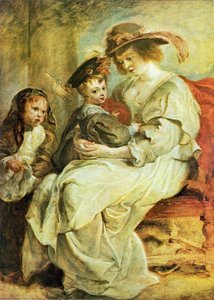
Sunlight streams through an open window, illuminating a scene of quiet domestic bliss—Peter Paul Rubens’s Helene Fourment with her Children , painted around 1636. This work—a cornerstone of our Top 10 artworks from the 17th century—is more than just a portrait; it's a celebration of family and a testament to Rubens’s mastery of color and emotion.
Rubens’s signature dynamism is present in every brushstroke, yet here it’s tempered with tenderness. The rich palette—deep reds, vibrant blues, and luminous golds—creates an atmosphere of warmth and opulence. Notice how sfumato , the subtle blurring of lines, lends a soft glow to the scene.
Today, Helene Fourment with her Children continues to inspire with its timeless beauty and emotional resonance. Its harmonious composition and vibrant colors make it a captivating focal point in any interior—a reminder that art can transform our spaces into sanctuaries of peace and connection.
Lord John Stuart and his Brother, Lord Bernard Stuart - Sir Anthony van Dyck
 Lord John Stuart and his Brother, Lord Bernard Stuart - Sir Anthony van Dyck
A quiet confidence emanates from Sir Anthony van Dyck’s Lord John Stuart and his Brother, Lord Bernard Stuart , painted around 1638. This striking double portrait—a cornerstone of our Top 10 artworks from the 17th century—is more than just a depiction of aristocratic elegance; it's a glimpse into a world of privilege, loyalty, and subtle tension.
Van Dyck’s masterful use of chiaroscuro bathes the composition in dramatic light, highlighting the brothers’ faces and rich attire. The deep reds, golds, and blues create an atmosphere of opulence and refinement. Notice how meticulous detail—from the luxurious fabrics to their carefully posed stances—conveys a sense of status and power.
Today, Lord John Stuart and his Brother continues to inspire with its timeless beauty and emotional depth. Its harmonious composition and vibrant colors make it a captivating focal point in any interior—a reminder that art can transform our spaces into sanctuaries of grace and contemplation.
Conclusion
As the light fades on these ten windows into the 17th century, we are left not with relics of a distant past, but with living presences—echoes of human emotion and artistic brilliance that continue to resonate across time. From the intimate gaze of Gentileschi’s Self Portrait to the familial warmth of Rubens’s Helene Fourment , these paintings remind us of our shared humanity, our enduring search for beauty, and the power of art to capture the fleeting moments that define a life.
These masterpieces are not merely canvases and oils; they are stories whispered across centuries, invitations to connect with the souls who created them—and to find within their work reflections of ourselves. At Most-Famous-Paintings.com , we believe in bringing these timeless treasures closer to you.
Each reproduction is lovingly hand-painted by skilled artists, honoring the original’s soul and detail with meticulous care. We invite you to experience the transformative power of art firsthand—to allow these masterpieces to grace your home, inspire your creativity, and become a part of your own story.
Explore our full collection and discover the artwork that speaks to your heart. Let us help you bring the beauty and wonder of the 17th century into your world, one brushstroke at a time.