

Introduction
Imagine stepping back in time to a world poised on the cusp of rebirth, where artistic conventions were beginning to crack and a new vision—one rooted in humanism, observation, and emotion—was starting to bloom. This is the world of the Proto-Renaissance, a period roughly spanning the late 13th and early 14th centuries in Italy. It wasn’t a sudden revolution, but rather a gradual shift away from the stylized forms of Byzantine art towards a more naturalistic representation of life.
For centuries, art had largely focused on conveying religious narratives through symbolic imagery and flattened perspectives. But as Italian city-states flourished—fueled by trade and intellectual exchange—artists began to look beyond established traditions. They drew inspiration from classical antiquity, rediscovered the principles of anatomy, and sought to capture the beauty and complexity of the human form. This burgeoning interest in the natural world coincided with a growing emphasis on individual experience and earthly concerns.
The Proto-Renaissance wasn’t just about technical skill; it was about a fundamental change in worldview. Artists like Cimabue, Duccio, and Giotto weren't simply replicating existing styles—they were laying the groundwork for the artistic explosion of the High Renaissance. Their works represent a pivotal moment in art history, bridging the gap between the medieval past and the modern era.
These masterpieces continue to resonate with us today not only for their aesthetic beauty but also for their profound humanity. They offer a glimpse into the minds and hearts of those who lived centuries ago—their faith, their fears, and their aspirations. The emotional depth, innovative techniques, and enduring stories within these paintings remind us of our shared human experience across time.
Over the following pages, we will embark on a journey through ten exceptional artworks that defined this transformative period. Prepare to be captivated by the groundbreaking visionaries who dared to challenge convention and paved the way for one of art history’s most celebrated movements.
Crucifix - Cimabue
 Crucifix - Cimabue
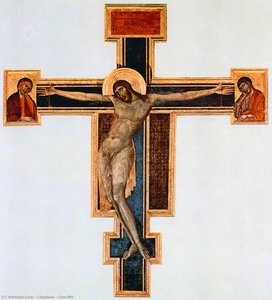
Cimabue’s “Crucifix,” painted in 1287, isn't merely a depiction of Christ’s sacrifice; it’s an encounter with profound sorrow rendered in the luminous hues of a world transitioning from Byzantine formality to Renaissance realism. This monumental work, one of his earliest attributed pieces, marks a pivotal moment in Italian art—a bridge between stylized religious iconography and the burgeoning humanism that would define the coming era.
What sets this crucifix apart is Cimabue’s subtle yet revolutionary approach to form. While retaining the rich golds and deep blues characteristic of Byzantine tradition, he imbues Jesus' figure with a nascent sense of weight and volume, foreshadowing the anatomical accuracy Giotto would later master. The flanking figures of Mary Magdalene and Saint John the Evangelist aren’t simply symbolic attendants; their expressions hint at genuine grief, drawing the viewer into the scene’s emotional core.
The “Crucifix” is a testament to Cimabue's skill in tempera on wood, showcasing meticulous detail in the rendering of drapery and skin tones. Its enduring power lies in this delicate balance—the reverence of the past harmonizing with the promise of a new artistic vision. Today, we see echoes of its solemn palette and dignified composition in contemporary design, from the muted tones of modern interiors to the emotive quality of figurative art.
As one of the Top 10 Masterpieces That Defined the ''Proto-Renaissance'' Art Movement , Cimabue’s “Crucifix” remains a powerful reminder of the artistic and spiritual shifts that shaped Western culture. It's a work that invites contemplation, bridging centuries with its timeless beauty and emotional resonance—a cornerstone in understanding early Renaissance painting and the evolution of Italian art history .
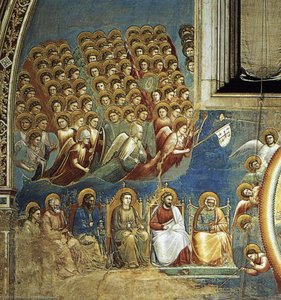
Last Judgment (detail 3) (Cappella Scrovegni (Arena Chapel), Padua) - Giotto di Bondone
Imagine standing within the Scrovegni Chapel, bathed in the soft light filtering through the windows, and encountering Giotto’s “Last Judgment (detail 3).” It isn't simply a fresco; it’s an overwhelming vision of divine power and human destiny unfolding before your eyes. This section from the larger narrative is a masterclass in emotional storytelling—a pivotal moment within one of the Top 10 Masterpieces That Defined the ''Proto-Renaissance'' Art Movement .
Giotto’s genius lies in his ability to imbue these figures with palpable weight and presence. The angels, rendered in vibrant blues and earthy tones, aren't ethereal beings but dynamic messengers of God’s will. Their flowing drapery and expressive gestures create a sense of movement and urgency, drawing the viewer into the cosmic drama. Notice how Giotto departs from the flat stylization of Byzantine art, using subtle shading to sculpt form and suggest depth.
The composition is densely packed yet remarkably balanced, guiding your eye through layers of saints and divine figures towards the central authority. The luminous gold halos signify holiness, while the overall palette evokes a sense of solemn reverence. Today, this same balance—the interplay of color, light, and form—can be found in contemporary interiors seeking to create spaces of calm contemplation.
More than just a religious depiction, Giotto’s “Last Judgment” is an exploration of the human condition—a powerful reminder of our mortality and the enduring search for meaning. It's a cornerstone of medieval art , paving the way for the Italian Renaissance painting and continuing to inspire awe centuries later.
No. 32 Scenes from the Life of Christ: 16. Christ before Caiaphas - Giotto di Bondone
 No. 32 Scenes from the Life of Christ: 16. Christ before Caiaphas - Giotto di Bondone
Close your eyes and imagine the flickering torchlight illuminating a tense chamber—the air thick with accusation, betrayal hanging heavy like smoke. This is the world Giotto di Bondone conjures in “No. 32 Scenes from the Life of Christ: 16. Christ before Caiaphas,” a pivotal fresco within the Cappella Scrovegni. More than just a biblical retelling, this scene represents a revolutionary leap towards naturalism and emotional depth—a cornerstone of the Top 10 Masterpieces That Defined the ''Proto-Renaissance'' Art Movement .
Giotto’s genius lies in his ability to stage drama. Caiaphas, visually elevated and tearing at his robes, embodies righteous indignation, while Christ's posture conveys a profound resignation that resonates across centuries. The single torch casts dramatic shadows, focusing our attention on the central figures and heightening the sense of claustrophobia. Notice how Giotto breaks from Byzantine convention, employing a nascent understanding of perspective to create a believable architectural setting.
The use of *chiaroscuro*—the interplay of light and shadow—adds volume and realism to the figures, making them palpably present. The muted palette, punctuated by flashes of red in Caiaphas’s garments, evokes a sense of solemnity and foreboding. Today, this same sensitivity to light and shadow can be found in contemporary interiors seeking to create spaces of quiet contemplation.
“Christ before Caiaphas” isn't simply about witnessing an event; it’s about experiencing the weight of betrayal and the stoic acceptance of fate—a testament to Giotto’s mastery of early Renaissance painting and a profound exploration of the human condition within the context of Italian art history .
Ognissanti Madonna (detail) - Giotto di Bondone
 Ognissanti Madonna (detail) - Giotto di Bondone
Imagine a moment of quiet reverence—a mother’s gaze filled with tenderness and strength, radiating a sense of both earthly compassion and divine grace. This is the essence Giotto di Bondone captures in the “Ognissanti Madonna (detail),” a work that irrevocably altered the course of Western art. Painted around 1310, this masterpiece isn't merely an icon; it’s a revolutionary statement—a daring departure from Byzantine stylization and a cornerstone of the Top 10 Masterpieces That Defined the ''Proto-Renaissance'' Art Movement .
Before Giotto, religious art often prioritized symbolic representation over naturalism. Here, Mary is portrayed with unprecedented realism and emotional depth—her form imbued with weight and volume, her gaze direct and engaging. Notice how Giotto employs a nascent understanding of perspective to create an illusion of space, drawing the viewer into the scene. The careful modeling of her drapery, rendered in rich blues and golds, conveys texture and movement.
This wasn’t simply about technical skill; it was about humanizing the divine—infusing religious imagery with a sense of empathy and connection. Today, this same desire for warmth and authenticity can be found in contemporary interiors seeking to create spaces of serenity and contemplation. The “Ognissanti Madonna” reminds us that art has the power to transcend time, offering moments of quiet beauty and profound emotional resonance.
As a pivotal work within early Renaissance painting , Giotto’s masterpiece continues to inspire awe—a testament to his genius and a lasting legacy in Italian art history .
Daedalus - Giotto di Bondone
 Daedalus - Giotto di Bondone
Feel the surge of ambition, the desperate yearning for freedom—a moment captured not in paint, but carved into enduring marble. Giotto di Bondone’s “Daedalus,” housed in Florence's Museo dell’Opera del Duomo, is more than a sculpture; it’s an embodiment of human aspiration and the inherent risks of innovation. This work stands as one of the Top 10 Masterpieces That Defined the ''Proto-Renaissance'' Art Movement , marking a pivotal shift towards naturalism and emotional depth.
Giotto masterfully conveys Daedalus’s internal struggle—the strain in his posture, the determined yet anxious expression on his face. The carefully rendered wings, symbols of both hope and potential downfall, are imbued with a palpable sense of movement. This wasn't simply about recreating a mythological tale; it was about exploring the complexities of the human condition.
The sculpture’s power lies in its ability to evoke empathy—to connect us with Daedalus’s desire for transcendence and his fear of failure. Today, this same pursuit of beauty and meaning can be found in our homes and offices—in the art we choose to surround ourselves with. At Most-Famous-Paintings, we believe that great art should be accessible, transforming spaces into personal sanctuaries filled with inspiration.
As a cornerstone of early Renaissance sculpture , Giotto’s “Daedalus” continues to resonate—a testament to his genius and a lasting legacy in Italian art history .
Navicella - Giotto di Bondone
 Navicella - Giotto di Bondone
Imagine standing before a canvas teeming with life—a boat adrift on turbulent waters, filled with figures representing the entirety of humanity. Giotto di Bondone’s monumental “Navicella,” originally intended for St. Peter’s Basilica, isn't merely a depiction of faith; it’s a profound allegory for the journey of life itself and one of the Top 10 Masterpieces That Defined the ''Proto-Renaissance'' Art Movement .
Giotto’s innovative use of oil on canvas—a relatively new medium at the time—allowed him to achieve a level of detail and emotional expressiveness previously unattainable. He breaks from Byzantine stylization, imbuing his characters with weight, volume, and palpable humanity. Notice how he arranges the figures within the vessel, creating a sense of community and shared experience.
The *Navicella*’s serene sky provides a counterpoint to the turbulent sea below—a visual metaphor for divine grace amidst earthly struggles. Today, this same balance—the interplay of calm and chaos—can be found in contemporary interiors seeking to create spaces of tranquility and reflection. The warm, earthy tones and dynamic composition evoke a sense of timeless beauty.
As a cornerstone of early Renaissance painting , Giotto’s “Navicella” continues to inspire awe—a testament to his genius and a lasting legacy in Italian art history .
View of the Peruzzi and Bardi Chapels (from right) - Giotto di Bondone
 View of the Peruzzi and Bardi Chapels (from right) - Giotto di Bondone
Unveiling Giotto di Bondone’s “View of the Peruzzi and Bardi Chapels (from right)” is akin to discovering a hidden jewel—a rare glimpse into the heart of 14th-century Florentine faith. This fresco, housed within the Museo dell'Opera di Santa Croce, isn’t merely a depiction of architecture; it’s a carefully constructed tableau vivant that captures the everyday rhythms and spiritual aspirations of its inhabitants—and rightfully earns its place among the Top 10 Masterpieces That Defined the ''Proto-Renaissance'' Art Movement .
Giotto’s genius lies in his ability to imbue this scene with a palpable sense of realism. Unlike the stylized figures of Byzantine art, his subjects possess weight and volume, drawing the viewer into the space. Notice how he employs techniques—converging lines, atmospheric perspective—to create an illusion of depth, making the church interior feel remarkably real.
The painting’s historical context is crucial; Florence in the early 14th century was a vibrant center of commerce and artistic innovation. Today, this same appreciation for detail, balance, and refined aesthetics can be found in contemporary interiors seeking to create spaces of quiet prestige and timeless beauty. The warm tones and intricate designs evoke a sense of enduring elegance.
As a cornerstone of early Renaissance painting , Giotto’s “View of the Peruzzi and Bardi Chapels” continues to inspire—a testament to his genius and a lasting legacy in Italian art history .
Scrovegni - [07] - The Birth of the Virgin - Giotto di Bondone
![Scrovegni - [07] - The Birth of the Virgin](/media/artworks/images/thumbnails/75/a9/75a93444bb604e28b6835580cee340d6.jpg) Scrovegni - [07] - The Birth of the Virgin - Giotto di Bondone
Scrovegni - [07] - The Birth of the Virgin - Giotto di BondoneA quiet intimacy radiates from Giotto di Bondone’s “The Birth of the Virgin,” a scene frozen in time within the breathtaking fresco cycle of the Scrovegni Chapel. This isn't merely an illustration of scripture; it’s a tender portrayal of human experience infused with divine significance—a work that rightfully claims its place among the Top 10 Masterpieces That Defined the ''Proto-Renaissance'' Art Movement .
Giotto masterfully grounds us in a simple, domestic setting. These aren’t ethereal figures; they are relatable individuals engaged in practical tasks and exhibiting genuine emotion. Notice how he employs *chiaroscuro*—the interplay of light and shadow—to model forms and create a sense of volume, giving his figures a three-dimensionality previously unseen in Italian painting.
The inclusion of everyday details—like the attentive dog nestled in the upper right corner—adds a remarkable sense of realism. Today, this same appreciation for detail and harmony can be found in contemporary interiors seeking to create spaces of quiet contemplation. The warm tones and intimate composition evoke a sense of enduring elegance.
As a cornerstone of early Renaissance painting , Giotto’s “The Birth of the Virgin” continues to inspire—a testament to his genius and a lasting legacy in Italian art history .
Bóveda de los Padres de la Iglesia - Giotto di Bondone
 Bóveda de los Padres de la Iglesia - Giotto di Bondone
Imagine standing beneath a celestial canopy—a vault teeming with figures engaged in contemplation and theological discourse. Giotto di Bondone’s “Bóveda de los Padres de la Iglesia” (Vault of the Church Fathers) isn't merely a painted ceiling; it’s a profound statement rendered with groundbreaking artistry, securing its place among the Top 10 Masterpieces That Defined the ''Proto-Renaissance'' Art Movement .
Though its precise original form remains debated, this fresco represents Giotto's innovative approach to spatial representation and narrative storytelling. Notice how he introduces a nascent sense of depth and volume—figures possess weight and dimensionality, appearing more grounded in reality than their Byzantine predecessors.
The arrangement isn’t haphazard; it’s carefully constructed to convey a sense of hierarchical order and spiritual connection. Today, this same appreciation for detail and harmony can be found in contemporary interiors seeking to create spaces of quiet contemplation. The warm tones and intricate designs evoke a sense of enduring elegance.
As a cornerstone of early Renaissance painting , Giotto’s “Bóveda de los Padres de la Iglesia” continues to inspire—a testament to his genius and a lasting legacy in Italian art history .
Nativity. Birth of Jesus - Giotto di Bondone
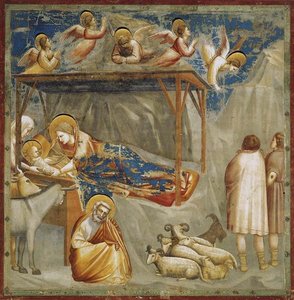 Nativity. Birth of Jesus - Giotto di Bondone
A hush falls over you as you encounter Giotto di Bondone’s *Nativity*, painted within the Scrovegni Chapel—a moment of quiet majesty rendered with unprecedented emotional depth. This isn't merely a depiction of Christ’s birth; it is a groundbreaking work that bridges the gap between stylized Byzantine tradition and the burgeoning naturalism of the Renaissance, rightfully earning its place among the Top 10 Masterpieces That Defined the ''Proto-Renaissance'' Art Movement .
Giotto boldly rejected convention, grounding his figures in space with rudimentary perspective—a revolutionary concept for the time. His use of *chiaroscuro* gives volume and weight to the forms, making them appear remarkably three-dimensional. Notice how Mary reclines, gazing tenderly at her newborn son, while Joseph observes with protective concern.
Every element carries symbolic weight—the donkey and sheep representing gentleness, innocence, and the pastoral setting of Jesus' arrival. Today, this same sense of humility and reverence can be found in contemporary interiors seeking to create spaces of quiet contemplation. The restrained colors and intimate composition evoke a feeling of enduring peace.
As a cornerstone of early Renaissance painting , Giotto’s *Nativity* continues to inspire—a testament to his genius and a lasting legacy in Italian art history .
Conclusion
As we conclude our journey through these ten defining works of the Proto-Renaissance, it’s not merely a farewell to paintings from centuries past—but rather an invitation to welcome them into the present. These masterpieces are not static relics; they are living presences that continue to move hearts and shape our understanding of beauty, faith, and the human condition.
Consider how Giotto's tender depictions of Mary and Jesus resonate with a universal longing for tenderness and grace—qualities we instinctively seek in our own homes. Or reflect on Duccio’s intricate details and vibrant colors, which evoke a sense of calm and sophistication that can transform any space into a sanctuary.
The legacy of the Proto-Renaissance extends far beyond museum walls. It lives within the balanced compositions, the subtle use of light and shadow, and the profound emotional depth that continue to inspire artists and designers today. These are not simply paintings; they are echoes of an eternal dialogue between art and everyday life—a reminder that beauty has the power to heal, provoke, and transform.
We invite you to explore the full collection and discover the timeless treasures that await. Perhaps one of these masterpieces will find a place within your own home—a quiet source of inspiration and wonder for years to come.