Early Life and Background
- Born: August 20, 1845, Igołomia, Poland
- Died: December 25, 1916, Kraków, Poland
- Full Name: Adam Hilary Bernard Chmielowski (also known as Albert Chmielowski)
- Born into a szlachta family (Polish nobility), his parents were Wojciech Chmielowski and Józefa Borzysławska.
- Received home schooling initially, followed by studies at the Puławy Polytechnic Institute focusing on agroforestry.
- Early life marked by tragedy with the loss of both parents during his adolescence.
The January Uprising and Artistic Development
- Actively participated in the January Uprising of 1863, demonstrating a strong commitment to Polish independence.
- Sustained severe injuries during a battle on October 1, 1863, resulting in the amputation of his left leg.
- Following the uprising, he spent time in Ghent, Belgium, where he resumed engineering studies and discovered his talent for painting.
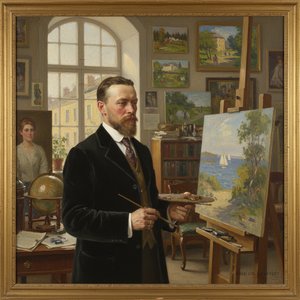
- Studied at the Royal Academy of Fine Arts in Munich, developing his artistic skills under professors Alexander Strähuber and Herman Anschütz.
- His art reflected both realism and a growing spiritual depth, often incorporating religious themes.
Major Works and Artistic Style
- Ecce Homo: Considered his most celebrated work, showcasing exceptional skill and reflecting his faith. Currently housed in the chapel of the Albertine Sisters in Kraków.
- Other notable works include Po pojedynku ("After the Duel"), Dziewczynka z pieskiem ("Little girl with a dog"), Cmentarz ("Cemetery"), Dama z listem ("Lady with a letter"), and Zachód słońca ("Sunset").
- His artistic style is characterized by realism, portraying subjects with emotional depth and social commentary.
- Influenced by the artistic circles in Munich, including befriending artists like Józef Brandt, Maksymilian Gierymski, and Aleksander Gierymski.
Founding of Religious Orders and Later Life
- After abandoning painting, Chmielowski dedicated his life to serving the poor and homeless.
- Founded both the Albertine Brothers (Servants of the Poor) in 1887 and the Albertine Sisters in 1891.
- These orders provided shelter, food, and care for those in need, regardless of their background or religion.
- His commitment to social justice and compassion earned him widespread respect and admiration.
Legacy and Canonization
- Canonized as Saint Albert Chmielowski by Pope John Paul II on November 12, 1989.
- Recognized for his unwavering faith, artistic talent, dedication to the poor, and founding of religious orders.
- His life serves as an inspiration for artists, social workers, and individuals seeking to make a positive impact on society.
- His story highlights the power of perseverance in overcoming adversity and dedicating one's life to serving others.