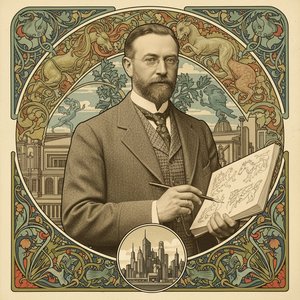
Pablo Picasso: A Revolutionary Life in Color and Form
Pablo Picasso, a name synonymous with artistic innovation and boundless creativity, remains one of the most recognizable figures in art history. Born in Málaga, Spain, on October 25, 1881, into a family deeply rooted in the world of art – his father, José Ruiz y Blasco, was a respected drawing teacher and museum curator – Picasso’s journey was marked by relentless experimentation, profound personal experiences, and an unwavering commitment to pushing the boundaries of artistic expression. His life wasn't simply about painting; it was a dynamic interplay between love, loss, political upheaval, and a constant striving for new ways of seeing and representing the world.
Early Years and Artistic Foundations
Picasso’s childhood in Málaga provided a rich foundation for his artistic development. Surrounded by art – his father's studio was a constant source of inspiration – he began drawing at an incredibly young age, reportedly as early as the age of three. His father recognized his son’s talent and nurtured it, providing him with formal training and introducing him to the world of art. However, Picasso’s rebellious nature and aversion to traditional schooling led him to pursue his artistic passions independently. He spent much of his youth sketching pigeons, bullfighters, and scenes from everyday life in Málaga and later in La Coruña, where his father was transferred for work in 1891.
- The Trauma of Loss: The death of his younger sister, Conchita, in 1895 profoundly impacted Picasso. This event is often cited as a catalyst for the “Blue Period” that followed, characterized by melancholic and somber tones reflecting themes of grief and isolation.
- Formal Training: Despite his reluctance towards formal education, Picasso enrolled in the Escuela de Bellas Artes de San Fernando in La Coruña at age 13. He found the rigid curriculum stifling but continued to hone his skills, experimenting with various media like pastels and pencils.
The Rise of Cubism and Artistic Breakthroughs
Picasso’s artistic trajectory took a dramatic turn in 1907 with the creation of *Les Demoiselles d'Avignon*, a painting that is widely considered to be the cornerstone of Cubism. This groundbreaking work, exhibited in Paris, shattered conventional notions of perspective and representation, introducing fragmented forms, multiple viewpoints, and an emphasis on geometric shapes. Alongside Georges Braque, Picasso developed Cubism – initially Analytical Cubism, characterized by breaking down objects into their constituent parts and presenting them from multiple angles simultaneously – and later Synthetic Cubism, which incorporated elements like collage and newspaper clippings into the artwork.
- Influences: Picasso’s artistic development was influenced by a diverse range of sources, including Paul Cézanne's emphasis on geometric forms, African masks and sculptures (which he encountered during his travels to Spain), and the works of Iberian and Proto-Cuban art.
- Key Works: Beyond *Les Demoiselles d’Avignon*, other pivotal works from this period include *Guernica* (1937), a powerful anti-war statement depicting the bombing of Guernica during the Spanish Civil War, and numerous portraits that explored themes of love, loss, and identity.
A Life of Passion and Artistic Evolution
Picasso’s personal life was as dynamic and complex as his artistic output. He had a series of intense relationships with women – Fernande Olivier, Olga Khokhlova, Marie-Thérèse Walter, Dora Maar, and Françoise Gilot – each leaving an indelible mark on his work. These relationships fueled his creativity but were often marked by passion, jealousy, and heartbreak. His artistic style continued to evolve throughout his long career, encompassing a vast range of techniques and styles, from the expressive brushstrokes of his early works to the more controlled and geometric forms of his later paintings.
- Diverse Styles: Picasso’s oeuvre spans numerous periods, including the Blue Period, Rose Period, African-influenced period, Surrealist phase, and Neoclassical revival.
- Political Activism: Throughout his life, Picasso engaged with political issues, most notably through *Guernica*, which became a symbol of anti-war sentiment. He also aligned himself with the Republican cause during the Spanish Civil War and later supported the French Resistance during World War II.
Legacy and Enduring Influence
Pablo Picasso died on April 8, 1973, in Mougins, France, leaving behind an unparalleled artistic legacy. His innovative techniques, groundbreaking ideas, and prolific output have profoundly influenced generations of artists across a wide range of disciplines. He is considered one of the most important figures in modern art, and his works continue to be celebrated and studied worldwide. Picasso’s ability to challenge conventions, experiment with new forms, and express profound emotions through his art ensures that he will remain an enduring icon of creativity and artistic genius for centuries to come.