Gabriel Portillo Del Toro: A Legacy of Color and Geometric Form
Gabriel Portillo del Toro (1927 – 2013) stands as a pivotal figure in Mexican muralism, embodying the spirit of Cubist influence while simultaneously grounding his artistic vision within the rich tapestry of Colima’s cultural heritage. His oeuvre transcends mere visual representation; it's an exploration of form and color—a deliberate dialogue with modernist principles tempered by regional traditions—that continues to resonate with collectors and scholars alike.Early Life and Artistic Formation
Born in Colima, Mexico, Portillo del Toro’s artistic journey began modestly, nurtured by a deep appreciation for Mexican folklore and indigenous art forms. He honed his skills initially through self-taught experimentation before pursuing formal studies at the Universidad Nacional Autónoma de México (UNAM), where he absorbed the teachings of prominent muralists like José Clemente Orozco and Diego Rivera—artists who championed social realism as a vehicle for conveying national identity. This formative period instilled in him a commitment to artistic integrity and a profound understanding of the role of art in shaping collective consciousness.The Influence of Cubism
Like many artists of his generation, Portillo del Toro was captivated by the revolutionary aesthetic of Cubism pioneered by Pablo Picasso and Georges Braque. He embraced the fragmentation of perspective and the simultaneous depiction of multiple viewpoints—techniques that allowed him to capture not only visual appearances but also underlying spatial relationships. This stylistic choice is evident throughout his extensive body of work, where geometric shapes dominate compositions, creating a dynamic interplay between abstraction and representation.Notable Murals and Artistic Achievements
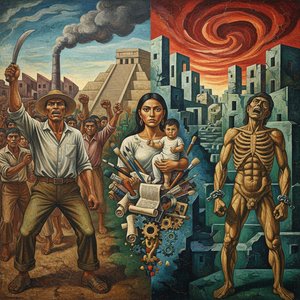
Portillo del Toro’s artistic reputation solidified through his monumental murals adorning public spaces across Mexico. Among his most celebrated creations are “El Hombre Nuevo,” commissioned for the Museo Estatal de Ciencias Naturales Cristóbal Colón in Veracruz, and “La Revolución Mexicana,” executed on the façade of the Universidad Tecnológica de Monterrey. These murals exemplify Portillo del Toro’s masterful command of color and form—bold hues juxtaposed against precise geometric patterns—and serve as powerful visual narratives documenting key moments in Mexican history. His paintings, characterized by similar stylistic considerations, explore themes of human dignity and social justice, reflecting his humanist convictions.Legacy and Recognition
Gabriel Portillo del Toro’s contribution to Mexican art is undeniable. He received numerous accolades throughout his career, including the Premio Nacional de Artes Plásticas, cementing his place as one of Colima's most respected artists. His work continues to inspire younger generations of painters and sculptors, demonstrating the enduring power of artistic innovation rooted in tradition. Portillo del Toro’s legacy resides not only in his impressive visual output but also in his unwavering dedication to fostering artistic education and promoting cultural understanding—a testament to his belief that art possesses the capacity to transform society and enrich human experience.Further Exploration
For more information on Gabriel Portillo Del Toro's life and work, consult resources such as:- Wikipedia: https://en.wikipedia.org/wiki/Gabriel_Portillo_del_Toro