Helen Winslow Durkee: A Brooklyn Artist's Delicate Touch
Helen Winslow Durkee (1880–1954) emerged from the vibrant artistic landscape of Brooklyn, New York City, establishing herself as a respected portrait miniaturist and still life painter. Her formative years were marked by enrollment at Smith College, where she honed her intellectual curiosity alongside her burgeoning artistic talent—a foundation that would prove invaluable throughout her career. Returning to New York after graduation, Durkee pursued formal training at the Art Students League from 1910 to 1918, immersing herself in a milieu of influential instructors who championed diverse artistic approaches. Among these were William Merritt Chase, Frank Vincent Dumond, George Bridgman, F. Luis Mora, Kenneth Hayes Miller, and Dmitri Romanoffsky—artists whose teachings profoundly shaped Durkee’s stylistic sensibilities. Notably, she served as the League's Women’s Vice-President from 1911 to 1918, demonstrating her commitment to fostering artistic collaboration and advancement within the community.
Durkee’s artistic journey began around 1907, characterized by consistent exhibitions that showcased her evolving style and garnered critical acclaim. She was a dedicated member of organizations like the American Society of Miniature Painters and the Pennsylvania Society of Miniature Painters, alongside the National Association of Women Painters and Sculptors—associations that underscored her dedication to elevating the status of women in the art world. Her scholarship prize during her time at the Art Students League served as an early recognition of her potential, while the Charlotte Ritchie Smith Memorial Prize from the Baltimore Watercolor Club in 1921 solidified her reputation as a skilled watercolorist. Furthermore, honorable mentions appeared elsewhere, acknowledging Durkee’s artistic merit and establishing her presence within the broader art community.
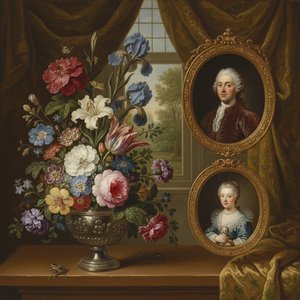
A poignant chapter unfolded during World War I when Durkee bravely volunteered for service with the YMCA canteen unit stationed in France—a testament to her compassion and willingness to contribute to the war effort. Upon returning home, she married Christopher John Mileham, an officer who had served alongside her in France with the British Expeditionary Forces, forging a partnership rooted in shared experiences and mutual admiration. Her artistic output continued throughout her life, producing evocative miniature portraits—including one unforgettable depiction of her uncle, William Wills Durkee—which now reside within the Metropolitan Museum of Art. Similarly, her still lifes, such as “White Onions” and “In the Studio,” exemplify her masterful command of texture and color, capturing fleeting moments of beauty with remarkable precision. These works stand as enduring reminders of Durkee’s artistic legacy and her contribution to American art history.