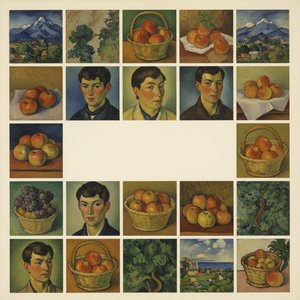
A Legacy of Vision: The Life and Art of Ivor Williams
Ivor Williams (1908–1982) remains a pivotal figure in the tapestry of Welsh art history, a painter whose work served as a bridge between the enduring traditions of Impressionism and a profound engagement with the monumental narratives of faith and national identity. Born in London to the celebrated Welsh painter Christopher Williams and Emily Appylard, Ivor was immersed in a rich, creative atmosphere from his earliest days. This lineage provided more than just a connection to heritage; it offered a foundational understanding of the artist's role in society. His formal education at the Central School of Art and Design and the prestigious Slade School of Art refined his technical mastery, instilling in him a capacity for meticulous observation paired with an expressive, emotive brushwork that would become his hallmark. The evolution of Williams’ style was deeply intertwined with his personal convictions and familial connections. Influenced by the Quaker values of simplicity, compassion, and social responsibility, his work often transcended mere decoration to touch upon the spiritual and the communal. His artistic journey was also a collaborative one; working alongside his father, he developed a remarkable talent for large-scale figure compositions and portraiture. This period of his life was marked by an ambitious pursuit of subjects that demanded both technical precision and emotional depth, ranging from intimate portraits to sweeping biblical scenes that breathed life into ancient texts through a modern lens.Mastery of Scale and Commemorative Grandeur
Williams possessed a rare ability to capture the weight of history through his monumental commissions. He was frequently called upon to document moments of immense national significance, translating fleeting historical events into permanent visual legacies. His canvases did not merely record facts; they captured the atmosphere of an era. Notable among these achievements were his depictions of high-profile official celebrations, such as the profound moment Field Marshal Montgomery received the Freedom of Newport in 1945, and the solemn dignity of Sir Winston Churchill’s honors at Cardiff City Hall. These works required a sophisticated command of composition to manage large groups of figures while maintaining a sense of individual character and historical gravity. Beyond the political and the official, Williams found profound inspiration in the sacred. His biblical paintings stand as some of his most enduring contributions to the art world, utilizing light and shadow to evoke the divine within the human experience. Through these works, he explored themes of struggle, redemption, and grace, making complex theological narratives accessible through a visual language that felt both timeless and contemporary. This duality—the ability to move seamlessly between the secular importance of state ceremonies and the spiritual depth of religious iconography—is what defines his unique position in the British art canon.A Lasting Impression on Welsh Identity
The significance of Ivor Williams extends far beyond the borders of his individual canvases; he was a vital contributor to the cultural fabric of Wales. His frequent exhibitions at prestigious institutions, including the Royal Academy, the New English Art Club, and the Royal Society of British Artists, brought Welsh artistic excellence to a much broader stage. Furthermore, his presence in the Royal National Eisteddfod of Wales solidified his role as a custodian of Welsh heritage. His life was also a testament to a multi-generational commitment to the arts, as seen through his family, including his daughter Annie Williams, an accomplished artist in her own right. To study the work of Ivor Williams is to witness a lifelong dedication to excellence and a deep-seated love for his subject matter. His legacy is found in:- The technical brilliance of his large-scale figure compositions that capture the essence of historical figures.
- The spiritual resonance of his biblical works which bridge the gap between tradition and modernity.
- The enduring importance of his commemorative paintings that serve as visual archives for Welsh history.
- A stylistic approach that honors the Impressionist tradition while embracing a uniquely personal, visionary perspective.