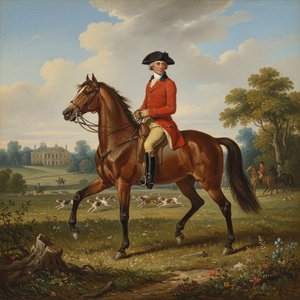
Johann Alexander Thiele: A Painter of Saxon Landscapes
Johann Alexander Thiele (1685-1752) stands as a pivotal figure in the artistic landscape of 18th Century Saxony, celebrated primarily for his breathtaking depictions of mountainous vistas and serene coastal scenes. Born in Erfurt, Germany, he embarked on an apprenticeship in printing before marrying Arnstadt and relocating to Dresden in 1715—a move that would profoundly shape his artistic trajectory. Unlike many artists of his era who pursued grand commissions or aristocratic patronage, Thiele cultivated a largely autodidactic style, honing his skills through observation and experimentation rather than formal academic training.
- Early Influences & Apprenticeship: Thiele’s formative years were marked by an intensive apprenticeship under Johann Christoph Ludwig Agricola, a renowned botanist and engraver whose meticulous attention to detail undoubtedly instilled in him a disciplined approach to artistic representation.
- Dresden & Collaborations: Dresden became his creative hub where he skillfully copied old paintings—a technique common at the time—and briefly collaborated with Adam Manyoki, a prominent artist known for his theatrical productions. However, Thiele’s artistic vision remained firmly rooted in independent exploration.
A Master of Landscape Painting
Thiele's reputation rests upon his extraordinary landscapes, which capture the grandeur and subtlety of Saxony’s natural beauty. His canvases are characterized by a masterful blend of tonal gradation—a technique championed by Rembrandt—and precise compositional structuring, reflecting the Baroque aesthetic prevalent during his lifetime. He achieved particular renown for his depictions of the Ore Mountains and Mount Oybin, commissioned by Jacob Heinrich von Flemming, Saxony's Minister of War, cementing his place as one of the foremost landscape painters of the period. These paintings are not merely scenic representations; they convey a palpable sense of atmosphere and emotion, inviting viewers into immersive experiences of mountainous grandeur.
- Royal Patronage & Artistic Recognition: Thiele’s artistic endeavors gained considerable acclaim when he was appointed court painter to Günther III., Prince of Schwarzburg-Sondershausen. Subsequently, he served the courts of Braunschweig and Kassel, demonstrating versatility and adapting his style to diverse commissions.
- The Flemming Commission & Artistic Innovation: The monumental commission undertaken for Flemming—producing four panoramic views of the Ore Mountains—represents a pinnacle of Thiele’s artistic achievement. This project demanded exceptional technical skill and compositional daring, resulting in artworks that stand as testaments to his mastery of tonal painting and landscape perspective.
Legacy & Influence
Christian Ludwig von Hagedorn's biography of Thiele—though currently unavailable—provides invaluable insight into the artist’s life and artistic philosophy. Notably, Johann Friedrich Alexander Thiele, his son, followed in his father’s footsteps as a landscape painter, perpetuating the Thiele tradition of capturing Saxon landscapes with unwavering dedication to observation and artistic excellence. His work continues to inspire admiration for its serene beauty and technical precision—a lasting contribution to the history of German art.
- Notable Works: Among his most celebrated paintings are “View of Dresden from the Loessnitz Heights,” “Oaks at the Sea Shore,” and “The Upland near Bern”—each showcasing Thiele’s distinctive style and capturing the essence of Saxon topography.
Concluding Remarks
Johann Alexander Thiele's legacy extends beyond his individual paintings; he embodies a commitment to artistic integrity and a profound appreciation for the natural world—values that resonate powerfully with contemporary audiences. His landscapes remain treasured emblems of Saxony’s heritage, reminding us of the enduring power of art to convey beauty, emotion, and intellectual contemplation.