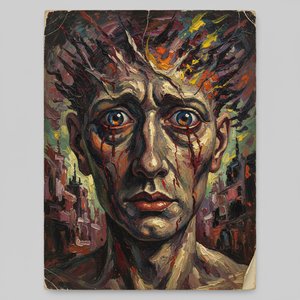
Vincent van Gogh: A Life Forged in Color and Emotion
Vincent van Gogh, born on March 30, 1853, in Groot Zundert, Netherlands, remains one of the most recognizable and profoundly influential figures in the history of Western art. Though his life was tragically short – he died in Auvers-sur-Oise, France, in July 1890 at the age of 37 – the sheer volume and emotional intensity of his work established him as a revolutionary artist whose impact continues to resonate today. His journey from a struggling preacher’s son to a celebrated painter is a compelling narrative interwoven with personal turmoil, artistic experimentation, and an unwavering dedication to capturing the world around him in vibrant color and expressive brushstrokes.
Early Life and Influences (1853-1886)
Van Gogh's early life was marked by a sense of restlessness and a search for purpose. He initially pursued a career as an art dealer, traveling throughout the Netherlands and Belgium, encountering various artistic circles and absorbing diverse influences. These experiences proved pivotal in shaping his nascent artistic sensibilities. Crucially, he spent time working at Goupil & Cie, a prominent art dealership, which exposed him to a wide range of artworks and artists, including those of Impressionists like Claude Monet and the Post-Impressionist movement gaining traction in Paris. The influence of Japanese woodblock prints – meticulously collected by himself and his brother Theo – is particularly evident in his later work, contributing to bold outlines, flattened perspectives, and an appreciation for decorative patterns. His early works, predominantly still lifes and depictions of peasant laborers, reflect a desire to portray the dignity and hardship of everyday life, often rendered with somber tones indicative of his personal struggles.
Parisian Experimentation and Artistic Transformation (1886-1888)
In March 1886, Van Gogh moved to Paris, a decision that proved transformative for his artistic development. The vibrant Parisian art scene – teeming with artists like Toulouse-Lautrec, Emile Bernard, and Paul Gauguin – provided an unprecedented stimulus to his creativity. He embraced the Impressionist techniques of broken color and capturing fleeting moments of light, but quickly sought to move beyond mere imitation. He experimented with brighter palettes, looser brushwork, and a more expressive approach to depicting subjects. This period saw a shift from the muted tones of his earlier work towards increasingly bold colors and dynamic compositions. Notably, he suffered a severe mental breakdown during this time, culminating in the infamous incident where he mutilated part of his own ear – an event that tragically underscored his internal struggles.
The Southern Years: Arles and Saint-Rémy (1888-1890)
Seeking respite from the pressures of Paris, Van Gogh relocated to Arles in Provence in 1888, hoping to establish an artist’s colony. This period marked a peak in his creative output, producing some of his most iconic works, including *Sunflowers*, *Bedroom in Arles*, and numerous landscapes capturing the beauty of the Provençal countryside. However, his time in Arles was fraught with tension, culminating in a violent confrontation with Paul Gauguin that led to Van Gogh’s voluntary confinement at the Saint-Paul-de-Mausole asylum near Saint-Rémy. Despite his mental health challenges, he continued to paint prolifically during this period, producing intensely emotional and psychologically charged works like *The Starry Night* (painted while in the asylum) and *Wheatfield with Crows*.
Legacy and Historical Significance
Vincent van Gogh’s tragically short career belied a profound impact on the course of art history. Initially overlooked during his lifetime, his work gained recognition posthumously, becoming one of the most beloved and widely reproduced in the world. He is considered a pivotal figure in the transition from Impressionism to Expressionism, paving the way for artists who sought to convey subjective emotions and inner experiences through their art. His innovative use of color, dynamic brushwork, and emotionally charged subject matter continues to inspire artists today. His story—a testament to both artistic genius and profound personal suffering—serves as a poignant reminder of the power of art to illuminate the human condition. Van Gogh’s legacy extends beyond his paintings; he is now recognized as an icon of modern art, embodying themes of passion, struggle, and the relentless pursuit of creative expression.