Miguel Ángel Battegazzore (1942-2010): A Pioneer of Uruguayan Geometric Abstraction
Miguel Ángel Battegazzore emerged as a prominent figure in Uruguay’s artistic landscape during the mid-20th century, leaving an indelible mark on the nation's visual culture. Born in Montevideo in 1942, he honed his craft at the Escuela Nacional de Bellas Artes, absorbing the stylistic currents of Uruguayan modernism and particularly influenced by Joaquín Torres García – a movement that championed geometric abstraction as a vehicle for exploring fundamental concepts.
- Early Life & Artistic Formation: Battegazzore’s formative years were marked by intense intellectual curiosity and engagement with avant-garde ideas. Studying under Miguel Ángel Pareja, he embraced the Escuela Nacional's ethos of experimentation and critical inquiry.
- European Travels & Influences: Recognizing the importance of broadening artistic horizons, Battegazzore embarked on extensive journeys throughout Europe in 1961, immersing himself in diverse cultural contexts and absorbing inspiration from European avant-garde movements. His travels extended to Africa in 1962 and subsequently to Latin American countries in 1967, fostering a multifaceted understanding of artistic traditions.
- Academic Career & Pedagogical Contributions: Battegazzore’s dedication to nurturing talent shone through his role as instructor at various institutions – including the Escuela Nacional de Bellas Artes, Enseñanza Secundaria, Instituto de Profesores Artigas, Facultad de Humanidades y Ciencias de la Universidad de la República. He championed a humanist approach to art education, emphasizing creativity and intellectual rigor.
- Theater & Audiovisual Projects: Beyond painting, Battegazzore’s artistic versatility extended into theatrical design and filmmaking. His collaborations with Montevideo theaters – Teatro Odeón, Teatro Solís and SODRE – showcased his ability to translate conceptual ideas into compelling visual narratives. Notable audiovisual projects included “Torres García” (1975), “Signo y color”, (1976), “El Grito” (1977) and “Hoy por hoy Latinoamérica” (1977).
- Recognition & Legacy: Battegazzore’s artistic achievements garnered considerable acclaim, culminating in the prestigious Figari Award – a testament to Uruguay's commitment to supporting visual artists. His work was exhibited internationally at institutions like Butler Institute of American Art and Syracuse University Art Collection, solidifying his position as a key figure in Uruguayan art history.
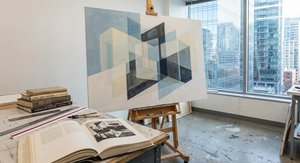
Battegazzore’s artistic style revolved around geometric abstraction—primarily utilizing circles, squares, and triangles—to generate dynamic compositions that probed the relationship between color and space. His canvases pulsed with vibrant hues, reflecting the influence of Uruguayan modernism and the pioneering spirit of Joaquín Torres García.