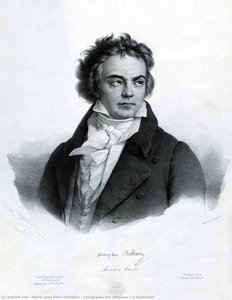
Pierre Louis Henri Grévedon: A Russian Landscape Painter’s Delicate Touch
Pierre Louis Henri Grévedon (g.grevedon), born in Paris in 1776, emerged as a significant figure in French art during the Napoleonic era and beyond—a painter deeply rooted in classical tradition yet captivated by the burgeoning Romantic spirit of his time. His artistic journey spanned across Europe, from the ateliers of Jean Baptiste Regnault to the vibrant landscapes of Russia, leaving behind a legacy characterized by meticulous detail and an understated elegance that continues to resonate with art historians today.
- Early Life & Training:
Grévedon’s formative years were spent under the tutelage of Jean Baptiste Regnault, a celebrated neoclassical painter known for his monumental depictions of scientific subjects. This grounding in academic principles instilled within him a disciplined approach to observation and representation—a cornerstone of his subsequent artistic endeavors.
- Move to Russia & Artistic Flourishing:
In 1804, Grévedon embarked on an ambitious expedition eastward, establishing himself in St Petersburg where he quickly gained recognition for his landscapes. The Russian court commissioned numerous portraits and panoramas showcasing the grandeur of imperial Russia—works imbued with a remarkable sensitivity to light and atmosphere. His artistic output during this period reflects not only technical mastery but also a profound engagement with the cultural milieu of the time.
- British Engagement & Continued Exploration:
Recognizing the opportunities afforded by London’s artistic community, Grévedon relocated to England in 1816. Here he honed his skills as a miniaturist and studied the works of Sir Thomas Lawrence—a deliberate effort to absorb influences from the dominant portraiture style of the British Romantic movement.
- Return to France & Recognition:
Grévedon’s return to Paris in 1816 marked a period of renewed artistic productivity. He continued to exhibit his paintings regularly at the Salon, securing acclaim for his landscapes and portraits alike—demonstrating an unwavering commitment to artistic excellence throughout his life.
- Legacy & Influence:
Grévedon’s meticulous technique—characterized by subtle gradations of color and painstaking attention to textural detail—established him as a master of the landscape genre. His paintings exemplify the Romantic ideal of capturing sublime beauty with understated grace, influencing subsequent generations of artists who sought to emulate his refined aesthetic sensibilities. He was awarded the Légion d'honneur for his contributions to the arts, cementing his place in French artistic history.
Grévedon’s oeuvre includes notable works such as “Miss Etienne-Mona-Lisa Cunégonde Silly Goose of the Constitutionnel,” a captivating panorama depicting Anthony’s triumph over Scipio Africanus at Cannae—a scene rendered with remarkable precision and imbued with an emotional depth that transcends mere visual representation. Alongside this monumental undertaking, Grévedon produced numerous smaller portraits capturing the likenesses of prominent figures—including Empress Catherine II and Emperor Alexander I—demonstrating his versatility as a painter and his ability to convey nuanced psychological characterizations.
Furthermore, Grévedon collaborated extensively with Honoré Victorin Daumier on lithographic prints exploring social commentary and theatrical scenes—a testament to his adaptability and willingness to engage with diverse artistic mediums. His prints offer invaluable insights into the cultural anxieties of the era and stand as enduring reminders of Daumier’s satirical genius.
His paintings reside in prestigious collections worldwide, including The Art Institute of Chicago and The British Museum, ensuring that Grévedon's artistic vision continues to inspire admiration and scholarly inquiry for decades to come.