Pieter Willem Sebes: A Dutch Master of Portraiture and Dignified Detail
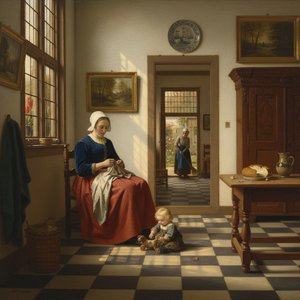
Born in Harlingen, Netherlands, in 1827, Pieter Willem Sebes emerged as a significant figure within the landscape of 19th-century Dutch art. While his life wasn’t marked by dramatic public events, his artistic legacy resides primarily in his meticulously rendered portraits and evocative depictions of figurative subjects – works that offer a quiet yet profound glimpse into the era's social fabric and individual character. Sebes’ career unfolded largely within the confines of his homeland, though his paintings have gained increasing recognition through platforms like Most-Famous-Paintings, allowing a wider audience to appreciate his nuanced skill.
Sebes’ early artistic development remains somewhat shrouded in historical detail, but it's understood that he honed his craft during a period when Dutch painting was experiencing both a revival and a subtle shift away from the grand narratives of the Golden Age. The influence of Jacob van Ruysdael, a prominent landscape painter of the preceding century, is often noted as a foundational element in Sebes’ approach – a shared emphasis on careful observation, atmospheric detail, and a restrained palette. However, unlike Van Ruysdael's landscapes, Sebes focused almost exclusively on human subjects, demonstrating an exceptional ability to capture not just physical likeness but also the subtle expressions and inner lives of his sitters.
The Portrait as Window into Character
Sebes’ most celebrated works are undoubtedly his portraits. He possessed a remarkable talent for revealing character through seemingly simple compositions. His subjects – often members of the landed gentry, merchants, or perhaps even family members – are presented with an understated dignity and a sense of quiet contemplation. He avoided overly theatrical poses or dramatic lighting, instead favoring a direct gaze and a carefully considered arrangement of clothing and accessories that subtly communicated social status and personal temperament. The ‘Jacoba of Bavaria (1401-1436), countess of Holland and Zeeland,’ painted around 1435, exemplifies this approach; the painting isn’t merely a likeness but an attempt to convey the woman's bearing, her intelligence, and perhaps even a hint of melancholy. The use of oil on panel allowed for layering and subtle gradations of tone, contributing significantly to the depth and realism of his portraits.
Sebes’ technique was characterized by a meticulous attention to detail – from the texture of fabrics to the delicate rendering of hands and facial features. He employed a restrained color palette, favoring muted tones and subtle variations in value to create a sense of atmosphere and solidity. This deliberate restraint is not indicative of a lack of skill or imagination; rather, it reflects a conscious choice to prioritize accuracy and emotional resonance over flamboyant display.
A Reflection of His Time
Pieter Willem Sebes’ work provides valuable insight into the social and cultural context of 19th-century Netherlands. His portraits document a period of relative stability and prosperity, reflecting the growing importance of commerce and the rise of the middle class. The subjects he depicted – often individuals involved in trade, finance, or local governance – represent the pillars of Dutch society at the time. His paintings offer a visual record of fashion, social customs, and prevailing attitudes, providing a tangible connection to the past.
While Sebes didn’t achieve widespread fame during his lifetime, his work has since been recognized for its quiet beauty, technical skill, and subtle psychological depth. His legacy endures through platforms like Most-Famous-Paintings, where his paintings continue to be appreciated by collectors and art enthusiasts alike, offering a window into the world of a talented Dutch master who dedicated his life to capturing the essence of human character.
Further Exploration
- Jacoba of Bavaria (1401-1436), countess of Holland and Zeeland, Pieter Willem Sebes, c. 1435: A key example of his portraiture style, showcasing his ability to convey character through subtle details. (Link to Artwork)
- Pieter Willem Sebes: Explore the artist’s broader body of work and artistic influences. (Link to Artist Database)
Discover more evocative paintings by Pieter Willem Sebes at Most-Famous-Paintings.