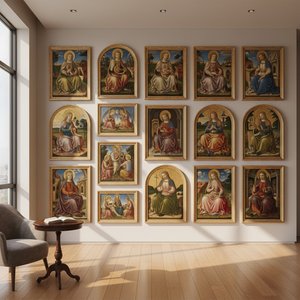
Pseudo Pier Francesco Fiorentino: A Florentine Madonna Maker
Pier Francesco Fiorentino (c. 1444 – after 1497), a name shrouded in scholarly debate, remains an enigmatic figure within the vibrant tapestry of Renaissance Florence. Despite limited surviving documentation—primarily attributed to Berenson’s astute observation—scholarly research suggests he was a prolific painter active during the mid-to-late fifteenth century, primarily focused on devotional imagery centered around depictions of Mary and Child. His artistic legacy is cemented by collaborations with Sandro Botticelli and Giovanni Battista Ghirlandaio, marking him as an important participant in the artistic milieu of his time.
### Early Life and Artistic Training
Information regarding Fiorentino’s formative years remains scarce. He was born in Florence, Italy—a city brimming with artistic innovation during this period—likely inheriting a tradition of craftsmanship from his father, Francesco Fiorentino, who served as a sculptor for Lorenzo de Medici. While precise details about his formal training are elusive, Florentine art academies fostered the development of talent and encouraged stylistic experimentation. It’s believed that Fiorentino honed his skills under the tutelage of Andrea Mantegna and Piero della Francesca, absorbing influences from these masters known for their meticulous realism and humanist ideals.
### Artistic Style and Technique
Fiorentino's distinctive style is characterized by a serene elegance and masterful execution—traits evident in numerous Madonna and Child paintings that bear testament to his artistic prowess. He favored a refined palette dominated by muted hues—particularly blues, greens, and golds—creating atmospheric compositions imbued with spiritual depth. His brushwork was meticulous, demonstrating an exceptional command of chiaroscuro (light and shadow), enhancing the sculptural quality of figures and conveying emotional nuance. Notably, Fiorentino’s paintings often incorporate symbolic elements reflecting medieval devotional traditions alongside humanist sensibilities. The Virgin Mary is frequently portrayed in graceful poses—often seated or kneeling—emphasizing humility and piety.
### Collaborations with Ghirlandaio and Botticelli
Fiorentino's artistic career gained considerable renown through his collaborations with Sandro Botticelli and Giovanni Battista Ghirlandaio, particularly during the decoration of Palazzo Vecchio’s Sala dei Cinquecenti in Florence around 1475. This ambitious project showcased Fiorentino’s ability to integrate seamlessly into a larger artistic ensemble—producing stunning frescoes depicting biblical narratives alongside mythological scenes. His contribution to Botticelli's Primavera exemplifies his stylistic sensitivity and technical skill, demonstrating an understanding of color harmony and compositional balance. Furthermore, Fiorentino’s involvement in Ghirlandaio’s workshop solidified his reputation as a respected artist within the Florentine art world.
### Notable Works and Legacy
Among Fiorentino’s surviving paintings are several Madonna and Child compositions—including “Virgin and Child with White Roses” housed at The Walters Art Museum—that exemplify his artistic vision. These works stand out for their luminous colors, delicate drapery folds, and expressive faces—capturing the essence of Marian devotion. Another significant piece is "Adoration of the Child with the Young St John," currently residing in Museo Civico Palazzo Buonarroti, Siena. Fiorentino’s paintings continue to inspire admiration for their beauty and spiritual resonance—reflecting the humanist ideals prevalent during the Renaissance while upholding traditions of medieval iconography. Although his output remains relatively modest compared to contemporaries like Botticelli or Ghirlandaio, Pseudo Pier Francesco Fiorentino's contribution to Florentine art history is undeniable—solidifying his place as a master craftsman and artist who skillfully navigated the artistic currents of his era.