A Monument of Elizabethan Ambition
To approach Burghley House is to encounter a profound statement of power etched into the very landscape of Lincolnshire. This magnificent edifice, a quintessential example of an Elizabethan prodigy house, was conceived by William Cecil, 1st Baron Burghley, as a deliberate projection of authority and intellectual sophistication. The architecture itself serves as a silent narrator of history; its honey-colored limestone façade, characterized by soaring towers and intricate stonework, draws heavily from Italian Renaissance ideals of symmetry and proportion. Every element of the structure was designed to impress, blending the rugged strength of English tradition with the refined elegance of Continental influence, creating a harmonious silhouette that has commanded respect for centuries.
Stepping across its threshold, one enters a realm where time seems to suspend itself within walls of immense historical weight. The house is not merely a relic of the past but a living chronicle of the Cecil family’s enduring legacy. As a private family home that opens its doors to the world, it offers an intimacy rarely found in larger state museums. This unique duality—being both a cherished ancestral seat and a public treasure—allows visitors to feel the pulse of a continuous history, where the grandeur of the sixteenth century breathes alongside the modern stewardship of the Burghley House Preservation Trust.
A Symphony of Baroque Splendor and Artistic Mastery
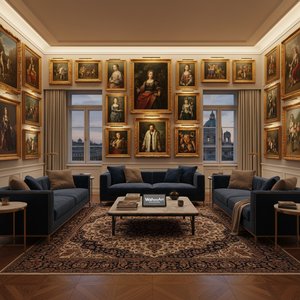
The interior of Burghley House is an immersive journey through the evolution of European taste. The State Rooms act as a gallery of unparalleled significance, where the walls are adorned with a curated dialogue between different eras. One might find themselves captivated by the stern, commanding presence of Elizabethan portraits, which stand in striking contrast to the dramatic, emotive energy of Baroque canvases. This collection reflects the Cecil family’s discerning eye and their active engagement with the shifting artistic currents of Europe, moving from the structured dignity of the Tudor court to the theatrical opulence of the seventeenth century.
Nowhere is this mastery more evident than in the breathtaking "Heaven Room." Here, the ceiling becomes a window into the divine, featuring spectacular artwork that exemplifies the height of Baroque illusionism. The presence of preparatory sketches by Antonio Verrio offers a rare, intimate glimpse into the creative process behind these monumental displays of Venetian-inspired grandeur. This sense of artistic transcendence continues within the chapel, where the works of Paolo Veronese and Johann Carl Loth grace the sacred space, reminding every observer of the profound connection between religious devotion and aesthetic excellence that defined the age.
The Art of Landscape and Living Heritage
The artistry of Burghley House extends far beyond its gilded frames and stone carvings, spilling out into the vast, meticulously choreographed landscapes of the estate. The grounds represent a masterful dialogue between different philosophies of design; while some areas retain the formal, structured layouts of the Elizabethan era, others have been transformed by the legendary Capability Brown. His influence introduced sweeping vistas and naturalistic elegance, creating a sense of infinite space that complements the house's architectural weight. Within these gardens, one finds the "Gardens of Surprise," where whimsical elements and clever optical illusions invite a playful engagement with the environment, proving that landscape architecture can be as much about delight as it is about prestige.
For the collector or the lover of fine aesthetics, Burghley House offers more than just a viewing of objects; it offers an experience of atmosphere. Whether one is drawn to the cinematic allure of its halls—having served as a backdrop for the Academy Award-winning Chariots of Fire—or the quiet contemplation of its period furnishings, the estate provides a masterclass in cohesive design. It remains a destination where history, art, and nature converge, offering an enduring inspiration for those who seek to understand how beauty can be used to shape the identity of a nation.