x

 Comprar impresión Comprar imagen en alta resolución
 Enviar
 Detalles
 Añadir a favoritos
 Descargar
 Similares
 Radiografía
 Presentación de diapositivas
Óleo sobre lienzo pintado a mano en el tamaño y marco de su elección, realizado por encargo por nuestros artistas.





























Elija entre nuestros tamaños predefinidos que respetan las proporciones originales de la obra.

Puede ingresar sus propias dimensiones para adaptarse a un marco o espacio específico. Si el tamaño seleccionado no coincide con las proporciones de la imagen original, recortaremos la obra o extenderemos la pintura con elementos adicionales pintados a mano. Se le enviará una maqueta digital para su aprobación antes de comenzar la producción.
Tenga en cuenta que la vista previa en pantalla no refleja el recorte o la extensión reales. Solo la maqueta mostrará con precisión la composición final.
Si bien existen tamaños personalizados, recomendamos seleccionar una dimensión de la lista predefinida para preservar las proporciones originales.
Entrega mundial () en 3-4 semanas en lugar de las 5 semanas estándar. (18 julio). Sin compromisos con la calidad.


Recital
Tamaño de la reproducción
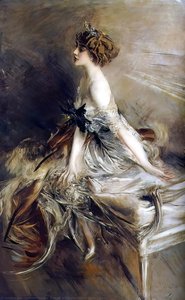
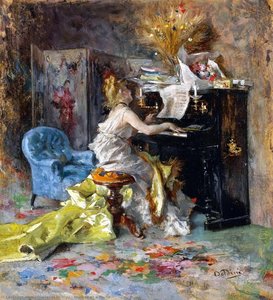
Giovanni Boldini's "Recital," painted in 1884, is more than just a portrait; it’s a meticulously crafted evocation of the elegance and social grace that defined the Belle Époque. This captivating scene, depicting a woman lost in the music of her piano, immediately transports the viewer to a world of refined leisure and artistic aspiration. Boldini, a master of capturing fleeting moments and the subtle nuances of human expression, expertly utilizes light and color to create an image brimming with atmosphere and emotion.
Boldini’s technique was renowned for its remarkable ability to create an illusion of depth and movement. He achieved this through a combination of meticulous brushwork—often applied in short, broken strokes—and his masterful manipulation of light and color. Notice the way he renders the piano keys, not with rigid detail but with shimmering highlights that suggest their reflective surfaces. The use of warm tones – ochres, reds, and golds – contrasts beautifully with the cooler blues and greens of the background, creating a dynamic visual harmony. This technique, heavily influenced by his time with the Macchiaioli, prioritized capturing the *impression* of light rather than photographic realism.
"Recital" is deeply rooted in the social and artistic climate of the late 19th century. Boldini was a prominent figure in Parisian society, frequently commissioned to paint portraits of wealthy industrialists, artists, and actresses. The scene reflects the era’s fascination with music, performance, and the pursuit of beauty. The presence of the two supporting figures – one standing behind the pianist and another further back – adds to the narrative, suggesting an audience or perhaps a fellow musician. This was a time when portraiture wasn't simply about likeness; it was about projecting status, wealth, and cultural refinement.
"Recital" continues to resonate with viewers today due to its evocative portrayal of a moment of quiet contemplation and artistic expression. Boldini’s ability to capture the sitter's personality—her poise, her focus, her vulnerability—is truly remarkable. This painting stands as a testament to Boldini’s genius and his enduring legacy as one of the most celebrated portraitists of the Belle Époque. A hand-painted reproduction offers an unparalleled opportunity to experience the beauty and artistry of this iconic work firsthand.


1842 - 1931 , Italia

Explore the art & culture of the Belle Époque! Discover Impressionism, Realism, and iconic Parisian paintings from Degas, Béraud & more. High-quality reproductions at Most-Famous-Paintings.

Explore the art & culture of 1875 Paris – a pivotal year for Impressionism & the Belle Époque. Discover Degas, Béraud, Stewart & more with Most-Famous-Paintings's expert insights.

Explore the captivating world of Raphael Kirchner, a master of Art Nouveau illustration during the Belle Époque. Discover his iconic 'Kirchner Girls,' pioneering pin-up art & lasting influence.

Explore the life & work of Paul Gabriël, a key figure of the Hague School and Belle Époque painting. Discover his journey to Parisian Salon recognition and lasting influence on Dutch landscape art.
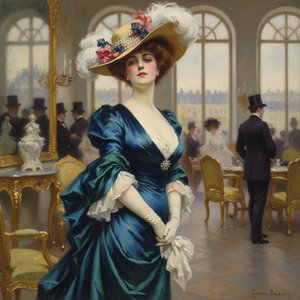
Explore the captivating world of Giovanni Boldini, master of Belle Époque portraiture. Discover his signature style, iconic works like 'Miss Bell,' and lasting influence on art history. Expert analysis for collectors.


Manténgase al día con las últimas noticias de arte, ofertas exclusivas e ideas de decoración.
Cuéntanos sobre tu proyecto y nuestros expertos en arte te ofrecerán 3 sugerencias de obras personalizadas.
Permítenos seleccionar 3 opciones solo para ti – ¡Gratis!


 Compartir


 Ver más







 La opción de vidrio solo está disponible en tamaños inferiores a 110 cm.