x


 Comprar impresión Comprar imagen en alta resolución
 Enviar
 Detalles
 Añadir a favoritos
 Descargar
 Similares
 Radiografía
 Presentación de diapositivas
Óleo sobre lienzo pintado a mano en el tamaño y marco de su elección, realizado por encargo por nuestros artistas.





























Elija entre nuestros tamaños predefinidos que respetan las proporciones originales de la obra.

Puede ingresar sus propias dimensiones para adaptarse a un marco o espacio específico. Si el tamaño seleccionado no coincide con las proporciones de la imagen original, recortaremos la obra o extenderemos la pintura con elementos adicionales pintados a mano. Se le enviará una maqueta digital para su aprobación antes de comenzar la producción.
Tenga en cuenta que la vista previa en pantalla no refleja el recorte o la extensión reales. Solo la maqueta mostrará con precisión la composición final.
Si bien existen tamaños personalizados, recomendamos seleccionar una dimensión de la lista predefinida para preservar las proporciones originales.
Entrega mundial () en 3-4 semanas en lugar de las 5 semanas estándar. (18 julio). Sin compromisos con la calidad.


Vaydelots
Tamaño de la reproducción
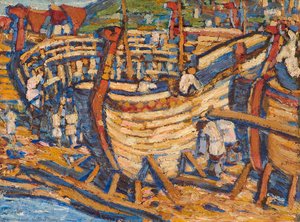
Nicholas Roerich’s 1914 painting, “Vaydelots,” isn't merely a depiction of a coastal scene; it’s an immersive experience, a carefully constructed tableau brimming with symbolic resonance and the artist’s signature blend of Symbolism, mysticism, and profound connection to nature. The work transports the viewer to a serene beach bathed in the warm glow of twilight, yet beneath its tranquil surface lies a complex tapestry of meaning rooted in ancient traditions and Roerich's own evolving spiritual beliefs.
At first glance, “Vaydelots” presents a simple composition: two figures seated by a crackling fire pit on a rocky outcrop overlooking the sea. These aren’t isolated individuals; they are integral parts of a larger narrative woven through the landscape itself. The central tree, its roots seemingly emerging from the sand and reaching towards the heavens, dominates the scene – a potent symbol of life, growth, and connection to the earth's core. The fire pit, radiating warmth and light, represents not just physical comfort but also the enduring power of tradition, community, and spiritual contemplation. The figures themselves, shrouded in shadow yet clearly engaged in conversation, embody harmony and balance within this elemental setting.
Roerich’s work is renowned for its intricate symbolism, often drawing from sources as diverse as ancient mythologies, Eastern philosophies, and his own personal spiritual journey. In “Vaydelots,” several key symbols converge to create a layered meaning. The presence of boats in the background evokes journeys – both literal and metaphorical – suggesting themes of exploration, transition, and the search for inner truth. The birds scattered throughout the scene represent messengers, guides, or perhaps even glimpses into other realms. More subtly, the arrangement of elements—the placement of the tree, the positioning of the figures—mirrors patterns found in sacred geometry and ancient cosmologies.
Notably, the painting’s title itself – “Vaydelots” – is significant. It refers to a mythical figure from Baltic folklore, often associated with wisdom, prophecy, and the guardianship of sacred places. This connection elevates the scene beyond a simple beachscape, imbuing it with an aura of ancient knowledge and spiritual significance. The painting’s creation during a period of immense social upheaval in Russia—the aftermath of the 1905 Revolution and the rise of Bolshevism—further underscores the symbolic weight of its themes: resilience, continuity, and the enduring power of tradition amidst chaos.
“Vaydelots” exemplifies Roerich’s distinctive artistic style, a synthesis of Symbolist aesthetics with elements of Russian landscape painting. He employed loose, expressive brushstrokes to capture the fluidity of light and shadow, creating an atmosphere of both serenity and mystery. The use of warm earth tones—ochres, browns, and golds—dominates the palette, evoking the warmth of the fire and the golden hues of a setting sun. Roerich’s masterful handling of texture adds depth and realism to the scene, particularly in the depiction of the rough-hewn rocks and the flickering flames of the fire.
The painting's composition is carefully balanced, drawing the eye towards the central tree and the figures while simultaneously creating a sense of spaciousness and openness. Roerich’s meticulous attention to detail—the subtle variations in color, the delicate rendering of foliage—contributes to the overall feeling of authenticity and invites the viewer to lose themselves within the scene.
Most-Famous-Paintings.com is proud to offer meticulously crafted hand-painted oil painting reproductions of “Vaydelots,” allowing art enthusiasts to experience the beauty and depth of this iconic work firsthand. Our skilled artisans replicate Roerich’s unique style with exceptional accuracy, capturing not only the visual details but also the emotional resonance of the original. Whether you're seeking a stunning addition to your home décor or an investment in a timeless piece of art history, our reproductions provide a faithful and accessible representation of this remarkable painting.
Explore the full depth of Nicholas Roerich’s artistic vision through Most-Famous-Paintings.com – where artistry meets preservation.


1874 - 1947 , Rusia

Descubre las 25 obras maestras del MET de Nueva York: Van Gogh, Monet, Rembrandt y más. Explora la historia, el arte y los colores que inspiran tu hogar. Reproducciones de museo en Most-Famous-Paintings.com.

Descubre las 10 obras maestras del Art Nouveau que revolucionaron el arte. Explora la belleza de Mucha, Klimt y más. Reproducciones de museo en para un hogar con estilo. ¡Inspírate ahora!
Descubre las 25 obras maestras de Gustav Klimt, ícono del simbolismo y Art Nouveau. Explora 'El Beso', 'Judith' y más. Reproducciones de arte en Most-Famous-Paintings.com para decorar tu hogar con elegancia. ¡Inspírate!

Descubre 10 obras maestras del Simbolismo, desde Klimt hasta Munch. Explora el significado oculto de sus símbolos y colores en Most-Famous-Paintings.com. Reproducciones de arte de calidad museo para inspirar tu hogar. ¡Explora la colección online!
Descubre las 25 obras maestras de Hieronymus Bosch, el enigmático pintor medieval. Explora 'El Jardín de las Delicias' y su simbolismo único. Reproducciones de arte de alta calidad para tu hogar en Most-Famous-Paintings.com.


Manténgase al día con las últimas noticias de arte, ofertas exclusivas e ideas de decoración.
Cuéntanos sobre tu proyecto y nuestros expertos en arte te ofrecerán 3 sugerencias de obras personalizadas.
Permítenos seleccionar 3 opciones solo para ti – ¡Gratis!


 Compartir


 Ver más







 La opción de vidrio solo está disponible en tamaños inferiores a 110 cm.