


x

Óleo sobre lienzo pintado a mano en el tamaño y marco de su elección, realizado por encargo por nuestros artistas. ( Pedir impresión Comprar descarga)





























Elija entre nuestros tamaños predefinidos que respetan las proporciones originales de la obra.

Puede ingresar sus propias dimensiones para adaptarse a un marco o espacio específico. Si el tamaño seleccionado no coincide con las proporciones de la imagen original, recortaremos la obra o extenderemos la pintura con elementos adicionales pintados a mano. Se le enviará una maqueta digital para su aprobación antes de comenzar la producción.
Tenga en cuenta que la vista previa en pantalla no refleja el recorte o la extensión reales. Solo la maqueta mostrará con precisión la composición final.
Si bien existen tamaños personalizados, recomendamos seleccionar una dimensión de la lista predefinida para preservar las proporciones originales.
Envío a todo el mundo () en 3-4 semanas en lugar de las 5 semanas estándar. (21 agosto). Sin comprometer la calidad.


No. 12 Scenes from the Life of the Virgin: 6. Wedding Procession
Tamaño de la reproducción
Before Giotto di Bondone, painting in Italy clung stubbornly to the Byzantine tradition—flat, stylized figures bathed in gold, conveying spiritual solemnity but lacking palpable human emotion. Giotto shattered this mold around 1290, marking a pivotal moment in artistic history and initiating what scholars now recognize as the Proto-Renaissance.
His most celebrated achievement is undoubtedly the decoration of the Cappella Scrovegni in Padua, begun in 1303. Commissioned by Enrico Scrovegni as an act of penance for his family’s sins, this monumental fresco cycle depicts scenes from the Life of Mary and Christ—a daring departure from Byzantine conventions.
Giotto's legacy extends far beyond Padua. He established a new standard for artistic excellence—one characterized by naturalism, psychological depth, and masterful technique. His influence can be traced throughout Renaissance art, shaping the stylistic sensibilities of artists like Masaccio and Brunelleschi.
The chapel itself stands as a testament to Giotto’s vision—a space designed to inspire contemplation and convey spiritual truth. Enrico Scrovegni, a wealthy banker haunted by remorse for his family's transgressions, entrusted the decoration of this sacred edifice to Giotto Di Bondone.
The fresco cycle’s meticulous detail—from drapery folds to facial expressions—demonstrates Giotto's unparalleled skill in capturing the nuances of human anatomy and emotion. It represents a radical departure from Byzantine art, establishing a new paradigm for Western painting.
Giotto perfected the technique of fresco—a method of painting on wet plaster that ensures durability and luminosity. This painstaking process demanded immense patience and precision—reflecting Giotto's unwavering commitment to artistic excellence.
The Scrovegni Chapel’s frescoes exemplify Giotto's mastery of fresco technique—resulting in an artwork that continues to captivate viewers centuries later.
Giotto Di Bondone’s groundbreaking innovations profoundly impacted the trajectory of Renaissance art—inspiring artists like Masaccio and Brunelleschi to embrace naturalism, spatial depth, and emotional resonance.
His work stands as an enduring testament to the transformative power of artistic innovation—forever altering the course of European culture.


1267 - 1337 , Italia
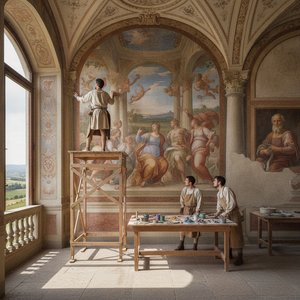
Explore the profound history and technical mastery of fresco painting. From ancient Roman murals to Michelangelo's Sistine Chapel, discover the enduring chemistry and artistry behind this timeless wall painting technique used by the world's greatest masters.


Manténgase al día con las últimas noticias de arte, ofertas exclusivas e ideas de decoración.
Cuéntanos sobre tu proyecto y nuestros expertos en arte te ofrecerán 3 sugerencias de obras personalizadas.
Dejamos que nosotros seleccionemos 3 opciones exclusivas para ti – ¡Gratis!


 Vista previa
 Compartir
 Compartir
 Ver detalles

 Descargar
 Ver similares
 Radiografía
 Presentación de diapositivas


 Leer más







 La opción de vidrio solo está disponible en tamaños inferiores a 110 cm.


![Leyenda De San Francisco - [08] - Visión Del Carro Flamígero — Giotto Di Bondone, Proto-renaissance Gothic](/media/artworks/images-thumb/65/6e/656e345ff55e49ce2e4377a050b85aa1.jpg)


![Scrovegni - [05] - Sueño de Joaquín](/media/artworks/images-thumb/8f/67/8f67bb5da87296bd452b3f0b237b528d.jpg)


