A Singular Vision of Lima
Francisco Fierro Palas (1807 – 1879) emerged from the modest surroundings of Lima, Peru, a city brimming with cultural dynamism during the nineteenth century. His artistic path was remarkably independent; devoid of formal training, he cultivated his talent through meticulous observation and an unwavering fascination for capturing the essence of daily life in Lima—a practice that would define his distinctive style: Costumbrismo. This movement sought to depict authentic scenes of Peruvian society, prioritizing realism and portraying the nuances of vernacular culture with remarkable sensitivity.
Early Life and Artistic Awakening
Born into a family grappling with socio-economic challenges typical of the era, Fierro Palas found solace in artistic expression. The influence of his mixed heritage—Spanish, indigenous, and African—shaped his worldview and subtly permeated his artistic sensibilities. While biographical details remain scarce, anecdotal evidence suggests an early inclination towards drawing and painting, nurtured by a profound appreciation for the visual arts. This innate curiosity propelled him toward honing his craft without relying on established academic institutions.
The Art of Costumbrismo: Capturing Lima’s Soul
Fierro Palas' contribution to Peruvian art lies primarily in his masterful execution of Costumbrismo. Unlike idealized representations favored by European artistic trends, Fierro Palas opted for a grounded approach, focusing on portraying ordinary individuals and commonplace settings—the fish seller on a donkey, the Camillian Friar, Sister of Charity—with remarkable detail and psychological insight. His watercolors weren’t merely decorative; they functioned as visual records of Lima's social fabric, reflecting its traditions, customs, and diverse communities. The artist skillfully employed light and shadow to convey emotion and atmosphere, creating images that resonate with immediacy and authenticity.
Notable Works and Museums Recognition
Among Fierro Palas’s most celebrated pieces are “The Camillian Friar,” “Sister of Charity,” and “Fish Seller on a Donkey.” These watercolors exemplify his ability to distill complex narratives into simple yet evocative compositions. They stand as testaments to his artistic prowess and his dedication to portraying the human condition with compassion and empathy. His works are proudly housed in institutions such as Museo Central and Banco Central de Reserva del Perú (Lima, Peru), where they continue to inspire admiration for their stylistic innovation and historical significance.
A Lasting Legacy
Francisco Fierro Palas’s legacy extends far beyond his own lifetime, establishing him as a pivotal figure in Peruvian art history. His pioneering approach to Costumbrismo paved the way for subsequent generations of artists who sought to celebrate Peru's cultural heritage with unwavering sincerity. Fierro Palas’s watercolors remain invaluable documents of Lima during the nineteenth century—a poignant reminder that beauty can be found in the simplest of observations and that artistic genius blossoms even without formal instruction.



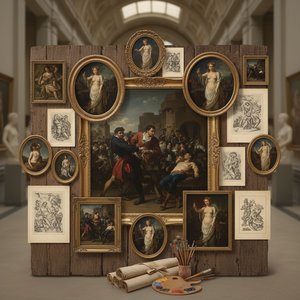






![[lady In Swimsuit With Indian Companion] — Francisco Fierro Palas](/media/artworks/images-thumb/b4/14/b4146dd365d73c18bdc7f9f8ce078566.jpg)

