Francisco Javier Venegas de Saavedra: A Painter of Faith and Majesty
Born in Zafra, Badajoz, Spain, Francisco Javier Venegas de Saavedra y Ramínez de Arenzana (1754 – 1838) emerged from noble lineage into a life dedicated to both military service and artistic expression—a duality that profoundly shaped his legacy as one of Spain’s most distinguished figures of the nineteenth century. Initially drawn to literary pursuits, Venegas swiftly recognized his innate aptitude for leadership and strategic thinking, decisively abandoning academia for the disciplined rigor of the infantry corps. This pivotal decision propelled him through the ranks with remarkable speed, demonstrating unwavering courage and devotion throughout a career that would ultimately culminate in a position of immense responsibility—viceroyalty over New Spain.
Military Valor: Defending the Crown Against Napoleon
Venegas’s participation in suppressing Napoleon’s invasion of Spain proved instrumental to safeguarding Spanish sovereignty during the Napoleonic Wars. His tactical acumen and unwavering resolve commanded respect among his peers, securing him a prominent role in bolstering defenses against French aggression. Recognizing the imperative for unity and resilience amidst crisis, Venegas spearheaded initiatives aimed at mobilizing national resources and galvanizing patriotic fervor—actions that underscored his commitment to upholding royal authority and preserving Spain’s independence. This formative experience instilled within him an enduring ethos of duty and honor—qualities that would permeate both his military accomplishments and his artistic endeavors.
The Viceroyalty Years: Navigating Independence Amidst Complexity
Venegas’s appointment as viceroy of New Granada (Bogotá) in 1810 presented him with a formidable challenge—the eruption of Mexico's independence movement fueled by liberal aspirations and simmering discontent. Faced with escalating unrest, Venegas skillfully navigated the turbulent political landscape while simultaneously striving to maintain order and stability within the colony. Demonstrating astute judgment, he responded decisively to Hidalgo’s rebellion by bolstering militia forces, implementing stringent security measures, and upholding the constitutional framework established in Madrid—a delicate balancing act that underscored his unwavering conviction regarding the preservation of monarchy. Despite encountering resistance from conservative factions, Venegas remained steadfast in his belief that safeguarding Spain's interests demanded resolute action.
A Painter’s Vision: Romanticism and Religious Iconography
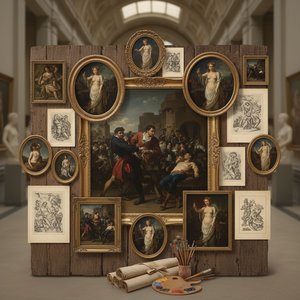
Beyond his military duties, Venegas possessed a fervent passion for artistic creation—a vocation rooted in the Romantic movement’s embrace of emotion, imagination, and spiritual contemplation. His paintings exemplify this stylistic trend, characterized by dramatic lighting, expressive brushstrokes, and an unwavering devotion to portraying saints with dignity and reverence. Notably, his depictions of Saint Vincent stand as masterpieces of Venetian art, capturing the saint's solemn gaze and conveying a palpable sense of inner peace—a testament to Venegas’s profound understanding of religious symbolism and artistic technique. Similarly, his representations of San Francisco embody the ideals of compassion and humility—themes central to Venetian artistic tradition.
Legacy: Enduring Influence on Art and Governance
Francisco Javier Venegas de Saavedra died in Zafra, Spain, in 1838, leaving behind a legacy that transcends both military history and artistic achievement. His unwavering dedication to duty—coupled with his ability to translate spiritual inspiration into visual splendor—solidified his place as one of Spain’s most accomplished figures of the nineteenth century. Venegas's paintings continue to resonate with audiences today, serving as enduring reminders of Romanticism’s fascination with faith, emotion, and artistic virtuosity. His influence extends beyond the realm of art, shaping perceptions of leadership, honor, and the pursuit of noble ideals—a testament to his indelible mark on Spanish history and culture.