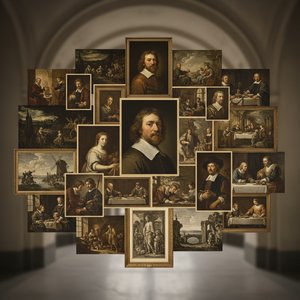
Nicolaes Jacobsz van der Heck: A Master of Dutch Landscape
Nicolaes Jacobsz van der Heck (c.1575 – 1652), also known as Claes Jacobsz van der Heck, stands as a pivotal figure in the Dutch Golden Age, celebrated for his breathtaking depictions of the Dutch countryside and imbued with a mystical spirit that distinguishes him from many of his contemporaries. Born in Alkmaar, Netherlands, he descended from Maarten van Heemskerck, a renowned painter whose legacy profoundly shaped Jacobsz’s artistic trajectory. His formative years were spent under the tutelage of Jan Nagel, a respected landscape artist who instilled in him a meticulous approach to observation and representation—a characteristic that would define his oeuvre for decades to come.
Early Life & Training: Karel van Mander recounts that Jacobsz possessed considerable talent from an early age and honed his skills within Nagel’s workshop, absorbing the techniques of capturing atmospheric perspective and conveying the grandeur of natural vistas. Nagel's influence was paramount in shaping Jacobsz’s artistic vision—a dedication to realism underpinned by a profound understanding of visual illusion. This meticulous attention to detail would become a hallmark of his distinctive style.
Style & Technique: Jacobsz’s paintings are characterized by their exceptional level of precision—from painstakingly rendered foliage to subtly shaded rocks—reflecting a commitment to realism that nevertheless embraced expressive brushwork. He skillfully employed chiaroscuro, manipulating light and shadow with masterful subtlety to heighten the drama of his landscapes and imbue them with an emotional resonance. This technique allowed him to transcend mere visual representation, conveying feelings of serenity and contemplation alongside capturing the beauty of the natural world.
Notable Works: Among Jacobsz’s most iconic creations is ‘View of the Abbey of Egmond-Binnen,’ a masterpiece that exemplifies the zenith of Dutch landscape painting. Its serene composition captures the monastic architecture against a backdrop of rolling hills and shimmering water, demonstrating an unparalleled grasp of tonal gradation and spatial depth—a testament to his artistic genius. Equally compelling are his depictions of witches’ sabbaths—scenes brimming with symbolic imagery and conveying a palpable sense of unease and fascination—reflecting the anxieties prevalent during his era and delving into themes of superstition and moral judgment. These works stand as enduring symbols of Dutch cultural heritage.
Museum Collections & Legacy: His paintings reside in prestigious institutions such as the Rijksmuseum (Amsterdam), showcasing ‘View of the Abbey of Egmond-Binnen’ alongside other celebrated landscapes; The Mauritshuis (The Hague) houses a remarkable assemblage of Dutch Golden Age masterpieces, including Jacobsz’s evocative depictions of witchcraft. Nicolaes Jacobsz van der Heck's contribution to the artistic landscape of the seventeenth century is undeniable. He established himself as a master of tonal gradation and spatial depth—techniques that would continue to inspire generations of painters. His meticulous observation of nature and his expressive brushwork solidified his reputation as a visionary artist who captured the essence of Dutch identity during its golden age, securing his place among the most influential landscape artists of his time.
- Influences: Jan Nagel’s teachings instilled in Jacobsz a disciplined approach to observation and representation—a cornerstone of his artistic style.
- Key Characteristics: Exceptional detail; Atmospheric perspective; Dramatic chiaroscuro; Emotional resonance.
For further exploration into Nicolaes Jacobsz van der Heck’s life and artistic achievements, visit Most-Famous-Paintings.com/@