x

 Acrylic On CanvasWallArtGerman Expressionism
 1913
1913 810.0 x 1050.0 cm
 Kunstpalast
Käsinmaalattu öljyväri kankaalle haluamassasi koossa ja kehyksissä, taiteilijoidemme valmistamana tilauksesta. ( Osta printti Osta kuva)





























Valitse valmiista mitoistamme sellaiset, jotka vastaavat teoksen alkuperäisiä mittasuhteita.

Voit syöttää omat mitat sopimaan tiettyyn kehykseen tai tilaan. Jos valitsemasi koko ei vastaa alkuperäisen kuvan mittasuhteita, rajaamme taideteoksen tai jatkamme maalausta käsin maalatuilla elementeillä. Digitaalinen esikatselu lähetetään hyväksyttäväksi ennen tuotannon aloittamista.
Huomioithan, että näytöllä oleva esikatselu ei vastaa todellista rajausta tai jatkamista. Vain digitaalinen mallikuva näyttää lopullisen sommittelun tarkasti.
Vaikka mittatilaustyöt ovat mahdollisia, suosittelemme valitsemaan mitan ennalta määritetystä listasta alkuperäisten mittasuhteiden säilyttämiseksi.
Maailmanlaajuinen toimitus () 3–4 viikossa tavallisen 5 viikon sijaan. (20 elokuu). Laadusta ei tingitä.


Four Girls
Replikaatin koko
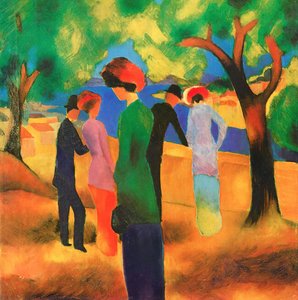
August Macke's "Four Girls," painted in 1913, stands as a pivotal work within the artist’s trajectory and a compelling example of the burgeoning movement towards abstraction that was reshaping European art at the time. Created during a remarkably productive period in Bonn, this painting embodies Macke’s shift away from purely representational forms toward a more emotionally charged and visually dynamic style – a hallmark of his engagement with both German Expressionism and the innovative approaches emerging from Paris.
Painted in 1913, “Four Girls” reflects a crucial moment in art history – the collision of Impressionism’s influence with the rising tide of German Expressionism. Macke, like many artists of his generation, was grappling with the rapid changes occurring in Paris and seeking to synthesize these diverse influences into a uniquely German aesthetic. The painting's rhythmic colour harmonies and simplified forms align with the Blaue Reiter group’s exploration of abstraction and emotional expression, while simultaneously retaining a distinctly Impressionistic sensibility in its focus on light and atmosphere.
Macke’s artistic journey was profoundly shaped by his travels and intellectual explorations. His time in Tunis in 1914 further intensified his experimentation with transparency, flatness, and abstract forms, anticipating the developments of Cubism and Abstraction that would dominate the art world in the years to come.
Macke’s technique is characterized by a confident brushstroke and a deliberate layering of colour. He employed a palette knife alongside traditional brushes to build up thick impasto surfaces, creating a tactile quality that adds to the painting's visual richness. The use of pure pigments, combined with Macke’s innovative approach to colour mixing, results in vibrant, luminous tones that seem to shimmer and vibrate on the canvas. The scale of this artwork – 810 x 1050 cm – further amplifies its impact, allowing for an immersive experience of colour and form.
"Four Girls" transcends a simple portrait; it’s a meditation on youth, leisure, and the beauty of nature. The presence of the dog and handbag adds subtle details that enhance the sense of everyday life and human connection. Macke's ability to capture not just the outward appearance of his subjects but also their inner emotions is what elevates this work beyond mere representation. It speaks to a yearning for simplicity, harmony, and the joy of shared experience – themes that resonate deeply with viewers even today.


1887 - 1914 , Saksa

Explore the visceral power of German Expressionism. From Ernst Ludwig Kirchner to Die Brücke, discover how bold colors and distorted forms unmask raw human emotion in this expert art history guide for collectors and enthusiasts.

Explore the raw realism of Neue Sachlichkeit. Discover how German New Objectivity artists like Otto Dix and George Grosz captured the turbulent Weimar Republic through unflinching social critique and precise detail. A definitive guide for art historians and collectors.


Pysy ajan tasalla uusimmista taideuutisista, eksklusiivisista tarjouksista ja sisustusideoista.
Kerro meille projektistasi, niin taideasiantuntijamme tarjoavat sinulle kolme henkilökohtaista taidesuositusta.
Anna meidän kuratoida 3 vaihtoehtoa juuri sinulle – Ilmaiseksi!


 Esikatselu
 Jaa
Jaa Jaa
Jaa
 Tarkemmat tiedot

 Lataa
Lataa
 Samanlaisia
 Röntgenkuva
 Diaesitys
 Näytä lisää







 Lasivaihtoehto on saatavilla vain alle 110 cm kokoisina teoksina