


x

 Tempera On PanelLate Medieval
 1375Late Medieval
 104.0 x 67.0 cm
 Indianapolis Museum of Art
Museolaatuisia giclée- tai kankaitaulun tulosteita nopealla tuotannolla ja joustavilla viimeistelyvaihtoehdoilla. ( Osta käsintehty maalaus Osta kuva)





























Valitse valmiista mitoistamme sellaiset, jotka vastaavat teoksen alkuperäisiä mittasuhteita.

Voit syöttää omat mitat sopiaksesi tiettyyn kehykseen tai tilaan. Jos valittu koko ei vastaa alkuperäisen kuvan mittasuhteita, rajaamme teosta tai laajennamme kuvaa peilatulla tai yhtenäisellä reunalla. Digitaalinen mallikuva lähetetään hyväksyttäväksi ennen tuotannon aloittamista.
Huomaathan, että näytöllä näkyvä esikatselu ei vastaa lopullista rajausta tai laajennusta. Vain mallikuva näyttää lopullisen sommittelun tarkasti.
Vaikka räätälöityjä kokoja on saatavilla, suosittelemme valitsemaan mitat valmiista listasta alkuperäisten mittasuhteiden säilyttämiseksi.
Toimitus maailmanlaajuisesti () kahdessa viikossa tavallisen 4–5 viikon sijaan. (15 elokuu)


Crucifixion
Replikaatin koko
In the quiet sanctity of the Museum of Art in Indianapolis, there exists a window into the fourteenth century that transcends the mere passage of time. The Crucifixion by Barnaba da Modena, executed around 1375, is not merely a painting but a profound spiritual encounter. As one gazes upon this tempera on wooden panel, the viewer is immediately enveloped by the solemnity of the late medieval period. The composition centers on the agonizing yet majestic figure of Jesus Christ, whose body is positioned to guide the eye through a celestial drama. Flanked by the two thieves, the central cross serves as the axis for a universe of grief and devotion, where every brushstroke seems to vibrate with the weight of eternal significance.
The artistry of Barnaba da Modena is characterized by a breathtaking synthesis of Byzantine grandeur and the emerging naturalism of the Lombard tradition. This piece showcases the artist's mastery over tempera, a medium that demands precision and foresight. The rich, saturated colors are punctuated by the strategic use of gold, which does more than merely decorate; it illuminates the divine. In the medieval mind, gold was a symbol of the uncreated light of God, suggesting that this specific panel may have once graced the altar of a prestigious religious institution or been commissioned by a patron of immense social standing. The intricate patterns found within the drapery and the surrounding landscape provide a tactile richness that invites the eye to linger on the meticulous details of the era's craftsmanship.
Beyond its visual splendor, the Crucifixion functions as a complex tapestry of theological symbolism. The presence of figures such as Mary Magdalene, the Virgin Mary, and John the Apostle creates a communal experience of mourning, allowing the viewer to find their own place within the biblical narrative. The background, featuring soft clouds and a burgeoning landscape of trees and distant architecture, serves to bridge the gap between the earthly realm and the heavens. This juxtaposition of the human tragedy on the cross with the eternal stability of the landscape reminds us of the intersection between mortal suffering and divine promise.
For the discerning collector or interior designer, this artwork offers a profound sense of historical gravity and aesthetic depth. A high-quality reproduction of this masterpiece brings more than just decoration to a space; it introduces a narrative of resilience and spiritual beauty. The elaborate border, with its intricate designs, acts as a threshold, separating the modern world from the sacred atmosphere of 1375. Whether placed in a curated gallery or a sophisticated residential setting, Barnaba da Modena’s work serves as a powerful focal point, evoking an era where art was the primary language of the soul.


1328 - 1386 , Italy
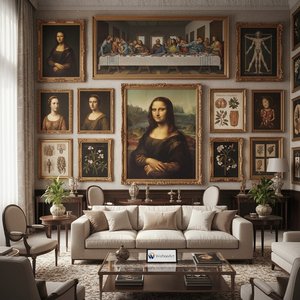
Tutustu Leonardo da Vincin 25 mestariteokseen! Uppoudu renessanssin maailmaan Mona Lisan, Viimeisen ehtoollisen ja muiden ikonisten maalausten tarinoihin. Löydä inspiraatiota kotiisi Most-Famous-Paintingsilta – korkealaatuiset taideteoksien reproduktiot ja sisustusehdotukset. Tutki kokoelma verkossa!

Journey through 10 defining Late Medieval masterpieces – from Giotto's frescoes to Jan van Eyck’s realism. Explore the stories, techniques & vibrant colors of Gothic art. Find museum-quality reproductions and elevate your home decor with Most-Famous-Paintings.com! Discover all masterpieces on Most-Famous-Paintings.com

Explore Leonardo da Vinci’s timeless masterpieces with Most-Famous-Paintings. Discover insights into his art, science, and legacy – trusted expertise for discerning collectors seeking authentic reproductions & investment opportunities.

Journey through High Medieval Art! Explore 10 iconic masterpieces – from Giotto's frescoes to stunning Gothic cathedrals. Discover the stories behind these timeless paintings, sculptures & illuminated manuscripts. Find museum-quality art reproductions at Most-Famous-Paintings.com.

Explore the rich history & stunning artistry of the Byzantine Empire! Discover iconic mosaics, profound symbolism, and lasting influence on Western art. A comprehensive guide for history lovers.


Pysy ajan tasalla uusimmista taideuutisista, eksklusiivisista tarjouksista ja sisustusideoista.
Kerro meille projektistasi, niin taideasiantuntijamme tarjoavat sinulle kolme henkilökohtaista taidesuositusta.
Anna meidän kuratoida 3 vaihtoehtoa juuri sinulle – Ilmaiseksi!


 Esikatselu
 Jaa
Jaa Jaa
Jaa
 Tarkemmat tiedot

 Lataa
Lataa
 Samanlaisia
 Röntgenkuva
 Diaesitys
 Näytä lisää







 Lasivaihtoehto on saatavilla vain alle 110 cm kokoisina teoksina


