x
 Öljyväri kankaalleSeinätaideExpressionism
 1907Moderni
 32.0 x 31.0 cm
Käsinmaalattu öljyväri kankaalle haluamassasi koossa ja kehyksissä, taiteilijoidemme valmistamana tilauksesta. ( Osta printti Osta kuva)





























Valitse valmiista mitoistamme sellaiset, jotka vastaavat teoksen alkuperäisiä mittasuhteita.

Voit syöttää omat mitat sopimaan tiettyyn kehykseen tai tilaan. Jos valitsemasi koko ei vastaa alkuperäisen kuvan mittasuhteita, rajaamme taideteoksen tai jatkamme maalausta käsin maalatuilla elementeillä. Digitaalinen esikatselu lähetetään hyväksyttäväksi ennen tuotannon aloittamista.
Huomioithan, että näytöllä oleva esikatselu ei vastaa todellista rajausta tai jatkamista. Vain digitaalinen mallikuva näyttää lopullisen sommittelun tarkasti.
Vaikka mittatilaustyöt ovat mahdollisia, suosittelemme valitsemaan mitan ennalta määritetystä listasta alkuperäisten mittasuhteiden säilyttämiseksi.
Maailmanlaajuinen toimitus () 3–4 viikossa tavallisen 5 viikon sijaan. (14 elokuu). Laadusta ei tingitä.


Self Portrait, Facing Right
Replikaatin koko
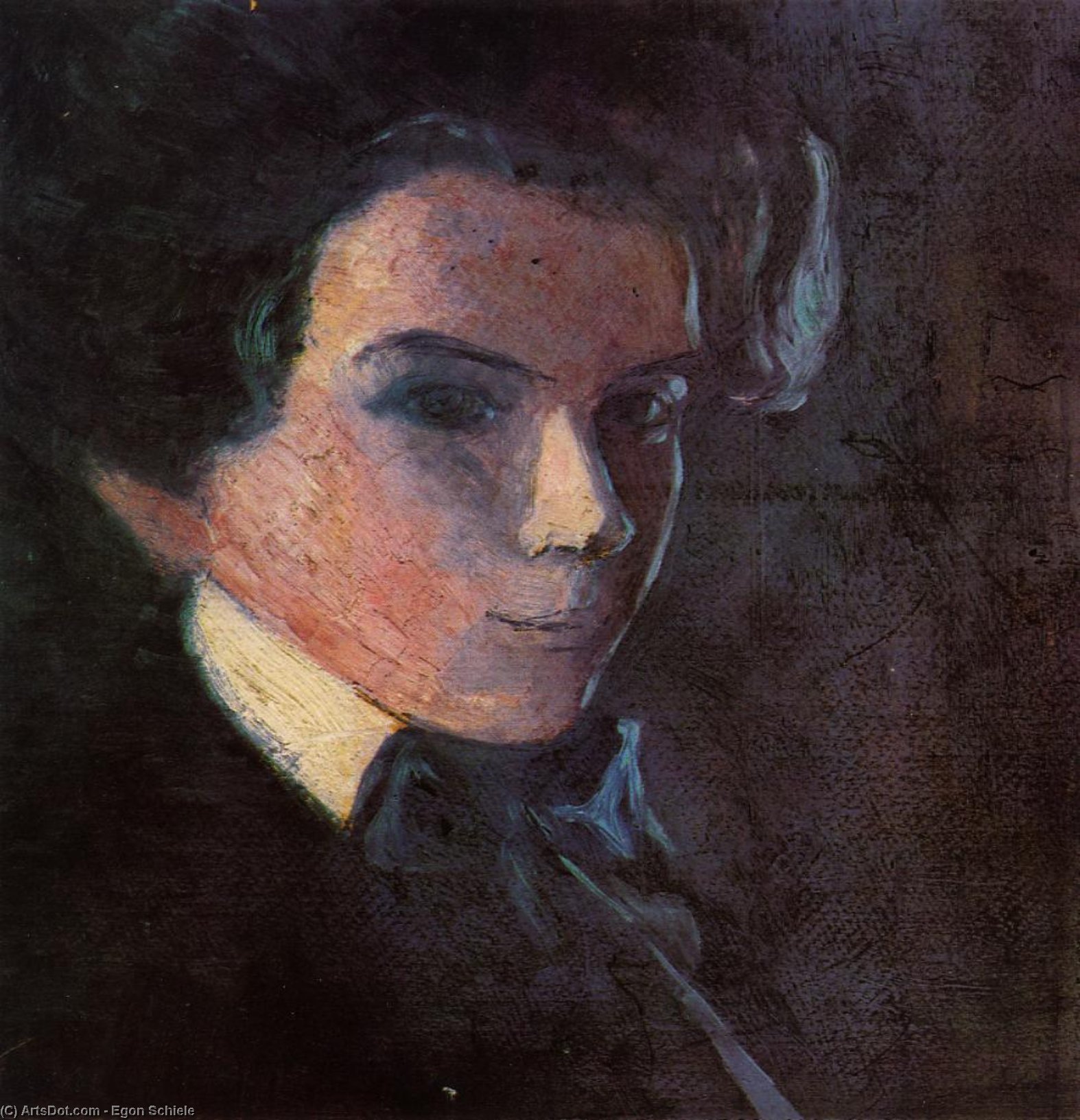
Egon Schiele’s Self Portrait, Facing Right, created in 1907, is a poignant and revealing work that encapsulates the artist’s burgeoning Expressionist style. Measuring 32 x 31 cm and rendered in oil on canvas, this self-portrait offers an intimate glimpse into the psyche of a young man grappling with complex emotions during a pivotal moment in his artistic development.
The portrait depicts Schiele himself, positioned facing right. His gaze is direct yet contemplative, drawing the viewer into a silent dialogue. The composition is strikingly simple; the subject fills most of the frame, eliminating extraneous details and focusing attention solely on his face and upper torso. This deliberate framing intensifies the sense of intimacy and vulnerability. Schiele’s technique in this piece demonstrates a move away from traditional academic realism towards the expressive distortions characteristic of Expressionism. The brushstrokes are visible and energetic, contributing to a raw and immediate feel. He employs a limited color palette dominated by dark blues, purples, and browns, punctuated by warmer tones in the skin. This restricted range enhances the somber mood and emphasizes the play of light and shadow.
Light plays a crucial role in shaping the emotional impact of Self Portrait, Facing Right. The dark background serves to isolate and highlight Schiele’s face, creating a dramatic chiaroscuro effect – a technique utilizing strong contrasts between light and dark to model forms and create depth. This deliberate use of light not only emphasizes the subject's features but also contributes to an atmosphere of introspection and melancholy. It echoes the influence of earlier masters while simultaneously forging a distinctly modern aesthetic. The way Schiele manipulates light underscores his desire to convey psychological truth rather than mere visual representation.
Created in 1907, this self-portrait emerged during a period of significant artistic upheaval. Vienna at the turn of the century was a hotbed of intellectual and cultural innovation, but also social unrest. Schiele’s work reflects this complex environment. He was deeply influenced by Gustav Klimt, his mentor at the Vienna School of Arts and Crafts, yet he quickly developed his own distinct style that pushed beyond Klimt's decorative aesthetic towards a more raw and psychologically probing exploration of human emotion. Self Portrait, Facing Right exemplifies this shift, foreshadowing the intense emotionality and psychological depth that would characterize Schiele’s later works. It stands as an early but powerful statement of his commitment to Expressionism – a movement dedicated to conveying subjective feelings and experiences through distorted forms and exaggerated colors.
Self Portrait, Facing Right is just one facet of Egon Schiele’s prolific output. His artistic legacy includes numerous other significant works that explore themes of sexuality, identity, and mortality with unflinching honesty. Notable examples include:
Self Portrait, Facing Right remains a compelling testament to Egon Schiele's artistic genius – a window into the soul of an artist grappling with profound questions about life, identity, and the human condition.

1890 - 1918 , Itävalta-Unkari

Explore the profound history and technical brilliance of oil on panel painting. From Renaissance masters to modern techniques, discover why this rigid support offers unparalleled precision and permanence for fine art lovers and collectors.

Explore the profound emotional depth of Expressionist portraiture. From Edvard Munch to Francis Bacon, discover how masters used distortion and color to reveal inner truths. Learn about this pivotal movement and find museum-quality oil reproductions for your collection.


Pysy ajan tasalla uusimmista taideuutisista, eksklusiivisista tarjouksista ja sisustusideoista.
Kerro meille projektistasi, niin taideasiantuntijamme tarjoavat sinulle kolme henkilökohtaista taidesuositusta.
Anna meidän kuratoida 3 vaihtoehtoa juuri sinulle – Ilmaiseksi!


 Esikatselu
 Jaa
Jaa Jaa
Jaa
 Tarkemmat tiedot

 Lataa
Lataa
 Samanlaisia
 Röntgenkuva
 Diaesitys
 Näytä lisää







 Lasivaihtoehto on saatavilla vain alle 110 cm kokoisina teoksina