


x

Museolaatuisia giclée- tai kankaitaulun tulosteita nopealla tuotannolla ja joustavilla viimeistelyvaihtoehdoilla. ( Osta käsintehty maalaus Osta kuva)





























Valitse valmiista mitoistamme sellaiset, jotka vastaavat teoksen alkuperäisiä mittasuhteita.

Voit syöttää omat mitat sopiaksesi tiettyyn kehykseen tai tilaan. Jos valittu koko ei vastaa alkuperäisen kuvan mittasuhteita, rajaamme teosta tai laajennamme kuvaa peilatulla tai yhtenäisellä reunalla. Digitaalinen mallikuva lähetetään hyväksyttäväksi ennen tuotannon aloittamista.
Huomaathan, että näytöllä näkyvä esikatselu ei vastaa lopullista rajausta tai laajennusta. Vain mallikuva näyttää lopullisen sommittelun tarkasti.
Vaikka räätälöityjä kokoja on saatavilla, suosittelemme valitsemaan mitat valmiista listasta alkuperäisten mittasuhteiden säilyttämiseksi.
Toimitus maailmanlaajuisesti () kahdessa viikossa tavallisen 4–5 viikon sijaan. (21 elokuu)


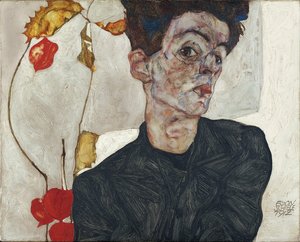
Self-Portrait with Eyelid Pulled Down, 1910
Replikaatin koko
Egon Schiele's 1910 self-portrait, “Self-Portrait with Eyelid Pulled Down,” is not merely a depiction of an individual; it’s a raw and unsettling excavation of the human psyche. Painted during a period of intense personal turmoil for the artist – a time marked by illness, loss, and a growing awareness of mortality – this watercolor captures a profound sense of vulnerability and introspection rarely found in portraiture of the era. The image immediately confronts us with an arresting visual: a man, his hand instinctively shielding his face, his eyelid deliberately lowered as if to shut out the world. This isn’t a pose of shame or concealment, but rather one of guarded sorrow, a deliberate act of self-protection against an overwhelming emotional burden.
Born in 1890 in Tulln an der Donau, Austria – a region steeped in both artistic tradition and personal tragedy – Schiele’s early life was profoundly shaped by loss. The untimely death of his father from syphilis at the age of fourteen cast a long shadow over his existence, fueling within him a preoccupation with themes of decay, illness, and the ephemeral nature of life. This experience is palpably present in “Self-Portrait,” manifesting not just as an intellectual concept but as a visceral emotional state. The lowered eyelid can be interpreted as a physical manifestation of this grief, a deliberate attempt to block out the pain and suffering that permeated his world. His sister Elvira’s early death further compounded these anxieties, contributing to the artist's increasingly dark and introspective artistic output.
Schiele’s mastery lies in his unconventional use of watercolor. He eschewed the smooth, polished surfaces favored by many of his contemporaries, opting instead for a technique characterized by loose washes, visible brushstrokes, and an almost frantic energy. The colors are muted – predominantly browns, grays, and ochres – reflecting the somber mood of the subject. Notice how he builds up layers of pigment, creating a sense of depth and texture that is both unsettling and captivating. The lack of precise detail forces the viewer to focus on the emotional intensity conveyed through the artist’s expressive lines and the subtle shifts in color. The watercolor medium itself lends an immediacy and fragility to the image, mirroring the vulnerability he seems to embody.
Beyond the immediate depiction of a man shielding his face, “Self-Portrait” is rich with symbolic meaning. The hand covering the mouth or nose suggests a suppression of words, an inability to articulate the depths of his suffering. It’s a gesture of isolation and withdrawal from the world. The downward-turned eyelid itself is particularly potent – it can be seen as representing a shutting down of perception, a refusal to confront reality. The overall composition feels claustrophobic, drawing the viewer into Schiele's internal landscape. Interestingly, recurring motifs of trains appear in his work, perhaps symbolizing journeys—both literal and metaphorical—through life’s uncertainties and dangers. This self-portrait stands as a testament to Schiele’s willingness to expose the darkest corners of the human experience, offering a glimpse into an artist grappling with profound personal demons.
Most-Famous-Paintings offers meticulously crafted hand-painted reproductions of “Self-Portrait with Eyelid Pulled Down,” allowing you to bring this powerful and emotionally resonant artwork into your home or office. Each reproduction captures the nuances of Schiele’s technique and the haunting beauty of his vision, providing a tangible connection to one of the most significant figures in early 20th-century Expressionism.

1890 - 1918 , Itävalta-Unkari
Tutustu Egon Schielen 25 vaikuttavinta teosta! Uppoudu ekspressionismin maailmaan, ihmiskuvauksen syvyyteen ja tunteelliseen taiteeseen. Löydä inspiraatiota sisustukseen ja korkealaatuiset taideprintit Most-Famous-Paintings.com-sivustolta. Tutki kokoelma verkossa!

Tutustu 10 legendaariseen vesivärimaalaukseen, jotka muuttivat taiteen historiaa! Inspiroiva tarina Turnerista Monetiin. Löydä upeita akvarelleja ja sisustusideoita Most-Famous-Paintingsilla. Tutki kokoelma verkossa!

Explore the emotionally charged world of Egon Schiele (1890-1918). Discover his Expressionist masterpieces, psychological themes, and lasting impact on modern art. A comprehensive guide for collectors & enthusiasts.

Explore the captivating world of watercolor painting! Discover its rich history, essential techniques, influential artists & collecting tips. A comprehensive guide for art enthusiasts from Most-Famous-Paintings.

Explore the captivating history of watercolor painting, from ancient techniques to modern masters like Kandinsky & Blake. Discover essential artists, collecting tips & the emotional power of this luminous medium. Expert insights for art enthusiasts.


Pysy ajan tasalla uusimmista taideuutisista, eksklusiivisista tarjouksista ja sisustusideoista.
Kerro meille projektistasi, niin taideasiantuntijamme tarjoavat sinulle kolme henkilökohtaista taidesuositusta.
Anna meidän kuratoida 3 vaihtoehtoa juuri sinulle – Ilmaiseksi!


 Esikatselu
 Jaa
Jaa Jaa
Jaa
 Tarkemmat tiedot

 Lataa
Lataa
 Samanlaisia
 Röntgenkuva
 Diaesitys


 Näytä lisää







 Lasivaihtoehto on saatavilla vain alle 110 cm kokoisina teoksina


