x

Käsinmaalattu öljyväri kankaalle haluamassasi koossa ja kehyksissä, taiteilijoidemme valmistamana tilauksesta. ( Osta printti Osta kuva)





























Valitse valmiista mitoistamme sellaiset, jotka vastaavat teoksen alkuperäisiä mittasuhteita.

Voit syöttää omat mitat sopimaan tiettyyn kehykseen tai tilaan. Jos valitsemasi koko ei vastaa alkuperäisen kuvan mittasuhteita, rajaamme taideteoksen tai jatkamme maalausta käsin maalatuilla elementeillä. Digitaalinen esikatselu lähetetään hyväksyttäväksi ennen tuotannon aloittamista.
Huomioithan, että näytöllä oleva esikatselu ei vastaa todellista rajausta tai jatkamista. Vain digitaalinen mallikuva näyttää lopullisen sommittelun tarkasti.
Vaikka mittatilaustyöt ovat mahdollisia, suosittelemme valitsemaan mitan ennalta määritetystä listasta alkuperäisten mittasuhteiden säilyttämiseksi.
Maailmanlaajuinen toimitus () 3–4 viikossa tavallisen 5 viikon sijaan. (15 elokuu). Laadusta ei tingitä.


untitled (7228)
Replikaatin koko
Egon Schiele’s “Untitled (7228),” a stark black and white depiction of a densely populated cityscape, isn’t merely a painting; it’s a distilled essence of anxiety, mortality, and the relentless march of time. Created during his tragically short but intensely productive career – spanning from 1890 to 1918 – this work embodies the core tenets of Expressionism, capturing not just visual reality but also the emotional turmoil simmering beneath its surface. The image presents a scene dominated by towering buildings, their silhouettes punctuated by the solemnity of church spires and the subtle chaos of chimneys rising from humble dwellings. A blanket of snow covers the ground, lending an atmosphere of quiet desolation and emphasizing the cold, isolating nature of urban existence.
Schiele’s technique is immediately arresting. He employs a deliberately angular and fragmented approach to his lines, creating a sense of unease and distortion. The buildings aren't rendered with smooth, idealized forms; instead, they are jagged, almost skeletal, suggesting fragility and decay. This deliberate roughness contrasts sharply with the meticulous detail he applies to certain elements – perhaps the texture of the snow or the intricate patterns on some of the rooftops – creating a dynamic tension within the composition. The limited palette of black, white, and grey further amplifies this effect, stripping away any potential for warmth or comfort and forcing the viewer to confront the stark realities presented.
Schiele’s personal life profoundly shaped his artistic vision, and “Untitled (7228)” is deeply intertwined with themes of loss and mortality. His father's death from syphilis at a young age cast a long shadow over his existence, fueling an obsession with the fragility of human life and the inevitability of decay. This preoccupation manifests powerfully in the painting’s overall mood – a palpable sense of melancholy and impending doom. The repetitive nature of the buildings, mirroring the relentless cycle of urban life, can be interpreted as a metaphor for the cyclical nature of existence itself, constantly reminding us of our own mortality.
The image also subtly echoes Schiele's fascination with death, a recurring motif in his oeuvre. While not explicitly depicting a corpse or a funeral scene, the painting’s somber atmosphere and the suggestion of isolation evoke a sense of mourning. The stark contrast between light and shadow further contributes to this feeling of unease, as if the city itself is shrouded in grief.
Beyond its emotional impact, “Untitled (7228)” offers a fascinating study in architectural symbolism. The variety of building styles – from grand churches to modest houses – reflects the social stratification of the era and hints at the underlying tensions within urban society. The towering spires of the churches can be interpreted as symbols of authority and tradition, while the smaller dwellings represent the struggles of everyday life. The chimneys, a common feature of European cities, suggest both warmth and industry, but also the potential for pollution and decay.
Interestingly, Schiele’s early interest in trains – a motif that occasionally appears in his work – is subtly present here as well. The dense arrangement of buildings can be seen as a visual equivalent to a railway station, evoking a sense of movement, transit, and the constant flow of people through the city. This connection adds another layer of complexity to the painting’s meaning, suggesting a broader commentary on human experience and the relentless pursuit of progress.
Most-Famous-Paintings offers meticulously crafted hand-painted reproductions of Egon Schiele's “Untitled (7228),” allowing you to bring this powerfully evocative artwork into your home or office. Each reproduction is created using traditional oil painting techniques, faithfully capturing the artist’s distinctive style and emotional intensity. More than just a decorative piece, this reproduction serves as a poignant reminder of Schiele's profound insights into the human condition – a testament to the beauty and sorrow inherent in our shared experience. Explore the full artwork details here.

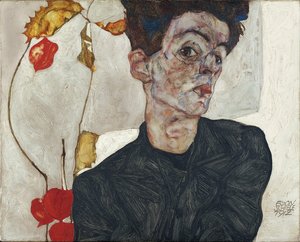
1890 - 1918 , Itävalta-Unkari

Explore the profound history of Surrealist Expressionism. Discover how artists blended dream logic with raw emotion to navigate post-war trauma through masterful, evocative imagery and psychological depth.

Explore the profound history of Expressionism. From Edvard Munch to Jackson Pollock, discover how artists used distortion and color to convey raw emotion. A definitive guide for art lovers seeking deep historical context and mastery in fine art reproductions.
Explore the profound depth of Figurative Expressionism. From Edvard Munch to William H. Johnson, learn how masters use the human form to capture raw emotion through color and distortion in this expert art history guide.


Pysy ajan tasalla uusimmista taideuutisista, eksklusiivisista tarjouksista ja sisustusideoista.
Kerro meille projektistasi, niin taideasiantuntijamme tarjoavat sinulle kolme henkilökohtaista taidesuositusta.
Anna meidän kuratoida 3 vaihtoehtoa juuri sinulle – Ilmaiseksi!


 Esikatselu
 Jaa
Jaa Jaa
Jaa
 Tarkemmat tiedot

 Lataa
Lataa
 Samanlaisia
 Röntgenkuva
 Diaesitys
 Näytä lisää







 Lasivaihtoehto on saatavilla vain alle 110 cm kokoisina teoksina