x

Käsinmaalattu öljyväri kankaalle haluamassasi koossa ja kehyksissä, taiteilijoidemme valmistamana tilauksesta. ( Osta printti Osta kuva)





























Valitse valmiista mitoistamme sellaiset, jotka vastaavat teoksen alkuperäisiä mittasuhteita.

Voit syöttää omat mitat sopimaan tiettyyn kehykseen tai tilaan. Jos valitsemasi koko ei vastaa alkuperäisen kuvan mittasuhteita, rajaamme taideteoksen tai jatkamme maalausta käsin maalatuilla elementeillä. Digitaalinen esikatselu lähetetään hyväksyttäväksi ennen tuotannon aloittamista.
Huomioithan, että näytöllä oleva esikatselu ei vastaa todellista rajausta tai jatkamista. Vain digitaalinen mallikuva näyttää lopullisen sommittelun tarkasti.
Vaikka mittatilaustyöt ovat mahdollisia, suosittelemme valitsemaan mitan ennalta määritetystä listasta alkuperäisten mittasuhteiden säilyttämiseksi.
Maailmanlaajuinen toimitus () 3–4 viikossa tavallisen 5 viikon sijaan. (14 elokuu). Laadusta ei tingitä.


untitled (839)
Replikaatin koko
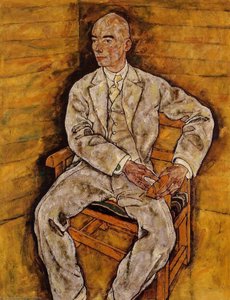
Egon Schiele’s “Untitled (839),” a stark black and white study, isn’t merely a depiction of two men; it’s a concentrated distillation of anxiety, power dynamics, and the unsettling beauty inherent in human interaction. Created during a period of immense personal turmoil for the artist – a time marked by illness, loss, and the looming shadow of World War I – this painting vibrates with an almost palpable tension. The photograph itself offers a glimpse into a scene brimming with unspoken narratives, inviting viewers to contemplate the subtle gestures and loaded glances that define their relationship.
Born in 1890 in Tulln an der Donau, Austria, Egon Schiele’s life was a relentless exploration of the darker aspects of human experience. His early years were profoundly shaped by tragedy – the death of his father from syphilis at just fourteen, and later the loss of his sister Elvira. These events fueled within him a preoccupation with mortality, illness, and the fragility of existence—themes that permeate much of his oeuvre. Raised under the watchful eye of an uncle who exerted considerable control over his life, Schiele developed a fiercely independent spirit, evident in his bold artistic choices. His fascination with trains, a recurring motif throughout his work, speaks to a yearning for movement and escape from the constraints of his upbringing. Schiele’s art is often described as Expressionist, characterized by its distorted figures, intense emotionality, and use of jagged lines—techniques he honed under the tutelage of Gustav Klimt, yet ultimately forged his own distinct style.
The painting’s power lies in its carefully constructed ambiguity. The two men are positioned close together, their bodies almost touching, yet a clear hierarchy exists. One man gestures emphatically towards the other, his hand resting on the shoulder of his companion—a gesture that could be interpreted as guidance, command, or perhaps even accusation. The tie hanging from the first man’s clothing adds a subtle layer of detail, hinting at social status or a shared past. The background figures, though indistinct, suggest a gathering, a scene of activity that contrasts sharply with the intense focus on the central pair. It's important to note Schiele often included small figures in his paintings, adding layers of narrative and creating a sense of a larger world beyond the immediate subjects.
The painting’s monochromatic palette further enhances its dramatic effect, stripping away any distractions and intensifying the emotional impact. The stark contrast between light and shadow creates a sense of depth and volume, while the simplified forms draw attention to the figures' gestures and expressions. Schiele was known for his ability to capture fleeting moments of intense emotion—a skill he masterfully demonstrates in “Untitled (839).”
"Untitled (839)" is more than just a portrait; it’s a window into the artist's psyche, a raw and honest exploration of human relationships and the anxieties of modern life. Schiele’s work continues to resonate with viewers today because of its unflinching honesty and its ability to evoke powerful emotions. Reproductions of this painting offer a chance to experience Schiele’s unique vision firsthand, bringing his intense and unsettling world into your own space. Consider commissioning a hand-painted reproduction from Most-Famous-Paintings.com – a faithful recreation that captures the essence of this iconic work.

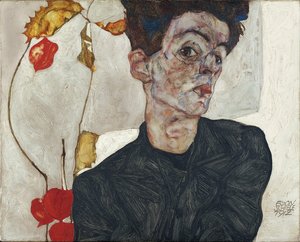
1890 - 1918 , Itävalta-Unkari

Explore the profound artistry of black and white photography. From the chemistry of gelatin silver to the chiaroscuro of the Old Masters, discover how monochrome captures the eternal essence of light, form, and emotion for the discerning art collector.


Pysy ajan tasalla uusimmista taideuutisista, eksklusiivisista tarjouksista ja sisustusideoista.
Kerro meille projektistasi, niin taideasiantuntijamme tarjoavat sinulle kolme henkilökohtaista taidesuositusta.
Anna meidän kuratoida 3 vaihtoehtoa juuri sinulle – Ilmaiseksi!


 Esikatselu
 Jaa
Jaa Jaa
Jaa
 Tarkemmat tiedot

 Lataa
Lataa
 Samanlaisia
 Röntgenkuva
 Diaesitys

 Näytä lisää







 Lasivaihtoehto on saatavilla vain alle 110 cm kokoisina teoksina