


x

Museolaatuisia giclée- tai kankaitaulun tulosteita nopealla tuotannolla ja joustavilla viimeistelyvaihtoehdoilla. ( Osta käsintehty maalaus Osta kuva)





























Valitse valmiista mitoistamme sellaiset, jotka vastaavat teoksen alkuperäisiä mittasuhteita.

Voit syöttää omat mitat sopiaksesi tiettyyn kehykseen tai tilaan. Jos valittu koko ei vastaa alkuperäisen kuvan mittasuhteita, rajaamme teosta tai laajennamme kuvaa peilatulla tai yhtenäisellä reunalla. Digitaalinen mallikuva lähetetään hyväksyttäväksi ennen tuotannon aloittamista.
Huomaathan, että näytöllä näkyvä esikatselu ei vastaa lopullista rajausta tai laajennusta. Vain mallikuva näyttää lopullisen sommittelun tarkasti.
Vaikka räätälöityjä kokoja on saatavilla, suosittelemme valitsemaan mitat valmiista listasta alkuperäisten mittasuhteiden säilyttämiseksi.
Toimitus maailmanlaajuisesti () kahdessa viikossa tavallisen 4–5 viikon sijaan. (21 elokuu)


Yhdistelmä (56)
Replikaatin koko
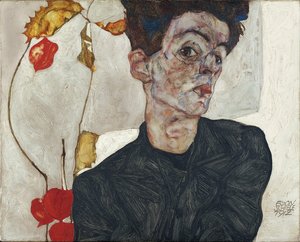
Egon Schiele’s “Untitled (56)” is not merely a painting; it's an unflinching gaze into the heart of human vulnerability. Completed in 1918, just months before his untimely death, this work embodies the artist’s signature style – a potent blend of raw emotion, distorted forms, and unsettling psychological depth. The image depicts a woman, her features rendered with remarkable clarity despite the overall sense of unease, standing before an indistinct wall or building. Her long hair cascades around her face, framing a gaze that seems both defiant and profoundly sorrowful. The color palette is deliberately restrained yet powerfully evocative: shades of muted yellow, deep blue, and flashes of crimson create a visual atmosphere thick with melancholy and unspoken tension.
Schiele’s technique is instantly recognizable. He employs rapid, almost frantic brushstrokes – visible in the layering of paint and the slight distortions of the figure – to convey a sense of urgency and instability. The woman's body, though largely occupying the frame, feels strangely detached, as if she exists on the periphery of her own experience. This deliberate ambiguity is central to Schiele’s work; he rarely offers easy answers or comforting resolutions. Instead, he presents us with fragments of reality, inviting us to contemplate the complexities of human existence and the inevitability of suffering.
To understand “Untitled (56),” it's crucial to consider Schiele’s deeply personal history. His life was marked by profound loss – the early deaths of his father, who succumbed to syphilis, and his sister Elvira. These tragedies profoundly shaped his artistic vision, fueling a preoccupation with mortality, illness, and the fragility of human life. The painting can be interpreted as a meditation on these themes, a visual representation of the lingering effects of grief and the awareness of impending death. The woman’s posture, slightly slumped and introspective, suggests a deep-seated sadness, while her direct gaze seems to challenge the viewer to confront their own mortality.
Schiele's exploration of sexuality is also interwoven with his themes of loss and vulnerability. His self-portraits, often depicting nude figures in moments of intense emotional turmoil, are not simply explorations of physical beauty but rather investigations into the darker aspects of human desire and its connection to pain. “Untitled (56)” subtly hints at this duality, suggesting a complex relationship between strength and weakness, defiance and despair.
“Untitled (56)” is firmly rooted in the Expressionist movement, which sought to convey subjective emotions and experiences rather than objective reality. Schiele’s distorted forms, exaggerated features, and intense color palette are hallmarks of this style. He rejected academic conventions in favor of a more visceral and emotionally charged approach to artmaking. His work reflects the anxieties and uncertainties of the early 20th century – a period marked by rapid social change, political upheaval, and a growing sense of alienation.
The painting’s composition—the woman centered within the frame, facing an undefined space—creates a feeling of isolation and introspection. It's a visual metaphor for the individual’s struggle to find meaning and connection in a rapidly changing world. Schiele’s ability to capture such profound emotional depth with such simple means is what makes “Untitled (56)” a truly remarkable work of art.
Most-Famous-Paintings offers meticulously crafted, hand-painted reproductions of Egon Schiele's "Untitled (56)" that faithfully capture the artist’s unique style and emotional intensity. Each reproduction is created by skilled artists using traditional techniques and high-quality materials, ensuring a stunningly accurate representation of the original painting. Whether you are an art collector, an interior designer seeking to add a touch of dramatic flair, or simply someone who appreciates Schiele's powerful vision, a Most-Famous-Paintings reproduction of “Untitled (56)” is a beautiful and meaningful addition to your collection.
Explore the full artwork details and order your custom reproduction today at Most-Famous-Paintings.com

1890 - 1918 , Itävalta-Unkari

Explore the profound history of Expressionism. From Edvard Munch to Jackson Pollock, discover how artists used distortion and color to convey raw emotion. A definitive guide for art lovers seeking deep historical context and mastery in fine art reproductions.

Explore the profound history of Surrealist Expressionism. Discover how artists blended dream logic with raw emotion to navigate post-war trauma through masterful, evocative imagery and psychological depth.
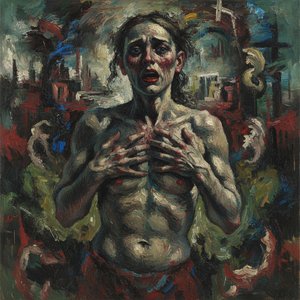
Explore the profound depth of Figurative Expressionism. From Edvard Munch to William H. Johnson, learn how masters use the human form to capture raw emotion through color and distortion in this expert art history guide.


Pysy ajan tasalla uusimmista taideuutisista, eksklusiivisista tarjouksista ja sisustusideoista.
Kerro meille projektistasi, niin taideasiantuntijamme tarjoavat sinulle kolme henkilökohtaista taidesuositusta.
Anna meidän kuratoida 3 vaihtoehtoa juuri sinulle – Ilmaiseksi!


 Esikatselu
 Jaa
Jaa Jaa
Jaa
 Tarkemmat tiedot

 Lataa
Lataa
 Samanlaisia
 Röntgenkuva
 Diaesitys
 Näytä lisää







 Lasivaihtoehto on saatavilla vain alle 110 cm kokoisina teoksina


