x


 Tilaa painos Osta kuva
 Jaa
Jaa
 Tarkemmat tiedot
 Lisää suosikkeihin
 Lataa
Lataa
 Samanlaisia
 Röntgenkuva
 Diaesitys
Käsinmaalattu öljyväri kankaalle haluamassasi koossa ja kehyksissä, taiteilijoidemme valmistamana tilauksesta.
Valitse valmiista mitoistamme sellaiset, jotka vastaavat teoksen alkuperäisiä mittasuhteita.

Voit syöttää omat mitat sopimaan tiettyyn kehykseen tai tilaan. Jos valitsemasi koko ei vastaa alkuperäisen kuvan mittasuhteita, rajaamme taideteoksen tai jatkamme maalausta käsin maalatuilla elementeillä. Digitaalinen esikatselu lähetetään hyväksyttäväksi ennen tuotannon aloittamista.
Huomioithan, että näytöllä oleva esikatselu ei vastaa todellista rajausta tai jatkamista. Vain digitaalinen mallikuva näyttää lopullisen sommittelun tarkasti.
Vaikka mittatilaustyöt ovat mahdollisia, suosittelemme valitsemaan mitan ennalta määritetystä listasta alkuperäisten mittasuhteiden säilyttämiseksi.
Maailmanlaajuinen toimitus () 3–4 viikossa tavallisen 5 viikon sijaan. (18 heinäkuu). Laadusta ei tingitä.


Evening Patrol
Replikaatin koko
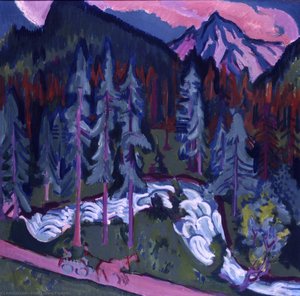
Ernst Ludwig Kirchner’s “Evening Patrol” is not merely a depiction of two riders on horseback; it's a visceral plunge into the anxieties and uncertainties that defined the early 20th century. Executed in the style of German Expressionism, this work, likely a lithograph or etching, captures a moment suspended between urgency and unease, reflecting Kirchner’s profound engagement with the psychological landscape of his time. The composition immediately commands attention – two figures, rendered with stark, angular forms and bold black lines, dominate the central space, their diagonal movement suggesting a relentless pursuit, a patrol perhaps, yet one imbued with an unsettling lack of purpose. The simplified background, comprised of loosely defined shapes hinting at trees or foliage, serves not as a backdrop but as a visual echo of the figures’ internal turmoil.
“Evening Patrol” transcends a simple narrative; it’s a potent symbol of the anxieties simmering beneath the surface of early 20th-century Europe. The distorted forms, flattened perspective, and lack of realistic detail are hallmarks of Expressionism's core philosophy – to depict not what is seen but what is felt. The riders themselves become embodiments of this unease, their angular bodies and forceful lines suggesting a loss of control, a struggle against an unseen force. The ambiguity of their mission—a patrol or pursuit—further contributes to the artwork’s unsettling atmosphere, mirroring the broader sense of disorientation and uncertainty that characterized the era. Kirchner's work resonates with the concerns of his time – the rapid industrialization, social upheaval, and growing sense of alienation that fueled the Expressionist movement.
Kirchner’s “Evening Patrol” firmly places him within the heart of the German Expressionist movement, a reaction against the perceived superficiality and academic constraints of traditional art. Influenced by artists like Albrecht Dürer and deeply affected by the social and political climate of his time – particularly the rise of industrialization and urban life – Kirchner sought to express raw emotion through distorted forms and bold lines. His work aligns closely with the style of other key Expressionist figures, such as Emil Nolde and Max Pechstein, sharing a commitment to conveying subjective experience rather than objective reality. The piece’s dynamic composition and emotional intensity are hallmarks of Kirchner's distinctive approach, solidifying his place as one of the most important artists of the 20th century.
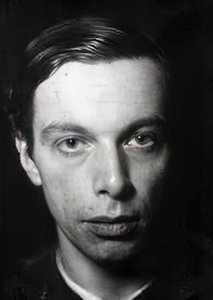
1880 - 1938 , Saksa

Explore the powerful world of Ernst Ludwig Kirchner and German Expressionism. Discover his iconic paintings, Die Brücke group, and the movement's exploration of urban anxiety & modern identity. Expert analysis for collectors & enthusiasts.
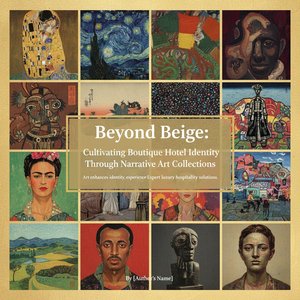
Luo ainutlaatuinen brändi boutique-hotellillesi kuratoidun taidekokoelman avulla. Opas sisustussuunnittelijoille ja hotelliyrittäjille visuaalisen identiteetin vahvistamiseen ja asiakaskokemuksen parantamiseen.

Explore the rich symbolism & emotional power of yellow in art history! From Van Gogh to Kandinsky, discover how artists used this vibrant hue. Expert analysis & high-quality reproductions at Most-Famous-Paintings.
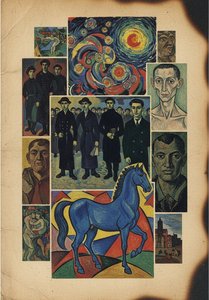
Uppoudu Saksan ekspressionismin maailmaan! Tutustu 10 mestariteokseen – Kirchnerin voimakkaista väreistä Munchin tunteisiin. Löydä taidemaalauksien tarinat ja inspiroi sisustusta Most-Famous-Paintings.com:ssa. Explore the full collection online!
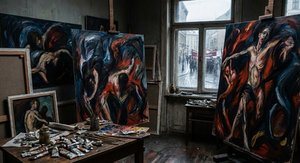
Explore the powerful world of Expressionism! Discover key artists like Kirchner & Nolde, understand its emotional impact, and learn about this revolutionary art movement's lasting legacy. Expert insights for collectors & enthusiasts.


Pysy ajan tasalla uusimmista taideuutisista, eksklusiivisista tarjouksista ja sisustusideoista.
Kerro meille projektistasi, niin taideasiantuntijamme tarjoavat sinulle kolme henkilökohtaista taidesuositusta.
Anna meidän kuratoida 3 vaihtoehtoa juuri sinulle – Ilmaiseksi!


 Jaa
Jaa


 Näytä lisää




































 Lasivaihtoehto on saatavilla vain alle 110 cm kokoisina teoksina