


x

Osta korkearesoluutioinen, parannettu digitaalikuva, joka on laadultaan huomattavasti parempi kuin verkkosivuston esikatselu.
Jokainen tiedosto valmistellaan huolellisesti omien asiantuntijoidemme toimesta käyttäen edistyneitä työkaluja ja ammattitaitoista manuaalista retusointia. Varmistamme, että jokaisessa kuvassa on poikkeuksellinen selkeys, tarkka värintoisto ja hienovaraiset yksityiskohdat.
Lopputiedosto toimitetaan sähköpostitse 72 tunnin kuluessa, ja se on optimoitu välittömään käyttöön ammattimaisissa, toimituksellisissa ja painoympäristöissä. Laatu on sama, johon huipputason suunnittelustudiot, kustantajat ja galleriat luottavat.
Lataa korkearesoluutioinen tiedosto henkilökohtaiseen näyttelyyn, tulostamiseen ja luoviin projekteihin. ( Osta printti Osta käsintehty maalaus)
Kun valitset Most-Famous-Paintings.com-palvelun, et saa vain kuvaa – saat ammattimaisesti parannetun digitaalisen taideteoksen, joka on luotu tarkkuudella ja jonka takaa tulee tyytyväisyystakuu. Tässä on kaikki, mitä tilauksesi sisältää, automaattisesti:

Korkearesoluutioinen digitaalinen kuvatiedostosi lähetetään sähköpostiisi 72 tunnin kuluessa tilauksesta – valmiina käytettäväksi välittömästi.

Taiteilijasi teos on optimoitu ammattimaisesti edistyneiden tekoälytyökalujen ja manuaalisen muokkauksen avulla, mikä takaa maksimaalisen yksityiskohtaisuuden, selkeyden ja väritarkkuuden.

Oletko vahingossa poistanut tai kadottanut tiedostosi? Ei hätää – lähetämme sen sinulle uudelleen milloin tahansa täysin maksutta.

Nauti taiteestasi välittömästi ilman tulleja, veroja tai toimitusmaksuja – digitaaliset lataukset ovat aina verovapaita.

Varmistamme, että digitaalinen kuvasi vastaa alkuperäisiä värejä mahdollisimman tarkasti käyttämällä ammattilaistason työkaluja ja värinhallintaa.

Jos et ole tyytyväinen digitaaliseen kuvaasi, muokkaamme sitä tai palautamme 100% takaisin 60 päivän kuluessa – ilman kysymyksiä.

Etkö ole tyytyväinen? Saat täyden hyvityksen 60 päivän kuluessa digitaalisen tiedostosi vastaanottamisesta – ilman kyselyitä.

Osta 3 kuvaa, säästä 10% - Osta 5, säästä 15% - Osta 10+, säästä 20%. Erinomainen valinta luoviin projekteihin, gallerioille ja toimistoille.
Fernand Léger's 1916 painting, "The Proof That Man Descended From Monkeys," is far more than a whimsical depiction of a man perched atop a ladder. It’s a pivotal work in the evolution of early 20th-century art, a bold statement about modernity, and a surprisingly poignant reflection on humanity's place within the natural world. Created during the tumultuous years of World War I, this piece embodies Léger’s innovative “Tubism” style – a movement he pioneered alongside Pablo Picasso and Georges Braque – that sought to capture the dynamism of industrial life through simplified, geometric forms.
The scene itself is instantly arresting. A man, rendered in Léger's signature blocky style, sits precariously on a ladder, chains encircling his neck. He’s not a heroic figure; rather, he appears bewildered and slightly absurd, a symbol of the disorientation felt by many during this period of rapid social and technological change. Below him, a chaotic scene unfolds – soldiers, engineers, and laborers engage in various tasks, all depicted with a raw, almost brutal honesty. The composition is deliberately fragmented, mirroring the shattered sense of order that war had brought to Europe.
Léger’s Tubism was born out of a desire to translate the impact of machinery and urban life onto canvas. Rejecting traditional representational techniques, he employed simplified forms – cylinders, cones, and cubes – to capture the essence of industrial objects and processes. This wasn't simply an aesthetic choice; it was a philosophical one. Léger believed that these geometric shapes represented a new way of seeing the world, a world dominated by technology and industry.
The painting’s palette is deliberately restrained, utilizing bold primary colors – reds, yellows, blues – punctuated by black and white. This stark contrast emphasizes the forms and creates a sense of visual energy. Léger's brushwork is loose and expressive, adding to the dynamism of the composition. Notice how he uses overlapping planes and fragmented perspectives to create a feeling of movement and instability.
The title itself – “The Proof That Man Descended From Monkeys” – immediately introduces a layer of complex symbolism. It’s a direct reference to Darwin's theory of evolution, which was gaining traction at the time. Léger wasn't simply illustrating scientific theory; he was using it as a metaphor for humanity’s relationship with nature and technology. The man on the ladder can be interpreted as representing mankind’s struggle to adapt to this new world, a world increasingly shaped by forces beyond our control.
Furthermore, the painting's creation coincided with the horrors of World War I. Léger’s depiction of industrial labor reflects the widespread mobilization of men and resources for war production. The chaotic scene below the ladder can be seen as a commentary on the senselessness and brutality of conflict. It is important to note that this artwork was created during a time of immense social upheaval, reflecting anxieties about progress, identity, and humanity's future.
"The Proof That Man Descended From Monkeys" remains a significant work in the history of modern art. It’s a testament to Léger’s innovative approach to form and color, and his ability to capture the spirit of modernity with remarkable clarity. Reproductions of this artwork offer a unique opportunity to experience this pivotal moment in artistic expression – a bold exploration of symbolism, technology, and the human condition.

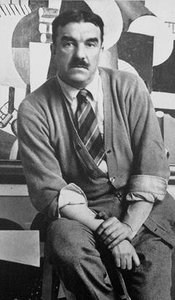
1881 - 1955 , Ranska


Pysy ajan tasalla uusimmista taideuutisista, eksklusiivisista tarjouksista ja sisustusideoista.
Kerro meille projektistasi, niin taideasiantuntijamme tarjoavat sinulle kolme henkilökohtaista taidesuositusta.
Anna meidän kuratoida 3 vaihtoehtoa juuri sinulle – Ilmaiseksi!


 Esikatselu
 Jaa
Jaa Jaa
Jaa
 Tarkemmat tiedot

 Lataa
Lataa
 Samanlaisia
 Röntgenkuva
 Diaesitys

 Näytä lisää


