Myy taiteesi
Toivelista Ostoskori Cart
EsikatseluEsikatselu Esikatsele AR-tilassaEsikatsele AR-tilassa Osta printti Osta printtiOsta käsintehty maalaus Osta käsintehty maalaus JaaJaa
Tarkemmat tiedotTarkemmat tiedot Lisää suosikkeihin Lisää suosikkeihin LataaLataa SamanlaisiaSamanlaisia RöntgenkuvaRöntgenkuva DiaesitysDiaesitys

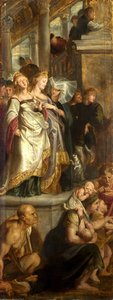
Annunciation

Experience the divine drama of this 17th-century Annunciation by Frans Luyckx, capturing Baroque grace; discover this masterpiece for your collection today.

Explore the works of Frans Luyckx (1604-1668), a Dutch Golden Age painter known for his captivating self-portraits and group portraits. Discover art at the Frans Hals Museum!

Osta korkearesoluutioinen, parannettu digitaalikuva, joka on laadultaan huomattavasti parempi kuin verkkosivuston esikatselu.

Jokainen tiedosto valmistellaan huolellisesti omien asiantuntijoidemme toimesta käyttäen edistyneitä työkaluja ja ammattitaitoista manuaalista retusointia. Varmistamme, että jokaisessa kuvassa on poikkeuksellinen selkeys, tarkka värintoisto ja hienovaraiset yksityiskohdat.

Lopputiedosto toimitetaan sähköpostitse 72 tunnin kuluessa, ja se on optimoitu välittömään käyttöön ammattimaisissa, toimituksellisissa ja painoympäristöissä. Laatu on sama, johon huipputason suunnittelustudiot, kustantajat ja galleriat luottavat.

Digitaalinen kuva

Lataa korkearesoluutioinen tiedosto henkilökohtaiseen näyttelyyn, tulostamiseen ja luoviin projekteihin. (Osta printti Osta printtiOsta käsintehty maalaus Osta käsintehty maalaus)

Kokonaishinta

$ 24,90

Sisältyy jokaiseen digitaalisen kuvan tilaukseen

Asiantunteva digitaalinen toimitus, taattuun laatuun

Kun valitset Most-Famous-Paintings.com-palvelun, et saa vain kuvaa – saat ammattimaisesti parannetun digitaalisen taideteoksen, joka on luotu tarkkuudella ja jonka takaa tulee tyytyväisyystakuu. Tässä on kaikki, mitä tilauksesi sisältää, automaattisesti:

shipping_icon
Nopea digitaalinen toimitus

Korkearesoluutioinen digitaalinen kuvatiedostosi lähetetään sähköpostiisi 72 tunnin kuluessa tilauksesta – valmiina käytettäväksi välittömästi.

canvas_icon
Tekoälyllä parannettu digitaalinen tiedosto

Taiteilijasi teos on optimoitu ammattimaisesti edistyneiden tekoälytyökalujen ja manuaalisen muokkauksen avulla, mikä takaa maksimaalisen yksityiskohtaisuuden, selkeyden ja väritarkkuuden.

insurance_icon
Ilmainen elinikäinen uudelleenlähetyspalvelu

Oletko vahingossa poistanut tai kadottanut tiedostosi? Ei hätää – lähetämme sen sinulle uudelleen milloin tahansa täysin maksutta.

tax_icon
Ei tuontimaksuja – koskaan

Nauti taiteestasi välittömästi ilman tulleja, veroja tai toimitusmaksuja – digitaaliset lataukset ovat aina verovapaita.

color_icon
Värintoiston tarkkuustakuu

Varmistamme, että digitaalinen kuvasi vastaa alkuperäisiä värejä mahdollisimman tarkasti käyttämällä ammattilaistason työkaluja ja värinhallintaa.

return_icon
60 päivän tyytyväisyystakuu

Jos et ole tyytyväinen digitaaliseen kuvaasi, muokkaamme sitä tai palautamme 100% takaisin 60 päivän kuluessa – ilman kysymyksiä.

guarantee_icon
100% Rahat takaisin -takuu

Etkö ole tyytyväinen? Saat täyden hyvityksen 60 päivän kuluessa digitaalisen tiedostosi vastaanottamisesta – ilman kyselyitä.

discount_icon
Suurtilaaja-alennukset

Osta 3 kuvaa, säästä 10% - Osta 5, säästä 15% - Osta 10+, säästä 20%. Erinomainen valinta luoviin projekteihin, gallerioille ja toimistoille.

Pikaista tietoa

  • Subject or theme: Annunciation
  • Year: 1630
  • Artist: Frans Luyckx
  • Title: Annunciation
  • Movement: Baroque
  • Artistic style: Flemish Baroque

Taidevisa

Jokaisessa kysymyksessä on vain yksi oikea vastaus.

Kysymys 1:
What is the title of the artwork?
Kysymys 2:
Who is the artist credited with painting this work?
Kysymys 3:
Approximately what year was the Annunciation painted?
Kysymys 4:
In the scene, what is the central action depicted?
Kysymys 5:
Which artistic period is associated with Frans Luyckx's style?

Keräilykohteen kuvaus

The Divine Encounter: An Exploration of Frans Luyckx's Annunciation

To gaze upon this depiction of the Annunciation is to step across the threshold into a moment suspended between worlds—the sacred and the earthly. Frans Luyckx, master painter of the Baroque era, captures not merely an event, but a profound spiritual resonance. The scene unfolds with exquisite grace: Mary, kneeling in humble devotion, awaits the divine message. Flanking her are two angels, figures steeped in celestial mystery. One angel, perhaps symbolizing the veil between realms, partially obscures his face, lending an air of hushed anticipation to the composition, while the other reaches out in a gesture of tender revelation. The entire tableau is imbued with the rich, dramatic sensibility characteristic of 17th-century Flemish painting.

Baroque Drama and Technical Mastery

Luyckx’s handling of light and shadow here is nothing short of masterful. The technique employed allows the divine luminescence to seem as if it emanates from within the very fabric of the canvas, illuminating the rich draperies and the delicate gestures of the figures. One can almost feel the texture of the silk and velvet against the skin. While Luyckx absorbed the dynamism of Rubens’ workshop, his touch retains a refined elegance, particularly visible in the meticulous rendering of the background details and the placement of objects, such as the vase nestled near the lower left corner. This attention to detail grounds the miraculous event within a tangible, believable space, making the spiritual narrative all the more immediate for the modern viewer.

Symbolism Woven into Sacred Narrative

The Annunciation itself is rich with theological symbolism. The presence of Mary kneeling signifies her acceptance of God's will, a posture of profound humility that anchors the emotional core of the piece. The angels serve as messengers, conduits between heaven and earth. Every element—the gesture of reaching, the veiled face, the very composition—guides the eye through layers of meaning. For collectors and those drawn to religious art, this painting offers an accessible yet deeply complex meditation on incarnation, purity, and divine intervention. It is a visual sermon rendered with breathtaking artistry.

Bringing Sacred Beauty Home

For the discerning collector or designer seeking to infuse a space with history, drama, and sublime beauty, a reproduction of this work offers unparalleled depth. The size, measuring approximately 35 x 34 cm, makes it an ideal focal point for a drawing-room, study, or chapel niche. Owning this piece is not merely acquiring art; it is curating a moment of contemplation. It allows the quiet drama and sophisticated palette of the Baroque period to breathe life into your décor, serving as a constant, gentle reminder of enduring beauty and profound narrative.


Taiteilijan elämäkerta

A Courtly Brush: The Life and Art of Frans Luyckx

Frans Luyckx, a name perhaps less immediately recognizable than his celebrated contemporary Peter Paul Rubens, nevertheless occupies a significant position within the tapestry of 17th-century Flemish painting. Born in Antwerp around 1604, into a family of merchants, Luyckx’s trajectory led him not to the bustling art market of his native city, but to the rarefied atmosphere of the Habsburg Imperial Court in Vienna. His story is one of ambition, skillful adaptation, and a mastery of portraiture that captured the power and prestige of an empire. Initially apprenticed to Remakel Sina and later joining Rubens’ workshop—a crucible for artistic talent—Luyckx absorbed the technical brilliance and dynamic compositions characteristic of the Baroque style. However, it was his journey beyond Flanders, specifically to Rome in 1635 and subsequently Vienna around 1638, that truly defined his career. These travels were instrumental in establishing crucial connections with influential figures within the Habsburg circles, paving the way for his appointment as court painter to Emperor Ferdinand III.

The Imperial Portraitist

Luyckx’s ascent to prominence at the Viennese court was swift and assured. He became a favored artist, entrusted with immortalizing the imperial family—Ferdinand III himself, his wife Maria Anna of Bavaria, their children, and various members of the extended Habsburg dynasty across Austria and Spain. His portraits weren't merely likenesses; they were carefully constructed statements of authority, lineage, and dynastic continuity. Luyckx possessed a remarkable ability to convey not just physical resemblance but also the character and status of his sitters. He skillfully employed rich fabrics, opulent settings, and refined poses to project an image of regal splendor. The portraits are characterized by a meticulous attention to detail—the gleam of jewels, the texture of velvet, the intricate lace collars—all contributing to a sense of tangible luxury and power. Beyond the Emperor’s immediate family, Luyckx's commissions extended to other prominent nobles and dignitaries, solidifying his reputation as the leading portraitist in Vienna. His work became synonymous with Habsburg courtly life, documenting its rituals, ambitions, and enduring legacy.

Influences and Artistic Development

While deeply indebted to Rubens’ influence—evident in his early works and dynamic compositions—Luyckx developed a distinctive style that moved beyond mere imitation. The Italian sojourn of 1635 likely exposed him to the portraiture traditions of Rome, influencing his approach to capturing psychological depth and refined elegance. However, it was the specific demands of the Habsburg court that shaped his artistic evolution. Unlike the more emotionally charged portraits favored in other centers, Luyckx’s work often prioritized a sense of dignified restraint and formal composure. He excelled at group portraiture, skillfully arranging figures within complex compositions while maintaining individual clarity and prominence. His palette, though rich, tended towards a cooler tonality compared to Rubens' vibrant hues, reflecting the more reserved aesthetic preferences of his imperial patrons. Interestingly, Luyckx’s connections extended beyond the Habsburgs; documented accounts reveal commissions from Polish royalty like Władysław IV Vasa, demonstrating a wider network and influence across European courts.

Beyond Portraits: A Broader Oeuvre

Although celebrated primarily as a portraitist, Frans Luyckx's artistic range wasn’t limited to capturing likenesses. He also ventured into other genres, including historical scenes and allegorical compositions, though these works are less frequently encountered today. His brother, Carstian Luyckx, was himself a notable painter specializing in still lifes—a testament to the artistic environment within the family. The influence of Frans Francken III is also apparent, as he served as a teacher for Carstian. While his historical paintings often echo the style of Rubens and other Flemish masters, they lack the same level of dynamism and emotional intensity found in his portraits. It’s in the realm of portraiture that Luyckx truly distinguished himself, honing a unique skill set tailored to the specific needs and expectations of his imperial clientele.

Historical Significance and Legacy

Frans Luyckx's historical significance lies not only in the artistic quality of his work but also in its role as a visual record of Habsburg courtly life during a pivotal period. His portraits offer invaluable insights into the fashion, customs, and political ambitions of the era. He wasn’t simply painting individuals; he was constructing an image of imperial power and dynastic legitimacy. While perhaps overshadowed by more flamboyant contemporaries like Rubens, Luyckx's meticulous technique, refined elegance, and unwavering commitment to capturing the dignity of his sitters secured his place as a leading portraitist of the Dutch Golden Age. His legacy endures through the numerous portraits that grace museum collections across Europe, offering a captivating glimpse into the world of Habsburg royalty and the artistry that immortalized it.
frans luyckx

frans luyckx

1604 - 1668 , Belgium

Lyhyesti esiteltynä

  • Artistic Movement Or Style: Dutch Golden Age Portraiture
  • Artists Or Movements Influenced By This Artist: ['Frans Hals']
  • Artists Who Influenced This Artist: ['Frans Hals']
  • Date Of Birth: 1604 Antwerp, Belgium
  • Date Of Death: 1668 Wien
  • Full Name: Frans Luyckx
  • Nationality: Flemish
  • Notable Artworks:
    • Ferdinand III
    • Self-portraits
  • Place Of Birth: Antwerp, Belgium