x

Museolaatuisia giclée- tai kankaitaulun tulosteita nopealla tuotannolla ja joustavilla viimeistelyvaihtoehdoilla. ( Osta käsintehty maalaus Osta kuva)





























Valitse valmiista mitoistamme sellaiset, jotka vastaavat teoksen alkuperäisiä mittasuhteita.

Voit syöttää omat mitat sopiaksesi tiettyyn kehykseen tai tilaan. Jos valittu koko ei vastaa alkuperäisen kuvan mittasuhteita, rajaamme teosta tai laajennamme kuvaa peilatulla tai yhtenäisellä reunalla. Digitaalinen mallikuva lähetetään hyväksyttäväksi ennen tuotannon aloittamista.
Huomaathan, että näytöllä näkyvä esikatselu ei vastaa lopullista rajausta tai laajennusta. Vain mallikuva näyttää lopullisen sommittelun tarkasti.
Vaikka räätälöityjä kokoja on saatavilla, suosittelemme valitsemaan mitat valmiista listasta alkuperäisten mittasuhteiden säilyttämiseksi.
Toimitus maailmanlaajuisesti () kahdessa viikossa tavallisen 4–5 viikon sijaan. (16 elokuu)


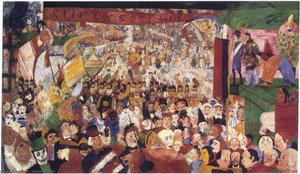
Grande vue de Mariakerke
Replikaatin koko
In the quietude of the Belgian countryside, there exists a scene that transcends mere topography to touch upon the very essence of nostalgia and solitude. James Ensor’s Grande vue de Mariakerke is not simply a depiction of a village nestled in a valley; it is an invitation into a world where the earth breathes through thick, textured strokes of paint. The composition unfolds as a sweeping vista, dominated by expansive fields of tall grasses and reeds that sway under the weight of a dramatic, heavy sky. At the heart of this landscape lies a small, tranquil village, anchored by a prominent church tower that reaches upward, acting as a silent sentinel between the terrestrial realm and the swirling, atmospheric heavens above. The horizontal format of the work emphasizes the immense breadth of the Belgian plains, creating an immersive experience that draws the viewer into a state of quiet contemplation.
The emotional resonance of this piece lies in its delicate balance between peace and a subtle, underlying melancholy. There is a profound sense of stillness, yet the landscape feels vibrantly alive, as if caught in a moment of transition between light and shadow. For the collector or the interior designer, this artwork offers a unique atmospheric depth; it possesses the ability to anchor a room with its grounded, earthy tones while simultaneously providing a window into a dreamlike, emotive space. It is a work that does not merely decorate a wall but breathes life into an environment, offering a sense of historical weight and poetic grace.
To look closely at Grande vue de Mariakerke is to witness the physical struggle and triumph of the artist’s hand. Ensor employs a masterful impasto technique, where the paint is applied so thickly that it creates a sculptural quality on the canvas. This tactile approach is most evident in the undulating fields of grass and the turbulent, billowing clouds, where every brushstroke contributes to a sense of movement and energy. The visible texture catches the light, creating miniature shadows within the painting itself, which lends an incredible depth to the vegetation and the sky.
While Ensor is often celebrated for his later, more grotesque and masked figures, this particular work reveals a profound stylistic kinship with the Impressionist movement, particularly the expressive spirit of Vincent van Gogh. The color palette is vibrant yet tempered by the naturalistic tones of the Belgian landscape—rich ochres, deep greens, and moody blues that coalesce under a diffused, overcast light. This use of color and gestural brushwork allows the artist to prioritize emotional impact over strict realism, utilizing atmospheric perspective to make distant objects appear paler and more ethereal. The result is a painting that feels less like a photographic record and more like a subjective, sensory memory of a place.
Historically, this work serves as a vital link in the evolution of modern art, capturing a pivotal moment when the traditions of landscape painting began to merge with the burgeoning movements of Expressionism. Born in Ostend, Ensor was a figure who bridged the gap between the observational beauty of Impressionism and the raw, psychological intensity of the 20th century. In Grande vue de Mariakerke, we see an artist experimenting with the landscape as a vessel for internal feeling, moving away from academic precision toward a more liberated, personal truth.
The symbolism within the piece is subtle yet profound. The church tower, a recurring motif in Ensor’s work, represents the enduring presence of community and faith amidst the vast, indifferent beauty of nature. The expansive, untamed fields evoke themes of isolation and the sublime, reminding the viewer of the smallness of human structures when compared to the eternal cycles of the natural world. For those seeking a high-quality reproduction, this painting offers more than just aesthetic beauty; it provides a piece of art history that speaks to the enduring human connection to the land, making it an exquisite choice for any curated collection or sophisticated interior design project.


1860 - 1949 , Belgia

Explore the profound evolution of Post-Impressionist landscapes. From Van Gogh's emotional brushwork to Cézanne's structural mastery, discover how these visionaries redefined art history through color and form in this expert guide for fine art enthusiasts.


Pysy ajan tasalla uusimmista taideuutisista, eksklusiivisista tarjouksista ja sisustusideoista.
Kerro meille projektistasi, niin taideasiantuntijamme tarjoavat sinulle kolme henkilökohtaista taidesuositusta.
Anna meidän kuratoida 3 vaihtoehtoa juuri sinulle – Ilmaiseksi!


 Esikatselu
 Jaa
Jaa Jaa
Jaa
 Tarkemmat tiedot

 Lataa
Lataa
 Samanlaisia
 Röntgenkuva
 Diaesitys

 Näytä lisää







 Lasivaihtoehto on saatavilla vain alle 110 cm kokoisina teoksina