


x
Osta korkearesoluutioinen, parannettu digitaalikuva, joka on laadultaan huomattavasti parempi kuin verkkosivuston esikatselu.
Jokainen tiedosto valmistellaan huolellisesti omien asiantuntijoidemme toimesta käyttäen edistyneitä työkaluja ja ammattitaitoista manuaalista retusointia. Varmistamme, että jokaisessa kuvassa on poikkeuksellinen selkeys, tarkka värintoisto ja hienovaraiset yksityiskohdat.
Lopputiedosto toimitetaan sähköpostitse 72 tunnin kuluessa, ja se on optimoitu välittömään käyttöön ammattimaisissa, toimituksellisissa ja painoympäristöissä. Laatu on sama, johon huipputason suunnittelustudiot, kustantajat ja galleriat luottavat.
Lataa korkearesoluutioinen tiedosto henkilökohtaiseen näyttelyyn, tulostamiseen ja luoviin projekteihin. ( Osta printti Osta käsintehty maalaus)
Kun valitset Most-Famous-Paintings.com-palvelun, et saa vain kuvaa – saat ammattimaisesti parannetun digitaalisen taideteoksen, joka on luotu tarkkuudella ja jonka takaa tulee tyytyväisyystakuu. Tässä on kaikki, mitä tilauksesi sisältää, automaattisesti:

Korkearesoluutioinen digitaalinen kuvatiedostosi lähetetään sähköpostiisi 72 tunnin kuluessa tilauksesta – valmiina käytettäväksi välittömästi.

Taiteilijasi teos on optimoitu ammattimaisesti edistyneiden tekoälytyökalujen ja manuaalisen muokkauksen avulla, mikä takaa maksimaalisen yksityiskohtaisuuden, selkeyden ja väritarkkuuden.

Oletko vahingossa poistanut tai kadottanut tiedostosi? Ei hätää – lähetämme sen sinulle uudelleen milloin tahansa täysin maksutta.

Nauti taiteestasi välittömästi ilman tulleja, veroja tai toimitusmaksuja – digitaaliset lataukset ovat aina verovapaita.

Varmistamme, että digitaalinen kuvasi vastaa alkuperäisiä värejä mahdollisimman tarkasti käyttämällä ammattilaistason työkaluja ja värinhallintaa.

Jos et ole tyytyväinen digitaaliseen kuvaasi, muokkaamme sitä tai palautamme 100% takaisin 60 päivän kuluessa – ilman kysymyksiä.

Etkö ole tyytyväinen? Saat täyden hyvityksen 60 päivän kuluessa digitaalisen tiedostosi vastaanottamisesta – ilman kyselyitä.

Osta 3 kuvaa, säästä 10% - Osta 5, säästä 15% - Osta 10+, säästä 20%. Erinomainen valinta luoviin projekteihin, gallerioille ja toimistoille.
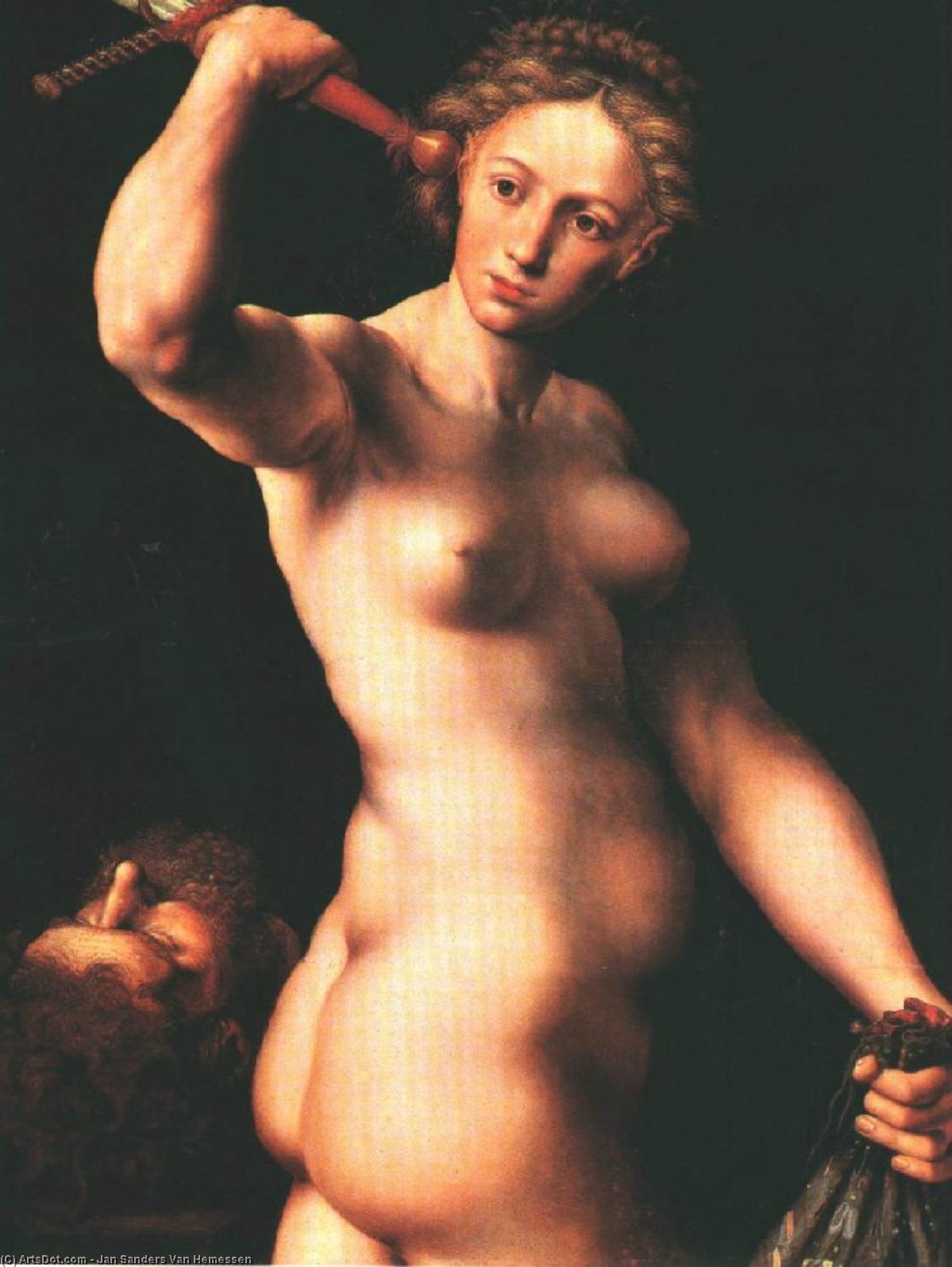
Jan Sanders van Hemessen's "Judith," painted around 1540, isn’t merely a depiction of a biblical tale; it’s a meticulously crafted moral drama rendered with the vibrant realism and psychological depth characteristic of the Northern Renaissance. This arresting image captures the pivotal moment when Judith, the courageous Jewish widow, delivers the fatal blow to Holofernes, the Assyrian general, thereby saving her besieged city. Van Hemessen, a key figure in the burgeoning Flemish genre painting movement, elevates this ancient story into a compelling meditation on female strength, strategic cunning, and divine justice – all presented with an astonishing level of detail and emotional resonance.
The composition immediately commands attention. Judith is not portrayed as a delicate heroine; instead, she’s depicted as a powerfully muscled figure, her body taut with effort and determination. Her profile, turned towards the viewer, conveys both resolve and a hint of grim satisfaction. The severed head of Holofernes, held aloft in her other hand, isn't presented in a gruesome manner but rather as a stark symbol of vanquished tyranny. Van Hemessen masterfully utilizes chiaroscuro – the dramatic interplay of light and shadow – to sculpt Judith’s form and emphasize the weight of her action. The dark background serves not as mere backdrop but as a stage upon which this decisive moment unfolds, drawing all focus onto the central figures.
Van Hemessen's style is deeply rooted in the artistic traditions of Italy, particularly the work of Michelangelo and Raphael. He absorbed their emphasis on idealized human forms, dynamic poses, and a profound understanding of anatomy. However, he skillfully adapted these influences to create a distinctly Northern Renaissance aesthetic. The painting’s realism is remarkable; from the intricate folds of Judith's dress to the texture of Holofernes’s beard and the glistening blood staining his face, every detail is rendered with painstaking precision. Van Hemessen was renowned for his ability to capture the nuances of human expression, evident in Judith’s focused gaze and the subtle hint of triumph in her posture.
The painting's technique showcases van Hemessen’s mastery of oil paint. He employed a layering approach, building up color gradually to achieve rich, luminous effects. The use of impasto – applying thick layers of paint directly onto the canvas – adds texture and depth to the figures and background. This meticulous attention to detail is further enhanced by his skillful handling of light and shadow, creating a sense of three-dimensionality that brings the scene vividly to life.
Beyond its visual beauty, “Judith” is laden with symbolic meaning. The story itself carries significant weight within Jewish tradition, representing themes of courage, faith, and resistance against oppression. Judith’s actions are not simply a violent act but an embodiment of strategic intelligence and righteous defiance. The depiction of Judith as a physically strong woman challenging a powerful male figure speaks to the Renaissance fascination with female agency – a theme that was increasingly explored in art during this period.
Furthermore, the painting can be interpreted as a broader allegory for the triumph of good over evil. Holofernes represents the forces of tyranny and corruption, while Judith embodies virtue and justice. The act of decapitation symbolizes the ultimate defeat of these forces, suggesting that moral strength and strategic action can overcome even the most formidable adversaries. The inclusion of the severed head is not intended to glorify violence but rather to underscore the consequences of injustice and the necessity of resistance.
“Judith” stands as a prime example of the moralizing art that flourished in the Netherlands during the 16th century. Artists like van Hemessen sought to create works that not only depicted biblical stories but also conveyed important ethical and religious lessons. This painting, with its compelling narrative, masterful technique, and profound symbolism, continues to resonate with viewers today – a testament to the enduring power of art to illuminate human experience and inspire reflection.


1500 - 1566 , Belgia


Pysy ajan tasalla uusimmista taideuutisista, eksklusiivisista tarjouksista ja sisustusideoista.
Kerro meille projektistasi, niin taideasiantuntijamme tarjoavat sinulle kolme henkilökohtaista taidesuositusta.
Anna meidän kuratoida 3 vaihtoehtoa juuri sinulle – Ilmaiseksi!


 Esikatselu
 Jaa
Jaa Jaa
Jaa
 Tarkemmat tiedot

 Lataa
Lataa
 Samanlaisia
 Röntgenkuva
 Diaesitys


 Näytä lisää


