x

 Oil On PanelEarly Netherlandish Painting
 1467Renaissance
 221.0 x 160.0 cm
 Gdańskin kansallismuseo
Käsinmaalattu öljyväri kankaalle haluamassasi koossa ja kehyksissä, taiteilijoidemme valmistamana tilauksesta. ( Osta printti Osta kuva)





























Valitse valmiista mitoistamme sellaiset, jotka vastaavat teoksen alkuperäisiä mittasuhteita.

Voit syöttää omat mitat sopimaan tiettyyn kehykseen tai tilaan. Jos valitsemasi koko ei vastaa alkuperäisen kuvan mittasuhteita, rajaamme taideteoksen tai jatkamme maalausta käsin maalatuilla elementeillä. Digitaalinen esikatselu lähetetään hyväksyttäväksi ennen tuotannon aloittamista.
Huomioithan, että näytöllä oleva esikatselu ei vastaa todellista rajausta tai jatkamista. Vain digitaalinen mallikuva näyttää lopullisen sommittelun tarkasti.
Vaikka mittatilaustyöt ovat mahdollisia, suosittelemme valitsemaan mitan ennalta määritetystä listasta alkuperäisten mittasuhteiden säilyttämiseksi.
Maailmanlaajuinen toimitus () 3–4 viikossa tavallisen 5 viikon sijaan. (17 elokuu). Laadusta ei tingitä.


Last Judgment Triptych (central)
Replikaatin koko
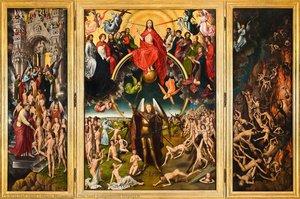
In the quiet corridors of the National Museum in Gdańsk, there exists a window into the divine, a breathtaking spectacle known as Hans Memling’s Last Judgment Triptych. Created between 1467 and 1471, this monumental work is far more than a mere religious relic; it is a symphonic achievement of Early Netherlandish painting that captures the very essence of human anxiety and spiritual hope. As one gazes upon the central panel, the viewer is immediately swept into a cosmic drama where the boundaries between the earthly and the eternal dissolve. The composition is anchored by the majestic presence of Jesus Christ, presiding over the apocalypse with a gravity that commands both awe and introspection. This is not merely a depiction of an event, but an immersive experience designed to stir the soul, making it an incomparable centerpiece for any collection dedicated to the profound depths of classical art.
The technical brilliance of Memling is nothing short of miraculous, showcasing a mastery of the oil medium that was revolutionary for the fifteenth century. Unlike the flatter, more opaque textures of tempera, Memling utilized the translucent properties of oil paint to achieve a luminous, sculptural quality. Each layer of pigment serves to build depth, allowing light to seemingly emanate from within the figures themselves. The drapery of Christ’s robes and the delicate features of the surrounding saints are rendered with such meticulous precision that they possess a tactile, three-dimensional presence. For the discerning collector or interior designer, this level of detail offers a rich visual texture that breathes life into a room, providing a focal point that rewards prolonged contemplation and reveals new nuances with every glance.
Beyond its physical beauty, the triptych serves as a complex theological map, woven with the intricate symbolism characteristic of the Burgundian Netherlands. The central panel acts as the fulcrum of existence, where St. Michael the Archangel performs the solemn task of weighing souls. This act of divine measurement introduces a palpable tension to the work; on one side, the promise of salvation beckons, while on the other, the terrifying descent into the abyss looms. The presence of figures like Tommaso Portinari, a prominent banker, embedded within the sacred narrative, bridges the gap between the contemporary world of the artist and the eternal realm of the divine. This fusion of the personal and the universal creates an emotional resonance that transcends centuries, inviting viewers to reflect on their own place within the grand tapestry of time.
The triptych’s structure—comprising the central scene of judgment, the left wing depicting the ascent to Heaven, and the right wing portraying the descent into Hell—offers a complete narrative arc of the human condition. The movement from the serene, light-filled heavens to the chaotic, shadowed depths of the underworld creates a dramatic chiaroscuro effect that is both visually arresting and emotionally taxing. For those seeking to incorporate art into a sophisticated living space, a high-quality reproduction of this work brings with it an atmosphere of profound dignity and intellectual depth. It is a piece that does not merely decorate a wall but transforms an environment, turning a room into a sanctuary of historical significance and spiritual beauty.

Saksa

Explore the profound beauty of divine judgment in art history. From sacred iconography to the sublime light of Impressionism, discover how masters capture the eternal. Expert insights for the discerning collector seeking depth and spiritual resonance in fine art.

Tutustu alkuflaamilaisen maalauksen 10 mestariteokseen – Jan van Eyckistä Hieronymus Boschiin. Taidetta, historiaa ja inspiraatiota kotiisi Most-Famous-Paintingsilta. Laadukkaat öljyvärimaalaukset ja sisustusehdotukset odottavat! Tutki kokoelma verkossa.

Explore the captivating world of Early Netherlandish painting! Discover Jan van Eyck, Hans Memling & more. Uncover symbolism, techniques & the legacy of these Flemish masters. A comprehensive guide for art enthusiasts.

Explore the captivating world of Early Netherlandish painting! Discover Jan van Eyck & other Flemish masters, their revolutionary techniques, hidden symbolism, and lasting legacy. A comprehensive guide for art enthusiasts.

Tutustu alkuflaamin renessanssin 10 mestariteokseen! Jan van Eyckin, Rogier van der Weydenin ja muiden taiteilijoiden ikonisia maalauksia. Öljyvärimaalauksen huippua – löydä inspiraatiota kotiisi Most-Famous-Paintings.comista. Tutustu kokoelma!


Pysy ajan tasalla uusimmista taideuutisista, eksklusiivisista tarjouksista ja sisustusideoista.
Kerro meille projektistasi, niin taideasiantuntijamme tarjoavat sinulle kolme henkilökohtaista taidesuositusta.
Anna meidän kuratoida 3 vaihtoehtoa juuri sinulle – Ilmaiseksi!


 Esikatselu
 Jaa
Jaa Jaa
Jaa
 Tarkemmat tiedot

 Lataa
Lataa
 Samanlaisia
 Röntgenkuva
 Diaesitys
 Näytä lisää







 Lasivaihtoehto on saatavilla vain alle 110 cm kokoisina teoksina