x

 Oil On CanvasWallArtEarly Netherlandish Renaissance
 1475
1475 31.0 x 24.0 cm
Museolaatuisia giclée- tai kankaitaulun tulosteita nopealla tuotannolla ja joustavilla viimeistelyvaihtoehdoilla. ( Osta käsintehty maalaus Osta kuva)





























Valitse valmiista mitoistamme sellaiset, jotka vastaavat teoksen alkuperäisiä mittasuhteita.

Voit syöttää omat mitat sopiaksesi tiettyyn kehykseen tai tilaan. Jos valittu koko ei vastaa alkuperäisen kuvan mittasuhteita, rajaamme teosta tai laajennamme kuvaa peilatulla tai yhtenäisellä reunalla. Digitaalinen mallikuva lähetetään hyväksyttäväksi ennen tuotannon aloittamista.
Huomaathan, että näytöllä näkyvä esikatselu ei vastaa lopullista rajausta tai laajennusta. Vain mallikuva näyttää lopullisen sommittelun tarkasti.
Vaikka räätälöityjä kokoja on saatavilla, suosittelemme valitsemaan mitat valmiista listasta alkuperäisten mittasuhteiden säilyttämiseksi.
Toimitus maailmanlaajuisesti () kahdessa viikossa tavallisen 4–5 viikon sijaan. (12 elokuu)


St. Veronica
Replikaatin koko
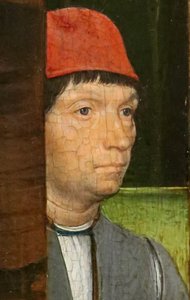
Hans Memling's “St. Veronica,” painted in 1475, stands as a cornerstone of Early Netherlandish art—a movement that prioritized meticulous detail and spiritual contemplation alongside breathtaking realism. More than just a portrait, it’s an immersive experience into the heart of fifteenth-century piety, capturing the profound reverence felt for religious iconography.
The painting depicts St. Veronica, a disciple of Jesus Christ who miraculously possessed a veil bearing his likeness after he carried his crucifix down Calvary. Memling skillfully portrays Veronica kneeling in prayerful devotion, her gaze fixed upon the veil—a poignant symbol of compassion and humility. The composition is carefully balanced, featuring two figures flanking St. Veronica: one standing upright, radiating authority, and the other seated beneath him, offering a sense of serenity and contemplation. A rocky outcrop serves as an understated yet significant backdrop, grounding the scene in the natural world and reinforcing its spiritual atmosphere.
Memling's approach aligns perfectly with the broader stylistic trends of the Flemish Primitives—a movement that distinguished itself from its Italian counterpart by prioritizing independent artistic exploration. He achieved unparalleled realism through masterful oil painting technique, utilizing glazing layers to create luminous surfaces and capturing subtle nuances of light and shadow. The artist’s meticulous attention to detail extends beyond mere representation; it embodies a desire to convey the inner life of his subjects—a characteristic that would become synonymous with Northern Renaissance art.
The central element – Jesus' face on the veil – transcends its visual depiction. It represents Christ’s suffering endured during his crucifixion and, crucially, embodies the promise of redemption offered through faith. Memling’s deliberate choice to portray Veronica with unwavering devotion underscores the importance of humility and compassion in Christian spirituality. The veil itself symbolizes purity and divine grace—a testament to the transformative power of encountering God.
"St. Veronica" continues to resonate powerfully with viewers today, eliciting feelings of serenity, contemplation, and reverence. Memling’s work profoundly influenced subsequent generations of artists, establishing a precedent for portraying religious figures with dignity and sensitivity. His legacy extends beyond individual masterpieces; it resides in his contribution to shaping the artistic landscape of Europe during a period marked by intellectual curiosity and spiritual renewal—a testament to the enduring beauty and significance of Early Netherlandish art.

Saksa

Explore the profound history and technical brilliance of oil on panel painting. From Renaissance masters to modern techniques, discover why this rigid support offers unparalleled precision and permanence for fine art lovers and collectors.


Pysy ajan tasalla uusimmista taideuutisista, eksklusiivisista tarjouksista ja sisustusideoista.
Kerro meille projektistasi, niin taideasiantuntijamme tarjoavat sinulle kolme henkilökohtaista taidesuositusta.
Anna meidän kuratoida 3 vaihtoehtoa juuri sinulle – Ilmaiseksi!


 Esikatselu
 Jaa
Jaa Jaa
Jaa
 Tarkemmat tiedot

 Lataa
Lataa
 Samanlaisia
 Röntgenkuva
 Diaesitys
 Näytä lisää







 Lasivaihtoehto on saatavilla vain alle 110 cm kokoisina teoksina