x

Käsinmaalattu öljyväri kankaalle haluamassasi koossa ja kehyksissä, taiteilijoidemme valmistamana tilauksesta. ( Osta printti Osta kuva)





























Valitse valmiista mitoistamme sellaiset, jotka vastaavat teoksen alkuperäisiä mittasuhteita.

Voit syöttää omat mitat sopimaan tiettyyn kehykseen tai tilaan. Jos valitsemasi koko ei vastaa alkuperäisen kuvan mittasuhteita, rajaamme taideteoksen tai jatkamme maalausta käsin maalatuilla elementeillä. Digitaalinen esikatselu lähetetään hyväksyttäväksi ennen tuotannon aloittamista.
Huomioithan, että näytöllä oleva esikatselu ei vastaa todellista rajausta tai jatkamista. Vain digitaalinen mallikuva näyttää lopullisen sommittelun tarkasti.
Vaikka mittatilaustyöt ovat mahdollisia, suosittelemme valitsemaan mitan ennalta määritetystä listasta alkuperäisten mittasuhteiden säilyttämiseksi.
Maailmanlaajuinen toimitus () 3–4 viikossa tavallisen 5 viikon sijaan. (16 elokuu). Laadusta ei tingitä.


Landscape
Replikaatin koko
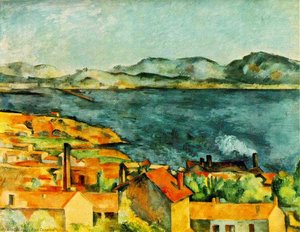
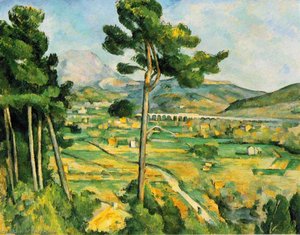
Paul Cézanne’s “Landscape,” painted in 1881, isn’t merely a depiction of a small provincial town; it’s a carefully constructed meditation on the relationship between humanity and nature, rendered with the quiet intensity that would come to define his revolutionary approach to painting. This work, often overlooked amidst the more celebrated Mont Sainte-Victoire series, offers a profound glimpse into Cézanne's evolving artistic vision – a bridge between the fleeting impressions of Impressionism and the nascent explorations of Cubism. The scene unfolds with a deliberate simplicity: a cluster of modest houses nestled within a dense forest, all bathed in the muted light of a winter’s day. Snow blankets the ground, lending an ethereal quality to the familiar landscape, while figures – likely engaged in daily routines – are scattered throughout the composition, adding a subtle layer of human presence without disrupting the overall sense of serene observation.
Cézanne's technique here is particularly revealing. He eschews the bright, broken brushstrokes characteristic of Impressionism, opting instead for more controlled and deliberate applications of paint. Notice how he builds up forms through layers of color – a subtle shift from cool blues and greens in the background to warmer ochres and browns in the foreground. This layering creates an illusion of depth and solidity, moving away from the purely optical representation favored by his predecessors. The trees aren’t sketched with delicate lines; they are blocks of color, suggesting volume and mass rather than simply mimicking their appearance. Similarly, the houses are simplified geometric shapes, hinting at underlying structure rather than striving for photographic accuracy. This deliberate reduction of form is a key element in Cézanne's exploration of pictorial space – he was less concerned with accurately representing what he *saw* and more interested in how he could represent what he *felt* about what he saw.
The forest surrounding the town isn’t presented as a wild, untamed wilderness. Instead, it acts as a carefully considered framework for the scene, providing both visual depth and symbolic resonance. Cézanne frequently depicted forests in his work, often viewing them as a source of stability and grounding – a counterpoint to the perceived chaos of modern life. The dense foliage suggests a sense of enclosure, inviting contemplation and offering a refuge from the bustle of human activity. The trees themselves are not rendered with individual detail; they’re treated as unified masses, contributing to the overall composition rather than competing for attention. This approach reflects Cézanne's broader interest in reducing complex natural forms to their essential geometric components – a principle that would later profoundly influence artists like Picasso and Braque.
The presence of several figures within the landscape is noteworthy. They aren’t presented as active participants in the scene, but rather as integrated elements within the composition—almost akin to still life subjects. Cézanne often included human forms in his landscapes, not necessarily to depict specific individuals, but to provide a sense of scale and context. The horse near one of the houses subtly anchors the scene, suggesting a connection between rural life and the rhythms of the natural world. These figures are deliberately ambiguous, their identities obscured by Cézanne’s simplified rendering style. They invite the viewer to project their own interpretations onto the scene, fostering a sense of personal engagement with the artwork.
“Landscape” exemplifies Cézanne's pivotal role in transitioning art from the Impressionist focus on capturing fleeting moments to a more structured and conceptual approach. He wasn’t simply painting what he saw; he was exploring the underlying geometry of form, seeking to reveal the essential structure beneath the surface appearance. This work demonstrates his growing interest in reducing complex natural forms to their fundamental shapes – a precursor to Cubism's fragmented perspectives. It is a testament to Cézanne’s profound influence on 20th-century art, and a beautiful example of how a seemingly simple landscape can be imbued with layers of meaning and artistic innovation. A hand-painted reproduction offers a remarkable opportunity to experience the quiet power and enduring beauty of this pivotal work.


1839 - 1906 , Ranska
Tutustu Paul Cézannen 25 vaikuttavinta mestariteosta! Postimpressionismin huipputeoksia, still life -maalauksia ja ikonisia maisemia. Löydä taiteen tarinat ja inspiroi kotisi sisustusta Most-Famous-Paintings.com:ssa. Tutki kokoelma verkossa!

Uppoudu lumihuurteen maailmaan! Tutustu 10 kuuluisimpaan taidemaalaukseen – Monet, Munch & muut mestarit. Löydä inspiraatiota sisustukseesi ja hanki korkealaatuiset taiteen toistot Most-Famous-Paintings.com:ista. Explore the full collection online!
Uppoudu maisemataiteen maailmaan! Tutustu 10 inspiroivaan teokseen Monet'sta van Goghiin. Taideteosten tarinat, tekniikat ja tunnelmat – löydä täydellinen taulu kotiisi Most-Famous-Paintings.comista. Explore the full collection online!

Tutustu 10 ikoniseen impressionistimaisemaan! Claude Monet’n ja muiden mestareiden teokset heräävät eloon. Taiteen historiaa, tekniikoita ja inspiraatiota kotiisi – Most-Famous-Paintings.com:sta löydät museolaatuiset taideprintit ja sisustusehdotukset. Tutki kokoelma verkossa!

Uppoudu romanttisen maisemamaalauksen maailmaan! Tutustu Caspar David Friedrichin, Turnerin ja muiden mestareiden ikonisiin teoksiin. Löydä inspiraatiota kotiisi taiteen avulla Most-Famous-Paintings.comista – laadukkaat taideprintit ja sisustusideoita.


Pysy ajan tasalla uusimmista taideuutisista, eksklusiivisista tarjouksista ja sisustusideoista.
Kerro meille projektistasi, niin taideasiantuntijamme tarjoavat sinulle kolme henkilökohtaista taidesuositusta.
Anna meidän kuratoida 3 vaihtoehtoa juuri sinulle – Ilmaiseksi!


 Esikatselu
 Jaa
Jaa Jaa
Jaa
 Tarkemmat tiedot

 Lataa
Lataa
 Samanlaisia
 Röntgenkuva
 Diaesitys

 Näytä lisää







 Lasivaihtoehto on saatavilla vain alle 110 cm kokoisina teoksina