x


 Tilaa maalaus Osta kuva
 Jaa
Jaa
 Tarkemmat tiedot
 Lisää suosikkeihin
 Lataa
Lataa
 Samanlaisia
 Röntgenkuva
 Diaesitys
 EnamelDecorAbstract Expressionism
 1950Modern
 25.0 x 96.0 cm
Museolaatuisia giclée- tai kankaitaulun tulosteita nopealla tuotannolla ja joustavilla viimeistelyvaihtoehdoilla.
Valitse valmiista mitoistamme sellaiset, jotka vastaavat teoksen alkuperäisiä mittasuhteita.

Voit syöttää omat mitat sopiaksesi tiettyyn kehykseen tai tilaan. Jos valittu koko ei vastaa alkuperäisen kuvan mittasuhteita, rajaamme teosta tai laajennamme kuvaa peilatulla tai yhtenäisellä reunalla. Digitaalinen mallikuva lähetetään hyväksyttäväksi ennen tuotannon aloittamista.
Huomaathan, että näytöllä näkyvä esikatselu ei vastaa lopullista rajausta tai laajennusta. Vain mallikuva näyttää lopullisen sommittelun tarkasti.
Vaikka räätälöityjä kokoja on saatavilla, suosittelemme valitsemaan mitat valmiista listasta alkuperäisten mittasuhteiden säilyttämiseksi.
Toimitus maailmanlaajuisesti () kahdessa viikossa tavallisen 4–5 viikon sijaan. (22 heinäkuu)


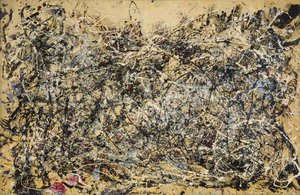
Number 25
Replikaatin koko
To stand before Number 25 is to confront pure, unmediated action. This canvas does not merely depict an image; it records an event—a moment of intense physical and emotional outpouring from the artist himself. Created in 1950, this work by Paul Jackson Pollock stands as a monumental pillar of Abstract Expressionism, forever altering the trajectory of modern art. It is a testament to the revolutionary spirit of post-war New York, where the very act of painting became as significant as the final product. The viewer is invited not just to look, but to feel the kinetic energy that saturated Pollock’s studio during those formative years.
What immediately arrests the eye is the material choice: an exclusive use of black enamel paint. This was a deliberate departure from his more recognizable drip techniques, lending Number 25 a profound, almost tar-like consistency that dries with a captivating depth. The monochromatic nature of the piece strips away the distraction of color, forcing the focus entirely onto line, texture, and the sheer force of application. It is a study in contrast—the deep void of black against the implied light catching the varied viscosity of the paint. This singular focus elevates the work from mere splattering to a highly controlled, dramatic composition.
Pollock’s signature method, often termed "action painting," involved him moving around and over the canvas, dripping, pouring, and flinging paint with his entire body. In Number 25, this process is visible in every stratum of black enamel. One can trace the paths of flung droplets alongside broader sweeps of material, creating a complex web that suggests both chaos and rigorous structure. The composition possesses an "all-over" quality; there is no discernible focal point, only an immersive field where force meets gravity. This technique transforms the canvas into an arena for performance art.
Beyond its technical brilliance, Number 25 resonates with a deep sense of modern anxiety and liberation. The black enamel can be read as both oppressive weight and ultimate freedom—a visual representation of wrestling with profound existential questions. For the collector or designer, this piece offers an unparalleled emotional anchor for any space. It does not whisper; it declares. Its raw power injects intellectual vigor and dramatic depth into a room, serving as a conversation starter that speaks to the history of artistic rebellion.
Owning a reproduction of Number 25 is acquiring a piece of art history’s most electrifying chapter. The scale, measuring approximately 25 x 96 cm, allows this dense field of action to command attention without overwhelming a space. When considering a hand-painted reproduction, one appreciates the painstaking effort required to capture the varied texture and depth that Pollock achieved so effortlessly in life. It is an investment not just in decoration, but in the enduring narrative of artistic innovation.


1912 - 1956 , Yhdysvallat
Tutustu Wassily Kandinskin 25 vaikuttavinta teosta! Uppoudu abstraktin taiteen maailmaan, värien symboliikkaan ja modernin ekspressionismin historiaan. Löydä inspiraatiota kodin sisustukseen Most-Famous-Paintings.com:ista – laadukkaat taideprintit ja reproduktiot.

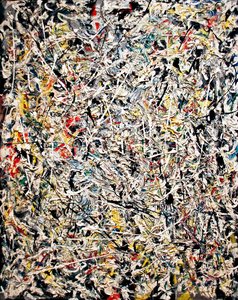
Tutustu abstraktin ekspressionismin 10 mestariteokseen! Jackson Pollock, Mark Rothko ja muut taiteilijat inspiroivat tunteellisuudellaan. Löydä upeita taidemaalauksia kotiisi Most-Famous-Paintings.comista – museolaatuista laatua ja sisustusehdotuksia.
Tutustu Mark Rothkon 25 mestariteokseen ja syvälliseen maailmaan abstraktin ekspressionismin parissa. Löydä tunteelliset väritaulut, taidehistorian helmet ja inspiraatiota kotiisi Most-Famous-Paintingsilta. Tutki kokoelma verkossa!
Tutustu James Abbott McNeill Whistlerin 25 vaikuttavinta mestariteosta! Uppoudu amerikkalaisen impressionismin maailmaan, tunnelmallisiin nocturneihin ja upeisiin muotokuviin. Löydä inspiraatiota sisustukseen Most-Famous-Paintings.comista – taidekopiot museolaadulla. Explore the full collection online!
Tutustu Egon Schielen 25 vaikuttavinta teosta! Uppoudu ekspressionismin maailmaan, ihmiskuvauksen syvyyteen ja tunteelliseen taiteeseen. Löydä inspiraatiota sisustukseen ja korkealaatuiset taideprintit Most-Famous-Paintings.com-sivustolta. Tutki kokoelma verkossa!


Pysy ajan tasalla uusimmista taideuutisista, eksklusiivisista tarjouksista ja sisustusideoista.
Kerro meille projektistasi, niin taideasiantuntijamme tarjoavat sinulle kolme henkilökohtaista taidesuositusta.
Anna meidän kuratoida 3 vaihtoehtoa juuri sinulle – Ilmaiseksi!


 Jaa
Jaa

 Näytä lisää




































 Lasivaihtoehto on saatavilla vain alle 110 cm kokoisina teoksina