x

 Akryyli kankaalleSeinätaideCubism
 1913Varhaiskeskiaika
 96.0 x 64.0 cm
 Kröller-Müllerin museo
Museolaatuisia giclée- tai kankaitaulun tulosteita nopealla tuotannolla ja joustavilla viimeistelyvaihtoehdoilla. ( Osta käsintehty maalaus Osta kuva)





























Valitse valmiista mitoistamme sellaiset, jotka vastaavat teoksen alkuperäisiä mittasuhteita.

Voit syöttää omat mitat sopiaksesi tiettyyn kehykseen tai tilaan. Jos valittu koko ei vastaa alkuperäisen kuvan mittasuhteita, rajaamme teosta tai laajennamme kuvaa peilatulla tai yhtenäisellä reunalla. Digitaalinen mallikuva lähetetään hyväksyttäväksi ennen tuotannon aloittamista.
Huomaathan, että näytöllä näkyvä esikatselu ei vastaa lopullista rajausta tai laajennusta. Vain mallikuva näyttää lopullisen sommittelun tarkasti.
Vaikka räätälöityjä kokoja on saatavilla, suosittelemme valitsemaan mitat valmiista listasta alkuperäisten mittasuhteiden säilyttämiseksi.
Toimitus maailmanlaajuisesti () kahdessa viikossa tavallisen 4–5 viikon sijaan. (14 elokuu)


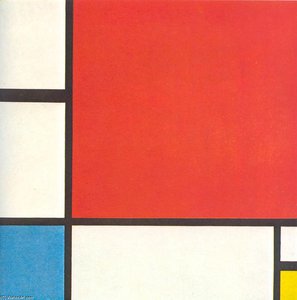
Tableau no. 1
Replikaatin koko
Piet Mondriaan's *Tableau no. 1*, painted in 1913, isn’t merely a composition of rectangles and lines; it’s a pivotal moment in the birth of abstract art, a visual distillation of the artist’s relentless pursuit of pure form and underlying reality. Emerging from his early training as a landscape painter – works like *The Red Mill* demonstrating a meticulous study of nature – Mondrian embarked on a radical transformation, driven by encounters with Cubism and a profound desire to transcend the limitations of representation. This piece embodies that journey, offering a glimpse into the nascent stages of his groundbreaking style.
The painting’s immediate impact is one of controlled dynamism. A dense network of grey, ochre, and muted brown rectangles and squares dominates the canvas, creating an intricate tapestry that seems to both contain and explode outwards. The lines are crisp and decisive, defining each shape with unwavering precision, yet there's a subtle suggestion of curvature within them – a delicate balance between rigidity and fluidity. It’s not a chaotic jumble, but rather a carefully orchestrated structure, reflecting Mondrian’s belief that the universe itself operates according to geometric principles. The underdrawing of a tree, barely discernible beneath the layered paint, hints at his previous life, a ghost of naturalism fading into abstraction.
*Tableau no. 1* firmly establishes Mondrian’s engagement with analytical cubism, a movement characterized by its deconstruction of objects into fragmented planes. Unlike the more sculptural approach of Picasso and Braque, Mondrian reduces his subject to its essential components – lines and shapes – stripping away all extraneous detail. The object isn't presented as it appears; instead, it’s dissected, broken down, and reassembled in a complex, multi-faceted structure. This process is evident in the overlapping planes and the blurring of edges, creating an illusion of depth without relying on traditional perspective. The painting feels like a carefully constructed puzzle, inviting the viewer to actively engage with its spatial relationships.
A significant departure from his earlier work is Mondrian’s restricted palette – primarily shades of grey, ochre, and brown. This deliberate limitation wasn't a rejection of color entirely, but rather a strategic choice to emphasize the underlying structure of the composition. Color becomes less about describing reality and more about defining relationships between forms. The warm tones of ochre provide a subtle grounding, while the cool greys create a sense of balance and restraint. This move towards a monochromatic aesthetic reflects Mondrian’s belief that color could be reduced to its purest essence – a means of conveying spiritual truth rather than merely imitating the visual world.
While *Tableau no. 1* is undeniably abstract, it's not devoid of symbolic meaning. The geometric forms themselves can be interpreted as representing fundamental building blocks – lines for verticality and horizontality, squares and rectangles for stability and order. Mondrian described his artistic ambition as moving “towards ‘the unchanging pure reality behind the changeable forms of nature’”. This painting represents a crucial step in that direction, suggesting an attempt to capture not the appearance of things, but their underlying essence – a timeless, universal truth expressed through simple geometric shapes. The piece invites contemplation on the relationship between form and content, structure and meaning, ultimately offering a glimpse into Mondrian's profound philosophical vision.

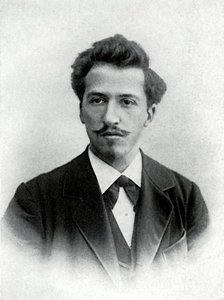
1872 - 1944 , Alankomaat

Explore the revolutionary world of Cubism. Discover how masters Pablo Picasso and Georges Braque dismantled reality through geometric abstraction to redefine modern art history.

Explore the profound impact of Minimalism and Geometric Abstraction. From Mondrian to Malevich, discover how stripping art to its essential forms revolutionized modern aesthetics through our expert-led historical guide.


Pysy ajan tasalla uusimmista taideuutisista, eksklusiivisista tarjouksista ja sisustusideoista.
Kerro meille projektistasi, niin taideasiantuntijamme tarjoavat sinulle kolme henkilökohtaista taidesuositusta.
Anna meidän kuratoida 3 vaihtoehtoa juuri sinulle – Ilmaiseksi!


 Esikatselu
 Jaa
Jaa Jaa
Jaa
 Tarkemmat tiedot

 Lataa
Lataa
 Samanlaisia
 Röntgenkuva
 Diaesitys
 Näytä lisää







 Lasivaihtoehto on saatavilla vain alle 110 cm kokoisina teoksina