x

Museolaatuisia giclée- tai kankaitaulun tulosteita nopealla tuotannolla ja joustavilla viimeistelyvaihtoehdoilla. ( Osta käsintehty maalaus Osta kuva)





























Valitse valmiista mitoistamme sellaiset, jotka vastaavat teoksen alkuperäisiä mittasuhteita.

Voit syöttää omat mitat sopiaksesi tiettyyn kehykseen tai tilaan. Jos valittu koko ei vastaa alkuperäisen kuvan mittasuhteita, rajaamme teosta tai laajennamme kuvaa peilatulla tai yhtenäisellä reunalla. Digitaalinen mallikuva lähetetään hyväksyttäväksi ennen tuotannon aloittamista.
Huomaathan, että näytöllä näkyvä esikatselu ei vastaa lopullista rajausta tai laajennusta. Vain mallikuva näyttää lopullisen sommittelun tarkasti.
Vaikka räätälöityjä kokoja on saatavilla, suosittelemme valitsemaan mitat valmiista listasta alkuperäisten mittasuhteiden säilyttämiseksi.
Toimitus maailmanlaajuisesti () kahdessa viikossa tavallisen 4–5 viikon sijaan. (18 elokuu)


Francesco d'Este
Replikaatin koko
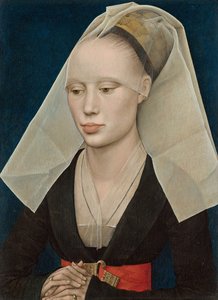
Rogier van der Weyden’s “Francesco d’Este,” completed around 1460, stands as a testament to the artistic fervor of Early Netherlandish painting—a period characterized by profound spiritual contemplation and meticulous realism. This portrait transcends mere likeness; it embodies the ideals of Renaissance nobility intertwined with devout piety, capturing a moment frozen in time with remarkable sensitivity.
The subject is Francesco d’Este, son of Leonello d'Este, Duke of Modena. Commissioned during his formative years, the painting depicts him as a young man embarking on military training—a common practice for aristocratic princes at the time—yet radiating an aura of composure and intellectual curiosity. Van der Weyden skillfully arranges the figure within a richly decorated interior space; Francesco occupies the central position, gazing directly at the viewer with an intense gaze that conveys both confidence and introspection.
Van der Weyden’s signature style—renowned for its unparalleled attention to detail and expressive portrayal of human emotion—is vividly evident in “Francesco d’Este.” Like many of his contemporaries, he adhered to the principles of naturalism championed by Filippo Brunelleschi and Donatello, striving to represent reality with unwavering accuracy. However, unlike purely observational depictions, Van der Weyden infused his canvases with psychological depth, conveying not just what was seen but also what was felt.
The painting’s remarkable luminosity stems from Van der Weyden's masterful use of oil paint—a relatively new medium at the time—allowing for subtle gradations of color and a velvety texture that imbues the scene with palpable warmth. Observe how he renders the folds of Francesco’s shirt with painstaking precision, capturing the interplay of light and shadow to create an illusion of three-dimensionality. The textured wall behind him serves as a counterpoint to the figure's stillness, adding visual interest and reinforcing the painting’s overall sense of grandeur.
Beyond its formal beauty, “Francesco d’Este” carries symbolic significance reflecting the cultural milieu of its time. The inclusion of a ring—a symbol of marital status and social standing—underscores Francesco's noble lineage and aspirations. Furthermore, the serene setting evokes biblical imagery, hinting at the spiritual values upheld by the Este family and highlighting Van der Weyden’s commitment to conveying moral virtue through art.
“Francesco d’Este” remains a cornerstone of Early Netherlandish painting—a masterpiece that continues to inspire admiration for its technical brilliance and emotional resonance. Its enduring appeal lies in Van der Weyden's ability to capture not just the outward appearance of his subject but also the inner spirit, cementing his place as one of the most influential artists of the fifteenth century.

1400 - 1464 , Belgia

Tutustu alkuflaamin renessanssin 10 mestariteokseen! Jan van Eyckin, Rogier van der Weydenin ja muiden taiteilijoiden ikonisia maalauksia. Öljyvärimaalauksen huippua – löydä inspiraatiota kotiisi Most-Famous-Paintings.comista. Tutustu kokoelma!
Tutustu Vincent van Goghin 25 vaikuttavinta mestariteosta! Uppoudu impressionismin ja postimpressionismin maailmaan, auringonkukkien väreihin ja tunteelliseen taiteeseen. Löydä tarinat kuuluisien maalausten takaa ja inspiroidu kotiisi Most-Famous-Paintings.com:ssa. Tutustu kokoelma!

Explore the revolutionary art of Rogier van der Weyden, a pivotal figure of the Early Netherlandish Renaissance. Discover his emotional realism, innovative compositions, and lasting impact on painting history.

Tutustu alkuflaamilaisen maalauksen 10 mestariteokseen – Jan van Eyckistä Hieronymus Boschiin. Taidetta, historiaa ja inspiraatiota kotiisi Most-Famous-Paintingsilta. Laadukkaat öljyvärimaalaukset ja sisustusehdotukset odottavat! Tutki kokoelma verkossa.

Explore the revolutionary art of Hugo van der Goes – a master of Early Netherlandish painting renowned for his dramatic realism, psychological depth & profound influence on Renaissance artists. Discover his iconic works and lasting legacy.


Pysy ajan tasalla uusimmista taideuutisista, eksklusiivisista tarjouksista ja sisustusideoista.
Kerro meille projektistasi, niin taideasiantuntijamme tarjoavat sinulle kolme henkilökohtaista taidesuositusta.
Anna meidän kuratoida 3 vaihtoehtoa juuri sinulle – Ilmaiseksi!


 Esikatselu
 Jaa
Jaa Jaa
Jaa
 Tarkemmat tiedot

 Lataa
Lataa
 Samanlaisia
 Röntgenkuva
 Diaesitys


 Näytä lisää







 Lasivaihtoehto on saatavilla vain alle 110 cm kokoisina teoksina