


x


 Tilaa painos Osta kuva
 Jaa
Jaa
 Tarkemmat tiedot
 Lisää suosikkeihin
 Lataa
Lataa
 Samanlaisia
 Röntgenkuva
 Diaesitys
Käsinmaalattu öljyväri kankaalle haluamassasi koossa ja kehyksissä, taiteilijoidemme valmistamana tilauksesta.
Valitse valmiista mitoistamme sellaiset, jotka vastaavat teoksen alkuperäisiä mittasuhteita.

Voit syöttää omat mitat sopimaan tiettyyn kehykseen tai tilaan. Jos valitsemasi koko ei vastaa alkuperäisen kuvan mittasuhteita, rajaamme taideteoksen tai jatkamme maalausta käsin maalatuilla elementeillä. Digitaalinen esikatselu lähetetään hyväksyttäväksi ennen tuotannon aloittamista.
Huomioithan, että näytöllä oleva esikatselu ei vastaa todellista rajausta tai jatkamista. Vain digitaalinen mallikuva näyttää lopullisen sommittelun tarkasti.
Vaikka mittatilaustyöt ovat mahdollisia, suosittelemme valitsemaan mitan ennalta määritetystä listasta alkuperäisten mittasuhteiden säilyttämiseksi.
Maailmanlaajuinen toimitus () 3–4 viikossa tavallisen 5 viikon sijaan. (20 heinäkuu). Laadusta ei tingitä.


Commodore John Watson
Replikaatin koko

Tilly Kettle (1735–1786) stands as a singular figure in British art history—the first prominent English portrait painter to establish himself successfully within the vibrant cultural landscape of India during the zenith of the East India Company’s dominion. Born in London, the son of a coach painter from a family steeped in brewing tradition for five decades, Kettle's artistic journey began with foundational training under William Shipley at the Strand. This early apprenticeship placed him within a burgeoning artistic milieu eager to explore new horizons beyond the traditional confines of the English countryside.
His professional foray into portraiture commenced in the 1750s, swiftly gaining recognition for his ability to capture likenesses with remarkable accuracy and sensitivity. Kettle’s early canvases—primarily self-portraits from 1760—immediately signaled his ambition and established him as a rising talent within the Society of Artists, founded in 1761. This initial exhibition solidified his position amongst fellow artists striving for acclaim and propelled him toward greater commissions. His early career was marked by a refined ability to document the dignity and status of his subjects, notably through his work with the members of the Dartmouth family.
Beyond the borders of England, Kettle’s legacy is defined by his extraordinary expedition in 1768. Traveling alongside the East India Company, he landed at Madras, an experience that would profoundly transform his artistic vision and subject matter. This period allowed him to bridge two worlds, blending European neoclassical techniques with the exoticism and grandeur of the Indian subcontinent. His work from this era serves as a vital historical record, capturing the complex intersections of British colonial presence and local Indian life.
Kettle’s technique was characterized by a remarkable realism and an ability to render both the textures of opulent fabrics and the subtle nuances of human emotion. His repertoire spans a diverse range of subjects, from the aristocratic elegance of Georgian England to the commanding figures of the East India Company's influence in India. Some of his most significant contributions to the art world include:
Through these works, Kettle did more than merely record faces; he captured the very essence of an era defined by expansion, trade, and the meeting of disparate cultures. His ability to adapt his style to suit both the formal requirements of British portraiture and the vibrant, often overwhelming, sensory landscape of India ensures his enduring place in the annals of art history.

1735 - 1786 , United Kingdom

Uppoudu 1700-luvun taiteen maailmaan! Tutustu 10 mestariteokseen – barokin loistosta valistuksen ajan ajatuksiin. Löydä tunnettujen taidemaalareiden tarinat ja inspiroi kotisi sisustusta Most-Famous-Paintings.com:ssa. Explore the full collection online!

Explore the life & work of Henry Raeburn, a master Scottish portraitist. Discover his innovative techniques, captivating portraits of the Enlightenment era, and lasting legacy in art history. Learn more at Most-Famous-Paintings.

Tilaa historiallinen muotokuva Most-Famous-Paintingsilta! Taitavat taiteilijat, laaja tyylivalikoima ja henkilökohtainen palvelu. Luo pysyvä perintö – tutustu nyt!

Explore the life & art of Louise Élisabeth Vigée Le Brun, Marie Antoinette’s renowned portraitist. Discover her Rococo style, self-portraits, and influence on 18th-century French painting. A deep dive into patronage & feminine identity.
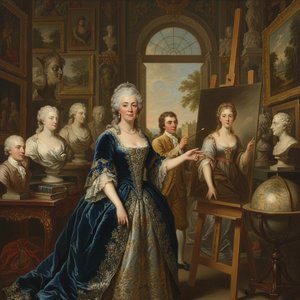
Explore the fascinating world of Sarah Churchill, Countess of Essex, a pivotal figure in 18th-century art patronage. Discover her influence on Rococo aesthetics and portraiture, and learn about commissioning artworks as a statement of power & identity.


Pysy ajan tasalla uusimmista taideuutisista, eksklusiivisista tarjouksista ja sisustusideoista.
Kerro meille projektistasi, niin taideasiantuntijamme tarjoavat sinulle kolme henkilökohtaista taidesuositusta.
Anna meidän kuratoida 3 vaihtoehtoa juuri sinulle – Ilmaiseksi!


 Jaa
Jaa


 Näytä lisää




































 Lasivaihtoehto on saatavilla vain alle 110 cm kokoisina teoksina


