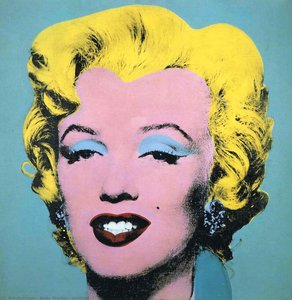
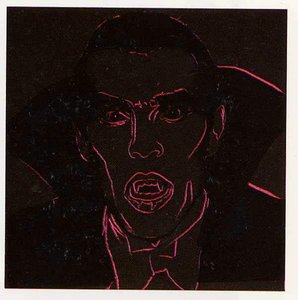
x

Acquérez une image numérique haute résolution et optimisée, d'une qualité bien supérieure à l'aperçu en ligne.
Chaque fichier est méticuleusement préparé par nos spécialistes internes à l'aide d'outils avancés et d'une retouche manuelle experte. Nous garantissons que chaque image possède une clarté exceptionnelle, une précision des couleurs irréprochable et un niveau de détail fin.
Le fichier final est livré par e-mail sous 72 heures, optimisé pour une utilisation immédiate dans des contextes professionnels, éditoriaux et d'impression. Il offre la même qualité de confiance que celle utilisée par les plus grands studios de création, éditeurs et galeries.
Téléchargez un fichier haute résolution pour votre usage personnel, l'impression et vos projets créatifs. ( Commander l'impression Commander la reproduction peinte à la main)
En choisissant Most-Famous-Paintings.com, vous n'obtenez pas seulement une simple image : vous recevez une œuvre numérique sublimée avec professionnalisme, conçue avec précision et accompagnée d'une garantie de satisfaction. Voici tout ce qui accompagne automatiquement votre commande :

Votre fichier d'image numérique haute résolution vous sera envoyé par e-mail sous 72 heures après votre commande — prêt à un usage immédiat.

Votre œuvre d'art bénéficie d'une optimisation professionnelle grâce à des outils d'IA avancés et une retouche manuelle, garantissant un niveau maximal de détail, de clarté et de fidélité chromatique.

Vous avez accidentellement supprimé ou perdu votre fichier ? Pas d'inquiétude — nous vous le renverrons gratuitement, quand vous le souhaitez.

Profitez de votre œuvre d'art instantanément sans frais de douane ni de livraison — les téléchargements numériques sont toujours exonérés de taxes.

Nous garantissons que votre image numérique reproduit les couleurs de l'original aussi fidèlement que possible grâce à des outils professionnels et une gestion rigoureuse des couleurs.

Si vous n'êtes pas satisfait de votre image numérique, nous la retoucherons ou vous rembourserons 100% sous 60 jours — sans poser de questions.

Pas satisfait ? Obtenez un remboursement intégral dans les 60 jours suivant la réception de votre fichier numérique — sans aucune question posée.

Achetez 3 images, économisez 10% - Achetez 5, économisez 15% - Achetez 10+, économisez 20%. Idéal pour les projets créatifs, les galeries et les agences.
Andy Warhol's "Flash—November 22, 1963" isn’t simply an image; it’s a haunting echo of a nation’s collective trauma. Created in 1968, five years after the assassination of President John F. Kennedy, this series of screenprints doesn’t attempt to *depict* the event itself, but rather to dissect and reflect upon its pervasive presence in the media landscape. The stark black and white photograph featured within the series—a man in a suit, gazing directly at the viewer—becomes a vessel for our own memories and anxieties surrounding that fateful day. It’s a face stripped of context, yet brimming with unspoken emotion, forcing us to confront not just the tragedy, but *how* we processed it.
Warhol, having risen through the ranks of commercial illustration, possessed an acute understanding of mass production and its impact on perception. He wasn’t interested in creating a unique masterpiece destined for a museum; he was fascinated by replication, by the way images lose their power—and simultaneously gain new layers of meaning—through endless reproduction. “Flash—November 22, 1963” is part of a larger series of eleven screenprints, each drawing from campaign posters, news photographs, and advertisements circulating at the time. This deliberate repetition mirrors the relentless media coverage that saturated American homes in November 1963, creating a sense of overwhelming information and emotional fatigue. The image itself, seemingly straightforward, is imbued with a chilling detachment, reflecting Warhol’s observation that television had “programmed everybody to feel so sad,” even if the feeling felt manufactured or imposed.
While appearing devoid of overt symbolism, the power of "Flash—November 22, 1963" lies in its deliberate ambiguity. The man’s suit and tie suggest authority and formality, perhaps representing the political establishment irrevocably altered by the assassination. His direct gaze challenges the viewer, demanding acknowledgement of the event’s lasting impact. The blurry background further emphasizes this sense of disorientation and loss of clarity—a visual metaphor for a nation struggling to make sense of an unthinkable act. The series as a whole is accompanied by Teletype reports, adding another layer of textual information that underscores Warhol’s exploration of how media shapes our understanding of reality. It's not about the *truth* of Kennedy’s death, but the constructed narrative surrounding it.
Andy Warhol was a pivotal figure in the Pop Art movement, challenging traditional notions of artistic value and subject matter. He elevated everyday objects and images—soup cans, celebrities, news headlines—to the realm of high art, forcing viewers to reconsider their relationship with consumer culture and mass media. “Flash—November 22, 1963rdquo; exemplifies this approach, transforming a deeply personal tragedy into a commentary on the spectacle of grief and the power of visual communication. Today, his work continues to resonate because it speaks to our contemporary obsession with celebrity, image, and the constant bombardment of information. A reproduction of this piece isn’t just an aesthetic addition to a space; it's a conversation starter, a reminder of a pivotal moment in history, and a testament to Warhol’s enduring artistic vision.
Warhol’s artistic journey began in Pittsburgh, Pennsylvania, where he was born into a family of Rusyn immigrants. From an early age, Warhol demonstrated exceptional talent for drawing and painting, nurtured by his mother who encouraged him to pursue his passions.
His formative years were marked by Sydenham's chorea, a debilitating neurological disorder that confined him indoors and fostered a profound engagement with visual culture—comic books and Hollywood magazines became crucial sources of inspiration. This experience instilled in Warhol an unwavering fascination for repetition and mass media, concepts that would become central to his artistic practice.
Warhol’s breakthrough came through commercial illustration, where he honed his skills in manipulating images and adapting them for advertising campaigns. However, it was his embrace of Pop Art—characterized by its appropriation of imagery from popular culture—that cemented his place as one of the most influential artists of the 20th century.
Warhol’s studio, dubbed “The Factory,” became a crucible for experimentation and collaboration, attracting a diverse group of creatives—artists, musicians, filmmakers—who pushed the boundaries of artistic expression. His groundbreaking films explored themes of celebrity and identity, challenging conventional notions of art and entertainment.
Throughout his life, Warhol remained committed to exploring the intersection between art and commerce, producing iconic works like Campbell’s Soup Cans and Marilyn Diptych that redefined the aesthetic landscape of the era. He died in February 1987, leaving behind a legacy as one of the most innovative and controversial figures in modern art.
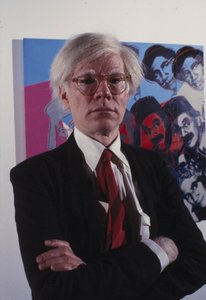
1928 - 1987 , États-Unis d'Amérique


Restez informé(e) des dernières actualités artistiques, des offres exclusives et des idées de décoration.
Parlez-nous de votre projet et nos experts en art vous proposeront 3 suggestions d'œuvres personnalisées.
Laissez-nous sélectionner 3 œuvres rien que pour vous – Gratuit !


 Aperçu en situation
 Envoyer
 Partager
 Détails de l'œuvre

 Télécharger
 Articles similaires
 Radiographie
 Diaporama

 Lire la suite