x

Acquérez une image numérique haute résolution et optimisée, d'une qualité bien supérieure à l'aperçu en ligne.
Chaque fichier est méticuleusement préparé par nos spécialistes internes à l'aide d'outils avancés et d'une retouche manuelle experte. Nous garantissons que chaque image possède une clarté exceptionnelle, une précision des couleurs irréprochable et un niveau de détail fin.
Le fichier final est livré par e-mail sous 72 heures, optimisé pour une utilisation immédiate dans des contextes professionnels, éditoriaux et d'impression. Il offre la même qualité de confiance que celle utilisée par les plus grands studios de création, éditeurs et galeries.
Téléchargez un fichier haute résolution pour votre usage personnel, l'impression et vos projets créatifs. ( Acheter l'impression Acheter la peinture faite à la main)
En choisissant Most-Famous-Paintings.com, vous n'obtenez pas seulement une simple image : vous recevez une œuvre numérique sublimée avec professionnalisme, conçue avec précision et accompagnée d'une garantie de satisfaction. Voici tout ce qui accompagne automatiquement votre commande :

Votre fichier d'image numérique haute résolution vous sera envoyé par e-mail sous 72 heures après votre commande — prêt à un usage immédiat.

Votre œuvre d'art bénéficie d'une optimisation professionnelle grâce à des outils d'IA avancés et une retouche manuelle, garantissant un niveau maximal de détail, de clarté et de fidélité chromatique.

Vous avez accidentellement supprimé ou perdu votre fichier ? Pas d'inquiétude — nous vous le renverrons gratuitement, quand vous le souhaitez.

Profitez de votre œuvre d'art instantanément sans frais de douane ni de livraison — les téléchargements numériques sont toujours exonérés de taxes.

Nous garantissons que votre image numérique reproduit les couleurs de l'original aussi fidèlement que possible grâce à des outils professionnels et une gestion rigoureuse des couleurs.

Si vous n'êtes pas satisfait de votre image numérique, nous la retoucherons ou vous rembourserons 100% sous 60 jours — sans poser de questions.

Pas satisfait ? Obtenez un remboursement intégral dans les 60 jours suivant la réception de votre fichier numérique — sans aucune question posée.

Achetez 3 images, économisez 10% - Achetez 5, économisez 15% - Achetez 10+, économisez 20%. Idéal pour les projets créatifs, les galeries et les agences.
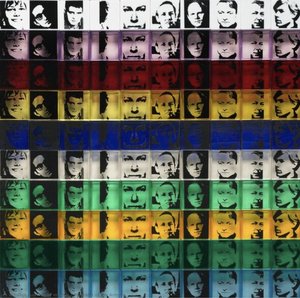
Andy Warhol’s “Thirteen Most Wanted Men,” conceived for the 1964 New York World’s Fair, wasn't merely a decorative commission; it was a deliberate act of disruption and a profound commentary on American culture. Born Andrew Warhola Jr. in Pittsburgh, Warhol’s early life, marked by illness and an immersion in popular imagery—comic books, Hollywood magazines—laid the groundwork for his later exploration of mass media and celebrity. The assignment to adorn the New York State Pavilion, a starkly modern structure designed by Philip Johnson, presented him with a unique challenge: to transform a mundane architectural space into a powerful visual statement. Rejecting the celebratory spirit expected of such commissions, Warhol chose instead to confront viewers with a series of unsettling images – enlarged mugshots of thirteen notorious criminals, plucked from a 1962 NYPD booklet.
The selection itself was deliberately provocative. These weren’t glamorous villains; they were figures associated with organized crime and the darker undercurrents of American society. Warhol's decision to utilize silkscreen printing—a technique he had previously employed for commercial illustration—elevated these images, lending them a cool, detached aesthetic that contrasted sharply with their inherent menace. The choice of black and white further intensified this effect, stripping away any romantic notions associated with crime and presenting the men as faceless, anonymous figures.
The unveiling of “Thirteen Most Wanted Men” at the World’s Fair was met with immediate resistance. Governor Nelson Rockefeller, concerned about potential offense to his constituents—particularly Italian-Americans who comprised a significant portion of the electorate—ordered the mural's hasty removal and subsequent obliteration with silver paint just days before the fair opened. This swift action underscored the anxieties surrounding cultural representation and the sensitivities of public opinion at the time. Warhol, ever the astute observer of social dynamics, reportedly accepted the decision with a shrug, suggesting that he would have replaced the mural with portraits of Robert Moses, the Fair’s director – a subtle critique of bureaucratic power.
Despite its brief existence, the incident cemented “Thirteen Most Wanted Men” as a pivotal moment in Warhol's career and a landmark work of Pop Art. It demonstrated his willingness to challenge conventions, provoke debate, and engage with complex social issues through his art. The subsequent creation of the silkscreen paintings based on the original mural further solidified its impact, transforming a fleeting public installation into a lasting testament to Warhol’s artistic vision.
Beyond its immediate controversy, “Thirteen Most Wanted Men” offers a rich tapestry of symbolic meaning. The repetition of the mugshots—each face rendered with meticulous precision—highlights the dehumanizing effects of the criminal justice system and the pervasive surveillance state. The grid-like arrangement evokes the sterile uniformity of advertising and mass media, suggesting that even individuals deemed “outlaws” are ultimately reduced to commodities in the American image machine. The use of black and white further amplifies this sense of detachment, stripping away any emotional connection to the subjects.
Furthermore, the title itself—"Most Wanted"—carries a double meaning, referencing both criminal pursuit and the relentless desire for fame and attention that characterized Warhol’s era. The mural can be interpreted as an exploration of the American obsession with celebrity, highlighting the blurred lines between criminality, notoriety, and public fascination.
Today, “Thirteen Most Wanted Men” continues to resonate with audiences worldwide, reproduced in high-quality prints that capture the essence of Warhol’s groundbreaking work. The stark simplicity of the composition—the black and white faces arranged in a grid—makes it an ideal subject for interior design, adding a touch of provocative elegance to any space. The artwork's enduring appeal lies not only in its historical significance but also in its timeless exploration of themes such as identity, surveillance, and the nature of celebrity. A reproduction offers a powerful reminder of Warhol’s revolutionary approach to art and his lasting influence on contemporary culture.
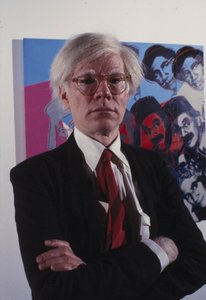
1928 - 1987 , États-Unis d'Amérique


Restez informé(e) des dernières actualités artistiques, des offres exclusives et des idées de décoration.
Parlez-nous de votre projet et nos experts en art vous proposeront 3 suggestions d'œuvres personnalisées.
Laissez-nous sélectionner 3 œuvres rien que pour vous – Gratuit !


 Aperçu en situation
 Envoyer
 Partager
 Détails de l'œuvre

 Télécharger
 Articles similaires
 Radiographie
 Diaporama

 Lire la suite