


x


 Preview
 Commander la reproduction Acheter l'image haute résolution
 Partager
 Détails de l'œuvre
 Ajouter aux favoris
 Télécharger
 Articles similaires
 Radiographie
 Diaporama
Impression giclée ou sur toile de qualité musée, avec une production rapide et des finitions au choix.





























Choisissez parmi nos formats prédéfinis qui respectent les proportions originales de l’œuvre.

Vous pouvez saisir vos propres dimensions pour vous adapter à un cadre ou à un espace spécifique. Si la taille sélectionnée ne correspond pas aux proportions de l'image originale, nous recadrerons l'œuvre ou étendrons l'image avec une bordure en miroir ou une couleur unie. Une maquette numérique vous sera envoyée pour approbation avant le début de la production.
Veuillez noter que l'aperçu à l'écran ne reflète pas le recadrage ou l'extension réelle. Seule la maquette montrera avec précision la composition finale.
Bien que des tailles personnalisées soient disponibles, nous vous recommandons de choisir une dimension dans la liste prédéfinie afin de préserver les proportions originales.
Livraison dans le monde entier () en 2 semaines au lieu des 4/5 semaines habituelles. (27 juillet)


St. Jerome
Format de reproduction
Annibale Carracci's "St. Jerome in the Wilderness," painted around 1597-1600, is not merely a depiction of a biblical figure; it’s a profound exploration of inner turmoil and divine grace rendered with the dynamism and emotional intensity that defined the burgeoning Baroque style. This oil on canvas, currently housed at The Metropolitan Museum of Art in New York, offers a glimpse into the artist's masterful command of color, composition, and psychological depth – qualities that cemented Carracci’s place as a pivotal figure in Italian art history.
The scene unfolds within a stark, almost desolate landscape, dominated by towering rock formations and a bruised, stormy sky. St. Jerome, clad in the simple, earth-toned robes of a hermit, is positioned centrally, his posture conveying both physical exhaustion and an unwavering resolve. His face, etched with lines of hardship and contemplation, bears witness to years of self-imposed penance – a three-year fast undertaken as atonement for past sins. The artist skillfully captures the weight of this struggle through subtle shifts in expression; a furrowed brow, a downward gaze, and the clenched fist gripping a stone, used repeatedly to beat his chest in a desperate attempt to quell overwhelming temptations. Yet, amidst this palpable suffering, there’s an undeniable sense of serenity, a quiet acceptance that speaks volumes about the saint's spiritual journey.
Carracci’s technique is characterized by a remarkable synthesis of influences – a careful balance between the linear precision of Florentine masters like Raphael and the atmospheric richness of Venetian painters such as Titian. The painting's palette is rich and vibrant, utilizing deep blues, ochres, and browns to create a sense of dramatic depth and volume. Notice how Carracci employs *chiaroscuro* – the masterful use of light and shadow – to sculpt Jerome’s form and draw the viewer’s eye directly to his face, emphasizing his inner struggle. The swirling clouds in the background contribute to a feeling of movement and turbulence, mirroring the tempest within the saint's soul.
Furthermore, Carracci breaks from the static compositions favored by earlier Renaissance artists, injecting a sense of dynamism into the scene. Jerome is not presented as an idealized figure; he’s a man wrestling with his demons, caught in a moment of intense emotional and spiritual confrontation. This departure from traditional iconography reflects the Baroque emphasis on realism and psychological truth – a shift away from purely decorative representations towards works that aimed to evoke powerful emotions and engage the viewer on a deeper level.
The painting is laden with symbolic meaning, reflecting the broader religious context of the Counter-Reformation. The desert landscape represents Jerome’s isolation and spiritual wilderness, while the stone he beats his chest upon symbolizes the relentless battle against temptation. The angels ascending above him are not merely celestial messengers; they represent divine grace and the promise of redemption. The red cardinal's robe, visible on Jerome’s shoulders, is a potent symbol of his eventual elevation to the highest rank in the Church – a testament to his unwavering faith and dedication.
Interestingly, the composition echoes elements found in earlier depictions of St. Jerome, particularly those by Hieronymus Bosch, suggesting a shared visual vocabulary rooted in medieval iconography. However, Carracci’s interpretation is markedly more personal and emotionally charged, reflecting the artist's own spiritual struggles and his desire to convey the profound experience of conversion.
"St. Jerome in the Wilderness" stands as a powerful example of Carracci’s artistic genius – a testament to his ability to fuse technical mastery with emotional depth and symbolic richness. It's a painting that invites contemplation, prompting viewers to consider not only the saint’s personal journey but also their own struggles with faith, temptation, and redemption. Reproductions of this work capture much of its original impact, offering a window into the heart of the Baroque era and the enduring power of human spirituality.


1560 - 1609 , Italie

Plongez dans l'univers spirituel d'El Greco ! Découvrez les 25 œuvres incontournables du maître espagnol, de *L'Enterrement du Comte d'Orgaz* à ses portraits saisissants. Inspirez votre décoration intérieure avec des reproductions d'art exceptionnelles sur Most-Famous-Paintings.com.
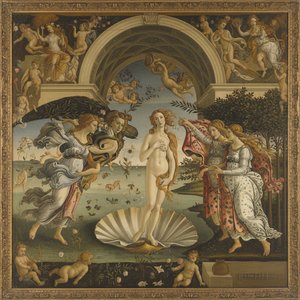
Plongez dans l'univers de Botticelli ! Découvrez les 25 œuvres majeures du maître florentin : La Naissance de Vénus, Primavera et bien plus. Histoire, technique & inspiration déco. Reproductions d'art haute qualité sur Most-Famous-Paintings.com.
Plongez au cœur de l'Alte Pinakothek, Munich ! Découvrez 25 chefs-d'œuvre de Dürer à Rembrandt. Explorez l'art Renaissance et baroque, leurs couleurs & histoires fascinantes. Reproductions de qualité sur Most-Famous-Paintings.com.
Plongez dans l'univers dramatique de Jacopo Tintoretto ! Découvrez les 25 œuvres incontournables du maître vénitien, ses techniques uniques et son style baroque. Reproductions de qualité muséale sur Most-Famous-Paintings.com.

Explore the life & art of Annibale Carracci, a pivotal figure bridging Renaissance ideals with Baroque innovation. Discover his masterpieces and lasting influence on Italian painting.


Restez informé(e) des dernières actualités artistiques, des offres exclusives et des idées de décoration.
Parlez-nous de votre projet et nos experts en art vous proposeront 3 suggestions d'œuvres personnalisées.
Laissez-nous sélectionner 3 œuvres rien que pour vous – Gratuit !


 Partager


 Afficher la suite







 L'option verre n'est disponible que pour les dimensions inférieures à 110 cm.


