x


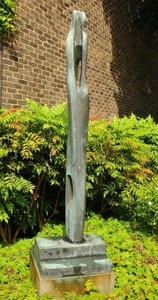
 StoneSculptureAbstraction-Création
 Modern
 53.0 x 34.0 cm
 Tate Britain
Impression giclée ou sur toile de qualité musée, avec une production rapide et des finitions au choix. ( Switch to hand made Painting Switch to Image)
Choisissez parmi nos formats prédéfinis qui respectent les proportions originales de l’œuvre.

Vous pouvez saisir vos propres dimensions pour vous adapter à un cadre ou à un espace spécifique. Si la taille sélectionnée ne correspond pas aux proportions de l'image originale, nous recadrerons l'œuvre ou étendrons l'image avec une bordure en miroir ou une couleur unie. Une maquette numérique vous sera envoyée pour approbation avant le début de la production.
Veuillez noter que l'aperçu à l'écran ne reflète pas le recadrage ou l'extension réelle. Seule la maquette montrera avec précision la composition finale.
Bien que des tailles personnalisées soient disponibles, nous vous recommandons de choisir une dimension dans la liste prédéfinie afin de préserver les proportions originales.
Livraison dans le monde entier () en 2 semaines au lieu des 4/5 semaines habituelles. (29 juillet)


Three Forms
Format de reproduction
In the quiet, monochromatic realm of Barbara Hepworth’s Three Forms, we encounter a profound dialogue between matter and void. Captured in a striking black-and-white composition, this work serves as a masterclass in the minimalist aesthetic that defined much of the twentieth-century sculptural revolution. The photograph presents three abstract sculptures, each a testament to Hepworth's ability to breathe life into stone. Arranged with meticulous balance upon a rectangular platform, these organic shapes emerge from a deep, velvety black background, creating an atmosphere of intense focus and meditative stillness. There is no distraction here—only the pure, unadulated interplay of light and shadow that defines the very soul of modernism.
The visual journey through this piece is one of tactile discovery. As the eye wanders across the smooth, rounded contours of the sculptures, one can almost feel the polished surface of the marble or alabaster from which they were birthed. Hepworth’s technique involves a delicate dance with geometry; while the sculptures themselves possess soft, flowing lines reminiscent of weathered river stones or celestial bodies, they are anchored by the sharp, decisive edge of the platform. This juxtaposition of organic fluidity and geometric stability creates a rhythmic tension, inviting the viewer to contemplate the relationship between the natural world and human intervention.
To understand Three Forms is to understand the historical weight of the Unit One movement. As a pioneer who sought to bridge the gap between Surrealism and pure Abstraction, Hepworth utilized light as a sculptural tool. In this particular rendering, the directional lighting acts as an invisible chisel, carving out bright highlights that define the sculptures' three-dimensional presence and casting deep, dramatic shadows that suggest hidden depths within the stone. This interplay of luminance does more than just illuminate; it imbues the inanimate objects with a sense of movement and breath, making the static forms feel vibrantly alive.
For the discerning collector or interior designer, this work offers an unparalleled opportunity to introduce a sense of timeless sophistication into a space. The monochromatic palette ensures that the piece remains versatile, acting as a focal point that complements both contemporary minimalist interiors and more classical, opulent settings. It is not merely a photograph of sculpture, but an evocative window into the heart of British Modernism—a piece that promises to bring a sense of structural harmony, intellectual depth, and quiet elegance to any curated collection.

L'œuvre de Hepworth a évolué au fil des ans, passant d'abstractions influencées par le cubisme et le surréalisme à des formes plus organiques et abstraites. Son séjour en France dans les années 1930, où elle a rencontré des artistes comme Brancusi et Arp, a été déterminant pour son développement artistique. Elle s’est intéressée aux formes naturelles, notamment celles trouvées dans la mer et le paysage de Cornouailles, où elle a vécu pendant une grande partie de sa carrière.

1903 - 1975 , Royaume-Uni
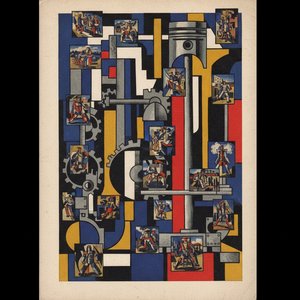
Plongez dans l'univers vibrant de Fernand Léger ! Découvrez les 25 œuvres majeures du cubisme et du tubisme, explorant formes géométriques et couleurs audacieuses. Retrouvez des reproductions d'art exceptionnelles sur Most-Famous-Paintings.com.
Plongez dans l'univers vibrant de Kandinsky ! Découvrez les 25 œuvres majeures du pionnier de l'art abstrait. Explorez son expressionnisme, ses couleurs audacieuses et l'histoire fascinante derrière chaque tableau. Reproductions d'exception sur Most-Famous-Paintings.com.

Plongez au cœur du Metropolitan Museum of Art avec notre sélection des 25 œuvres les plus emblématiques. Découvrez l'histoire de Van Gogh, Monet et d'autres maîtres, et trouvez l'inspiration pour une décoration intérieure raffinée. Reproductions de qualité muséale sur Most-Famous-Paintings.com.

Explore the profound world of Barbara Hepworth's sculpture. Discover her artistic evolution, iconic forms, and lasting influence on modern art. A guide for collectors & enthusiasts.
Plongez au cœur du MoMA avec les 25 œuvres incontournables de Van Gogh à Warhol. Découvrez l'histoire et la magie de chefs-d'œuvre impressionnistes, cubistes & abstraits. Trouvez votre inspiration déco sur Most-Famous-Paintings.com !


Restez informé(e) des dernières actualités artistiques, des offres exclusives et des idées de décoration.
Parlez-nous de votre projet et nos experts en art vous proposeront 3 suggestions d'œuvres personnalisées.
Laissez-nous sélectionner 3 œuvres rien que pour vous – Gratuit !


 Partager
 Partager
 Détails de l'œuvre

 Télécharger
 Articles similaires
 Diaporama
 Afficher la suite




































 L'option verre n'est disponible que pour les dimensions inférieures à 110 cm.