x

Impressions giclées ou sur toile de qualité musée, avec une production rapide et des finitions au choix. ( Commander la reproduction peinte à la main Télécharger l'image haute résolution)
Choisissez parmi nos formats prédéfinis qui respectent les proportions originales de l’œuvre.

Vous pouvez saisir vos propres dimensions pour vous adapter à un cadre ou à un espace spécifique. Si la taille sélectionnée ne correspond pas aux proportions de l'image originale, nous recadrerons l'œuvre ou étendrons l'image avec une bordure en miroir ou une couleur unie. Une maquette numérique vous sera envoyée pour approbation avant le début de la production.
Veuillez noter que l'aperçu à l'écran ne reflète pas le recadrage ou l'extension réelle. Seule la maquette montrera avec précision la composition finale.
Bien que des tailles personnalisées soient disponibles, nous vous recommandons de choisir une dimension dans la liste prédéfinie afin de préserver les proportions originales.
Livraison dans le monde entier () en 2 semaines au lieu des 4/5 semaines habituelles. (16 août)


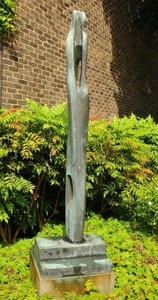
Totem
Format de la reproduction
Barbara Hepworth (1903–1975) stands as one of the most influential figures in British modernist sculpture, a pioneer who bravely navigated the shifting sands of artistic expression during the tumultuous years following World War I. Her work transcends mere representation; it delves into fundamental questions about materiality, space, and the human condition—themes powerfully embodied in “Totem,” created between 1960 and 1962.
The sculpture itself is a striking example of Hepworth’s signature style: abstract biomorphism. Crafted from alabaster – a translucent white stone prized for its purity and luminosity – Totem eschews recognizable forms, opting instead for undulating curves that mimic the contours of natural elements like seashells or stones. These shapes aren't simply decorative; they are meticulously designed to interact with light and shadow, creating an illusion of depth and movement within the seemingly static form.
Hepworth’s approach to sculpture was deeply rooted in subtractive carving—a painstaking process of removing material from a larger block of alabaster. This technique demanded immense patience and precision, allowing Hepworth to coax out the desired form with subtle manipulations of chisel and mallet. The resulting surface is remarkably smooth and polished, reflecting light in diffused patterns that underscore the sculpture’s inherent materiality.
Furthermore, Hepworth's studio was equipped with a sophisticated lighting system designed to minimize glare and maximize tonal variation—a deliberate effort to capture the essence of the stone itself. This meticulous attention to detail speaks volumes about her commitment to conveying not just visual form but also the tactile qualities of the material.
"Totem" isn't merely an aesthetically pleasing object; it’s imbued with symbolic significance. The sculpture’s flowing curves evoke a sense of serenity and balance, mirroring Hepworth’s belief in the power of art to communicate profound ideas about existence. The circular openings piercing the alabaster body can be interpreted as portals—windows into another realm—suggesting an openness to contemplation and a connection to something beyond the visible world.
Ultimately, Hepworth sought to create works that resonated emotionally with viewers, inviting them to engage in a dialogue with form and space. “Totem” achieves this ambition beautifully, prompting reflection on themes of continuity, transformation, and the enduring beauty of natural forms—a testament to Hepworth’s visionary artistic legacy.
Hepworth's work emerged during the height of British Modernism, a movement characterized by experimentation with new materials and techniques and a rejection of traditional representational conventions. Influenced by Surrealist ideas and championed by artists like Ben Nicholson and Paul Nash, Hepworth’s pursuit of abstraction reflected a broader cultural shift toward prioritizing intuition and emotion over rational thought.
Her contribution to the Unit One Art Movement solidified her position as a leading voice in British art, demonstrating that artistic innovation could flourish alongside intellectual rigor. “Totem” stands as an enduring symbol of this era’s commitment to exploring the expressive potential of form and materiality—a masterpiece that continues to inspire artists and collectors alike.

L'œuvre de Hepworth a évolué au fil des ans, passant d'abstractions influencées par le cubisme et le surréalisme à des formes plus organiques et abstraites. Son séjour en France dans les années 1930, où elle a rencontré des artistes comme Brancusi et Arp, a été déterminant pour son développement artistique. Elle s’est intéressée aux formes naturelles, notamment celles trouvées dans la mer et le paysage de Cornouailles, où elle a vécu pendant une grande partie de sa carrière.

1903 - 1975 , Royaume-Uni
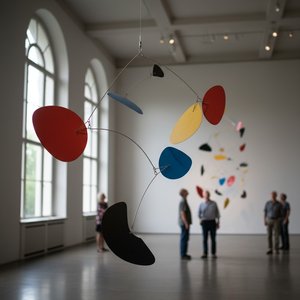
Explore the revolutionary world of Alexander Calder's kinetic sculptures & mobiles. Discover insights for collectors, acquisition advice, and the enduring legacy of this modern master. Expert analysis & art valuation.
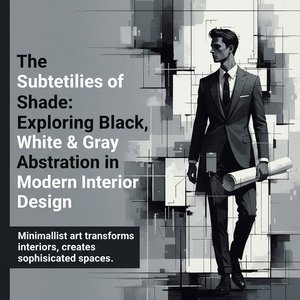
Explorez l'élégance du monochrome ! Découvrez comment créer un intérieur sophistiqué et apaisant avec nos conseils d'experts en décoration. Inspirez-vous des dernières tendances et transformez votre espace.

Explore the profound world of Barbara Hepworth's sculpture. Discover her artistic evolution, iconic forms, and lasting influence on modern art. A guide for collectors & enthusiasts.

Explorez l'Orphisme : son histoire, ses figures clés (Robert & Sonia Delaunay), et son impact sur l'art moderne. Analyse approfondie pour collectionneurs avertis et passionnés d'abstraction.

Intégrez l'art contemporain dans votre intérieur classique avec succès ! Conseils d'experts, inspiration et reproductions de qualité musée par Most-Famous-Paintings. Trouvez l'équilibre parfait.


Restez informé(e) des dernières actualités artistiques, des offres exclusives et des idées de décoration.
Parlez-nous de votre projet et nos experts en art vous proposeront 3 suggestions d'œuvres personnalisées.
Laissez-nous sélectionner 3 œuvres rien que pour vous – Gratuit !


 Envoyer
 Partager
 Détails de l'œuvre

 Télécharger
 Articles similaires
 Diaporama


 Lire la suite




































 L'option verre n'est disponible que pour les dimensions inférieures à 110 cm.