x

 Oil On CanvasWallArtBaroque
 1643Early Modern
 146.0 x 222.0 cm
 Musée du Louvre
Acquérez une image numérique haute résolution et optimisée, d'une qualité bien supérieure à l'aperçu en ligne.
Chaque fichier est méticuleusement préparé par nos spécialistes internes à l'aide d'outils avancés et d'une retouche manuelle experte. Nous garantissons que chaque image possède une clarté exceptionnelle, une précision des couleurs irréprochable et un niveau de détail fin.
Le fichier final est livré par e-mail sous 72 heures, optimisé pour une utilisation immédiate dans des contextes professionnels, éditoriaux et d'impression. Il offre la même qualité de confiance que celle utilisée par les plus grands studios de création, éditeurs et galeries.
Téléchargez un fichier haute résolution pour votre usage personnel, l'impression et vos projets créatifs. ( Commander l'impression Commander la reproduction peinte à la main)
En choisissant Most-Famous-Paintings.com, vous n'obtenez pas seulement une simple image : vous recevez une œuvre numérique sublimée avec professionnalisme, conçue avec précision et accompagnée d'une garantie de satisfaction. Voici tout ce qui accompagne automatiquement votre commande :

Votre fichier d'image numérique haute résolution vous sera envoyé par e-mail sous 72 heures après votre commande — prêt à un usage immédiat.

Votre œuvre d'art bénéficie d'une optimisation professionnelle grâce à des outils d'IA avancés et une retouche manuelle, garantissant un niveau maximal de détail, de clarté et de fidélité chromatique.

Vous avez accidentellement supprimé ou perdu votre fichier ? Pas d'inquiétude — nous vous le renverrons gratuitement, quand vous le souhaitez.

Profitez de votre œuvre d'art instantanément sans frais de douane ni de livraison — les téléchargements numériques sont toujours exonérés de taxes.

Nous garantissons que votre image numérique reproduit les couleurs de l'original aussi fidèlement que possible grâce à des outils professionnels et une gestion rigoureuse des couleurs.

Si vous n'êtes pas satisfait de votre image numérique, nous la retoucherons ou vous rembourserons 100% sous 60 jours — sans poser de questions.

Pas satisfait ? Obtenez un remboursement intégral dans les 60 jours suivant la réception de votre fichier numérique — sans aucune question posée.

Achetez 3 images, économisez 10% - Achetez 5, économisez 15% - Achetez 10+, économisez 20%. Idéal pour les projets créatifs, les galeries et les agences.
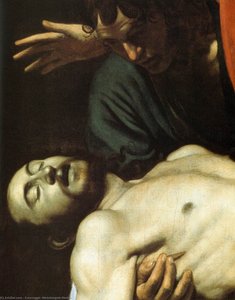
In the hallowed stillness of the Musée du Louvre, there exists a canvas that does more than merely depict a biblical event; it captures the very essence of human grief. Charles Le Brun’s Pietà, painted in 1643, is a monumental achievement of the Baroque era, serving as a profound meditation on sorrow, faith, and the weight of mortality. Originally commissioned for the Sainte-Chapelle in Paris—a sanctuary dedicated to the relics of Christ—this oil on canvas was designed to evoke spiritual contemplation through its sheer emotional gravity. As viewers encounter the work, they are not just observing a scene from the Passion; they are invited into a sacred space where the boundaries between the divine and the human dissolve.
The painting centers on the poignant aftermath of the crucifixion, presenting the Virgin Mary cradling the lifeless form of her son. Le Brun masterfully employs a pyramidal composition, a technique that provides a sense of structural stability to an otherwise turbulent emotional scene. This geometric arrangement directs the eye upward, guiding the observer from the heavy, slumped weight of Christ’s body toward the serene yet heartbroken countenance of Mary. The interplay of light and shadow, known as chiaroscuro, is utilized with breathtaking precision. A singular, dramatic light source illuminates the central figures against a dark, indistinct background, stripping away all worldly distractions to focus the soul entirely on the tragedy unfolding within the frame.
To understand the Pietà is to understand the hand of Charles Le Brun, a titan of French art who shaped the aesthetic standards of the age. His technique reflects the rigorous training he received under masters like Simon Vouet and his transformative years in Rome alongside Nicolas Poussin. In this work, Le Brun achieves a perfect balance between dramatic realism and idealized beauty. The texture of the painting is remarkably rich; one can almost feel the heavy, flowing drapery of Mary’s robes as they cascade around the figures, adding a sense of dynamic movement to the stillness of death. His brushwork captures the subtle nuances of skin, the limpness of muscle, and the intricate folds of fabric, all rendered with an exacting detail that speaks to his mastery of the medium.
Beyond its technical brilliance, the artwork serves as a profound symbolic vessel. The scene is steeped in Christian iconography, representing the ultimate sacrifice and the enduring devotion of the faithful. The presence of figures like Joseph of Arimathea and Mary Magdalene adds layers of communal mourning, yet the focus remains on the intimate bond between mother and son. For the collector or the lover of fine art, this piece offers more than just visual splendor; it provides a window into the 17th-century French soul. It is an ideal centerpiece for those seeking to infuse a space with historical depth, intellectual rigor, and a sense of timeless, quiet majesty.


1619 - 1690 , France


Restez informé(e) des dernières actualités artistiques, des offres exclusives et des idées de décoration.
Parlez-nous de votre projet et nos experts en art vous proposeront 3 suggestions d'œuvres personnalisées.
Laissez-nous sélectionner 3 œuvres rien que pour vous – Gratuit !


 Aperçu en situation
 Envoyer
 Partager
 Détails de l'œuvre

 Télécharger
 Articles similaires
 Radiographie
 Diaporama
 Lire la suite