x

 Oil On CanvasWallArt
 1914Early Modern
 29.0 x 38.0 cm
 Llyfrgell Genedlaethol Cymru / The National Library of Wales
Impressions giclées ou sur toile de qualité musée, avec une production rapide et des finitions au choix. ( Commander la reproduction peinte à la main Télécharger l'image haute résolution)





























Choisissez parmi nos formats prédéfinis qui respectent les proportions originales de l’œuvre.

Vous pouvez saisir vos propres dimensions pour vous adapter à un cadre ou à un espace spécifique. Si la taille sélectionnée ne correspond pas aux proportions de l'image originale, nous recadrerons l'œuvre ou étendrons l'image avec une bordure en miroir ou une couleur unie. Une maquette numérique vous sera envoyée pour approbation avant le début de la production.
Veuillez noter que l'aperçu à l'écran ne reflète pas le recadrage ou l'extension réelle. Seule la maquette montrera avec précision la composition finale.
Bien que des tailles personnalisées soient disponibles, nous vous recommandons de choisir une dimension dans la liste prédéfinie afin de préserver les proportions originales.
Livraison dans le monde entier () en 2 semaines au lieu des 4/5 semaines habituelles. (18 août)


Tangiers
Format de la reproduction
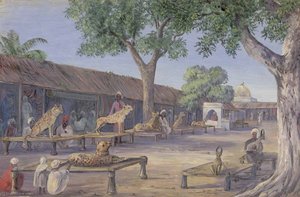
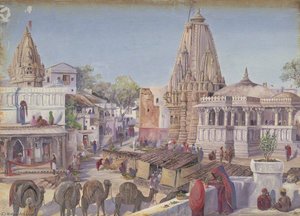
To stand before this depiction of Tangiers is to be instantly transported across continents and through the veil of time. Christopher Williams has captured not merely a location, but a palpable moment—the very breath of a bustling marketplace in early 20th-century Morocco. The scene explodes with life; one can almost hear the calls of vendors mingling with the clatter of hooves from the horse visible in the background. It is a rich tapestry woven from human interaction and exotic architecture, inviting the viewer to step directly into its vibrant chaos.
Williams’s technique here showcases an impressive ability to render depth and atmosphere simultaneously. The composition draws the eye through the foreground activity toward the intriguing archway, which acts as a visual portal into a more secluded courtyard setting. Notice the interplay between the solid, detailed architecture framing the scene and the softer textures of the tents and gathered crowds. This masterful handling of light suggests an intense Mediterranean sun filtering through narrow alleyways, illuminating faces caught in moments of conversation or commerce. The sheer number of figures—at least thirteen visible souls—lends a documentary quality to the piece, celebrating the enduring rhythm of daily life.
Painted in 1914, this work sits at a fascinating historical juncture, capturing Tangiers before the sweeping changes that would define the decades to come. For collectors and those drawn to global narratives, it offers an intimate window into a specific cultural moment. Williams, while celebrated for his Welsh identity, possessed an eye capable of absorbing and interpreting the universal human experience through diverse locales. The marketplace itself becomes a microcosm of cross-cultural exchange—a place where goods, stories, and people from disparate backgrounds converged.
For interior designers or art lovers seeking to infuse a space with worldly character, this reproduction offers unparalleled depth. It moves beyond mere decoration; it acts as an emotional anchor, suggesting adventure and warmth. The rich palette—the earthy tones of the buildings contrasted with the varied colors of clothing and goods—will provide a stunning focal point in any room. Owning this piece is not just acquiring art; it is curating a narrative of travel, history, and enduring human vitality for your walls.

Christopher David Williams (1873-1934) était un artiste gallois renommé dont la carrière s’étendait de la fin de la période victorienne au début du XXe siècle. Il est particulièrement mémorisé pour ses portraits évocateurs, scènes allégoriques et paysages qui reflétaient souvent un fort sentiment d'identité galloise et l'esprit du renouveau celtique.
Né à Maesygwrath, au Pays de Galles, Williams a initialement rencontré l’opposition de son père, Evan Williams, qui envisageait une carrière médicale pour lui. Cependant, une visite transformatrice à la Walker Art Gallery de Liverpool en 1892, où il a été profondément touché par *Pérse et Andromède* de Frederick Leighton, a enflammé sa passion pour l’art. Cette expérience a renforcé sa détermination à poursuivre une vie d'artiste.
Le travail de Williams se caractérise par:
Christopher Williams a joué un rôle important dans la promotion de l'art et de la culture galloise pendant sa vie. Il a participé activement à l’Eisteddfod national en tant qu’arbitre et a siégé au comité du Musée National du Pays de Galles et à la Honourable Society of Cymmrodorion. Son travail reflète un fort sentiment d'identité nationale et a contribué à la floraison artistique du Pays de Galles au début du XXe siècle.
Ses peintures sont conservées dans de nombreuses collections publiques, notamment le Musée National du Pays de Galles, la Collection Royale et la Glynn Vivian Art Gallery, assurant ainsi que son héritage continue d'inspirer et de captiver les publics aujourd’hui. Il était beau-frère de l'artiste Fred Appleyard, et père d'astronome Evan Gwyn Williams et d'artiste Ivor Williams.

1873 - 1934 , États-Unis d'Amérique

Plongez dans l'univers coloré de Marianne North ! Découvrez ses 25 œuvres les plus emblématiques, des paysages exotiques aux fleurs peintes avec une précision botanique unique. Reproductions d'art de qualité supérieure sur Most-Famous-Paintings.com.

Explore the captivating journey of street art from urban walls to prestigious galleries. Discover how contemporary graffiti has evolved into a high-end collectible movement, redefining modern interior design and global art culture.

Explorez l'évolution fascinante du street art et son impact culturel. Conseils d'experts pour collectionner, investir et apprécier cet art contemporain dynamique. Découvrez les artistes clés et les dernières tendances.

Explore the rich history of genre painting! Discover Dutch Masters & European artists who captured everyday life with stunning realism. Learn about symbolism, techniques & lasting influence.

Master the bold, dusty textures of street and pop art. Discover how chalk-inspired aesthetics and high-impact graphic styles are redefining modern urban interiors through tactile pigment and raw, energetic design.


Restez informé(e) des dernières actualités artistiques, des offres exclusives et des idées de décoration.
Parlez-nous de votre projet et nos experts en art vous proposeront 3 suggestions d'œuvres personnalisées.
Laissez-nous sélectionner 3 œuvres rien que pour vous – Gratuit !


 Aperçu en situation
 Envoyer
 Partager
 Détails de l'œuvre

 Télécharger
 Articles similaires
 Radiographie
 Diaporama
 Lire la suite







 L'option verre n'est disponible que pour les dimensions inférieures à 110 cm.